The stain is not where the leak is
Water gets in at the roof, runs down the underside of the tile or sheet, along the sarking, along a rafter, and drops onto the ceiling wherever it lands. On a tile roof that can be three or four metres from the entry point. Replacing the tile directly above the ceiling stain is the most common reason a "fixed" leak comes back with the next southerly.
So we do not start on the roof. We start in the ceiling cavity and trace the water uphill to where it came in.
What a leak looks like from inside
- A brown-ringed ceiling stain that grows after rain and dries pale in between
- A stain that only appears with wind from one direction, which points to a flashing or ridge rather than a cracked tile
- Bubbling paint or sagging plasterboard, which means the board is saturated and needs replacing
- Black mould in a ceiling corner or along the top of a wall
- A drip that starts an hour into heavy rain, which is usually a gutter filling up
We go through each pattern in what a ceiling stain is telling you.
Condensation vs leak
Not every wet ceiling is a leak. A metal roof with no insulation blanket sweats on cold, clear nights and drips onto the ceiling in the morning with no rain at all. A bathroom fan venting into the roof space does the same. The tell is timing: condensation shows up on still, cold mornings; a leak shows up during and after rain. If the drip appears on dry days, we check the cavity for a ventilation problem before looking for a hole that is not there.
How we find the entry point
Four methods, used in order, cheapest first.
- Cavity inspection. Torch and moisture meter in the roof space. Fresh water tracks are dark and shiny; old ones are dry tide marks. We follow the freshest track uphill along the timber until it stops at the underside of the roof.
- Roof inspection. We get onto the roof above that spot and look for the usual suspects: a cracked or slipped tile, a lifted ridge cap, corroded valley iron, a flashing pulled away from a wall, or a screw with a perished washer on a metal roof.
- Flood testing. If nothing is obvious, one of us stays inside with a torch while the other runs a hose on the roof, section by section, starting low and working up. When water shows inside, we know exactly which element let it through. It takes an hour or two and it is the most reliable method there is.
- Thermal imaging. A thermal camera shows wet insulation and plasterboard as cold patches. It earns its keep on a big ceiling, a flat membrane roof, or a strata building where we cannot get into every cavity. It shows where the water is sitting, not where it came in, so it works alongside flood testing, not instead of it. We photograph what we find before touching anything.
What actually causes leaks in Sydney roofs
Roughly in the order we see them:
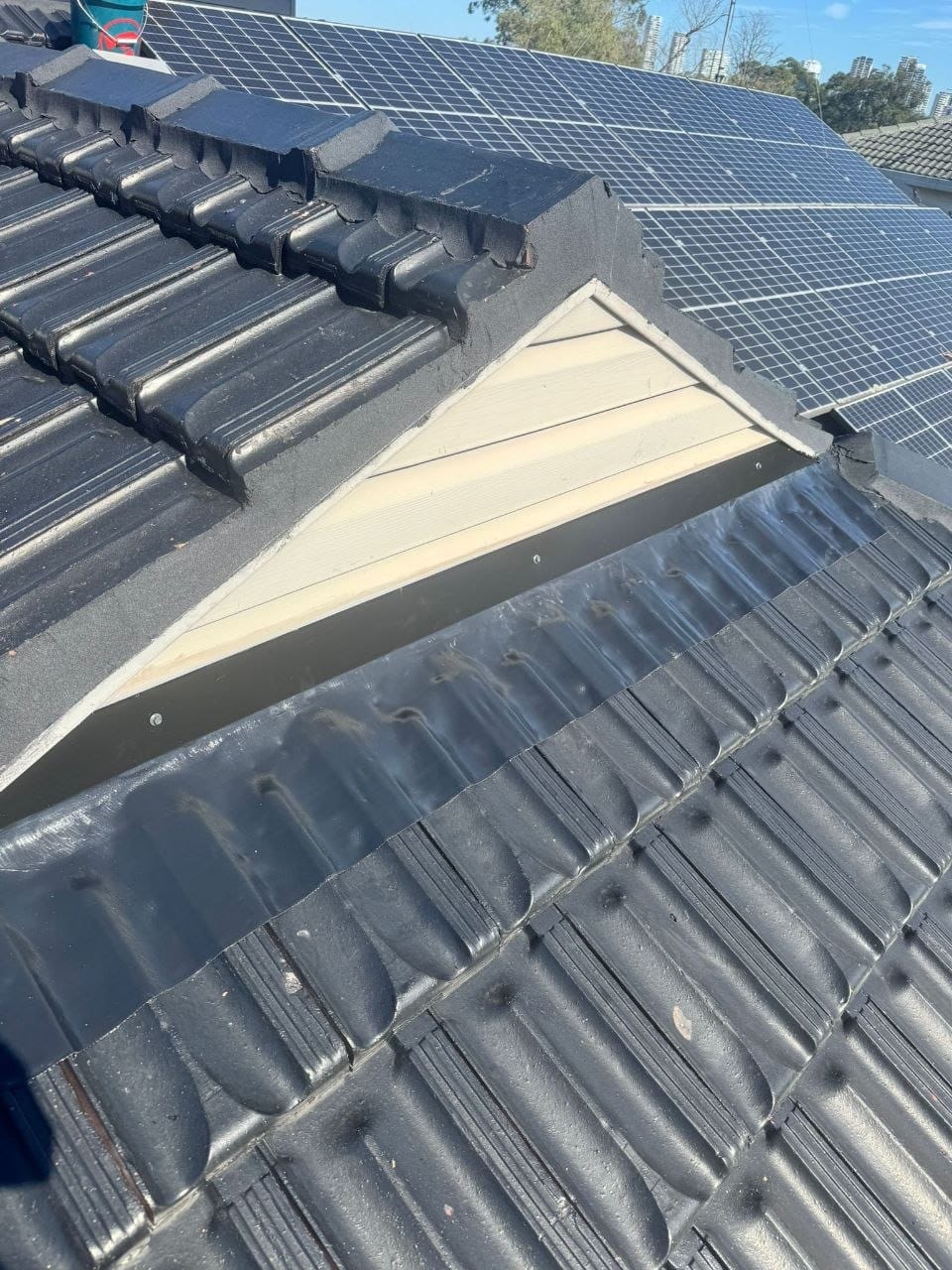
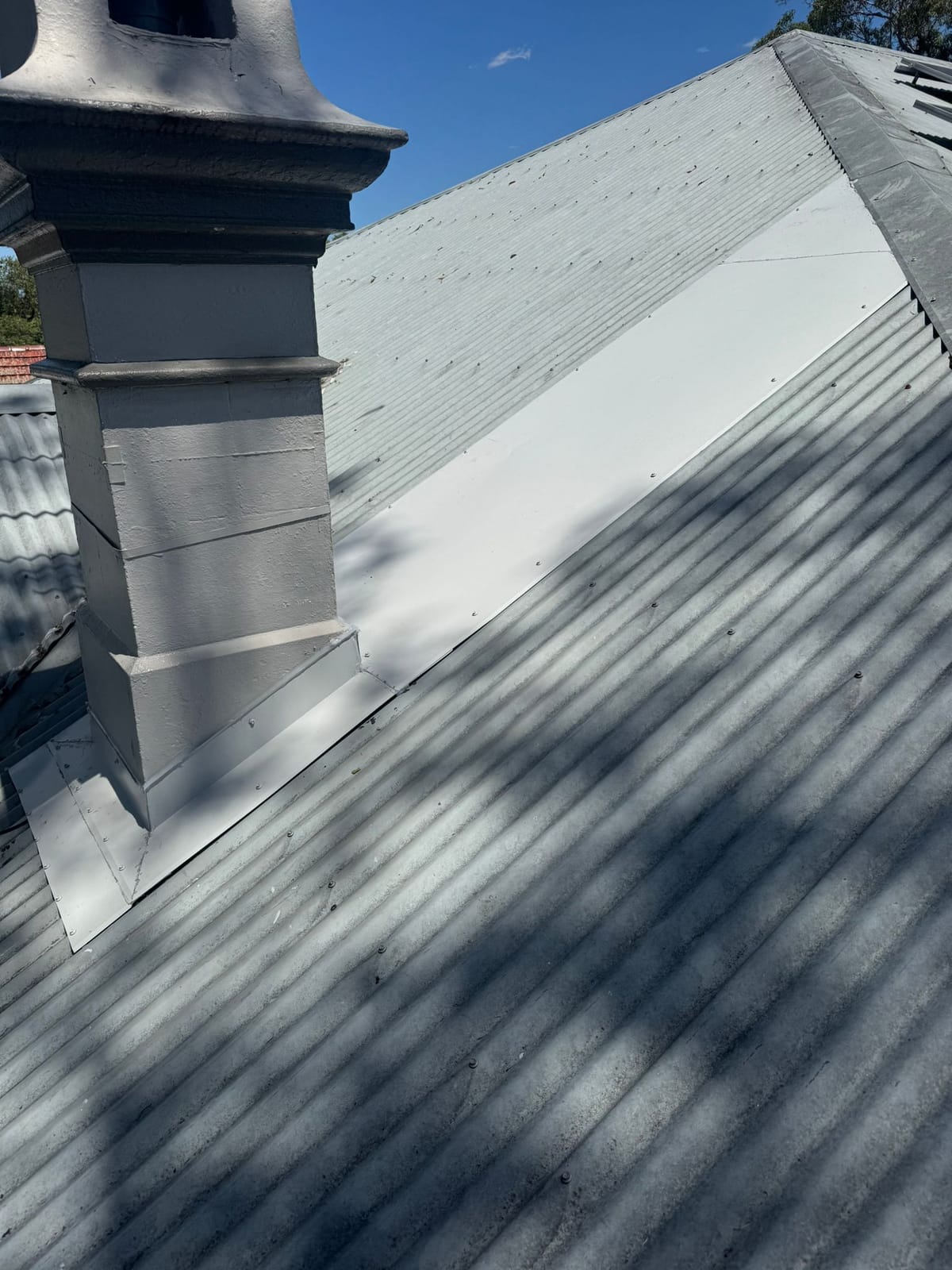
Flashing failure. The lead or Colorbond flashing where a roof meets a wall, chimney, skylight or parapet is the most common leak point on every roof type. The sealant perishes, the lead cracks along a fold, or the flashing was never chased into the brickwork. The fix is to lift it, re-dress or replace it, and chase the top edge into a mortar joint.
Cracked, slipped or porous tiles. A cracked tile only leaks in wind-driven rain. A slipped tile leaves a gap. Very old terracotta goes porous and weeps through the face. We replace with a matching profile, or the closest we can source.
Ridge capping and valley iron. Ridge mortar cracks and rain gets under the caps; valley iron rusts through where leaf litter has sat wet for years. Both are covered on the roof repairs page.
Box gutter overflow. Terraces in the Inner West and Eastern Suburbs, Art Deco blocks and most commercial roofs drain through box gutters hidden behind a parapet. When the outlet blocks or the gutter is too small for a Sydney downpour, water rises over the back edge and into the ceiling. It looks like a roof leak but it is a drainage problem: the fix is a clean, a bigger outlet, an overflow, or a new gutter sized to AS/NZS 3500.3.
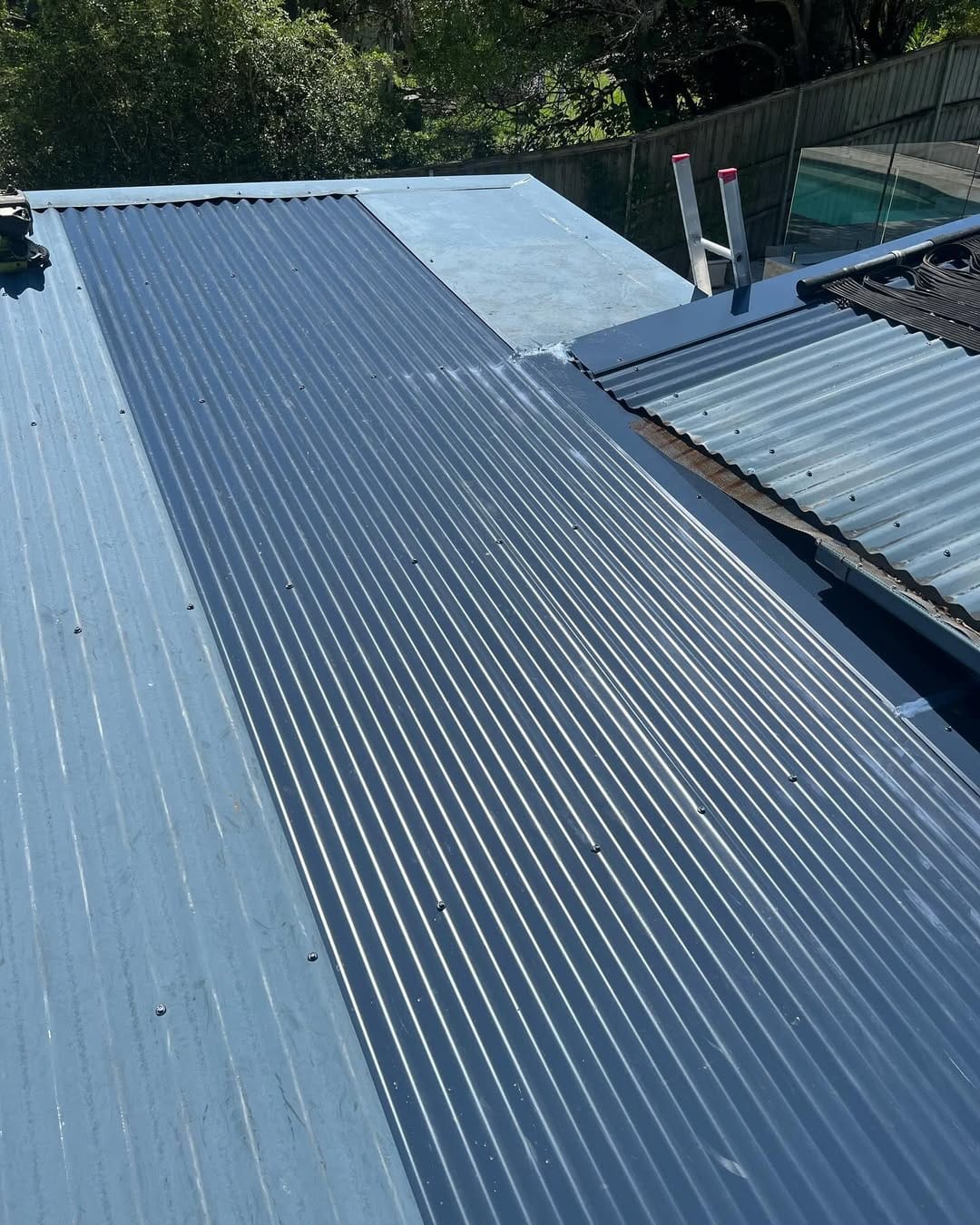
Metal roof fixings. On Colorbond and Zincalume the rubber washers under the screws perish after 15 to 25 years, faster on the coast, and every screw becomes a small hole. The repair is new fixings, or re-sheeting if the sheets have gone.
The repair, step by step
Once we know the entry point we fix that element rather than sealing over it. Silicone over a failed flashing buys one winter. Re-dressing it into the brick buys twenty.
- Set up access. Two-storey or steep roofs may need a roof ladder, edge protection or a small scaffold, which we price in the quote.
- Open up the failed element and check the sarking and timber underneath. Rotten battens are replaced.
- Repair or replace the element with like-for-like materials.
- Flood test the repair before packing up, so we leave knowing it holds rather than hoping.
- Clean up and send you before-and-after photos.
Most single-point leaks are a half-day job. Multiple entry points, box gutters and scaffold jobs run one to three days.
If it is raining now
Call rather than filling in a form. We do same-day make-safe across Sydney where availability permits: an emergency tarp battened down over the affected section, or a temporary flashing repair, so the ceiling stops getting worse. The permanent repair follows once the roof is dry. See emergency roof repairs.
Insurance claims
Sudden storm damage is usually claimable. Wear and tear, perished sealant and neglect usually are not, and insurers are strict about the difference. If you are making an insurance claim, we photograph the cause and the resulting water ingress, write up what failed and why, and give you a report in the format assessors expect. The small fee is waived if we do the repair. We do not pad the scope; assessors see through it and it puts the whole claim at risk.
When a leak repair is the wrong fix
- A tile roof with dozens of cracked tiles, porous faces and crumbling ridges is past spot repairs. It needs a roof restoration or, if the tiles are failing, a replacement.
- A metal roof with rust through the sheets, not just the screws, needs re-sheeting.
- A box gutter that overflows every big storm needs re-sizing, not another clean.
- A leak that only shows in heavy rain, with gutters full of leaves, is water backing up under the bottom row of tiles. Start with a gutter clean.
- Mould through a large area of ceiling and insulation is a remediation job as well as a roof job. We fix the roof; the plasterboard needs a builder.
Warranty
Every leak repair carries our 2-year workmanship warranty. If the same element leaks again inside two years, we come back at no charge. It covers the repair we did, not a new leak elsewhere on an old roof, which is why we tell you plainly if the rest of it is near the end.
Where we work
We are based in Gladesville and cover all nine regions of Sydney, from Ryde and the North Shore to the Inner West, the Hills, the Beaches, the East, the West and the Shire. To narrow it down before we arrive, read how to find a roof leak, then book a free on-site quote.