Skip to content
Sam's Roofing Experts

Roofers in The Hills District

Big two-storey homes, steep pitches and a generation of 1980s and 90s concrete tile roofs that are now due for serious work. Here is what we see on Hills District roofs, and what it usually takes to fix them.

NSW licence 502874C2-year workmanship warrantySame-day emergency attendance, where available4.9 on Google

The Hills Shire · Blacktown (north)

What Hills District roofs are actually like

The Hills is not one kind of housing. Baulkham Hills, Castle Hill and Winston Hills were built out through the 1970s, 80s and early 90s: brick homes, single storey to begin with and increasingly two-storey by the late 80s, almost all under concrete tile. Kellyville, Bella Vista and Glenhaven followed through the late 90s and 2000s with big project homes on 700 m² blocks, 300 m² or more of roof and pitches of 25 to 35 degrees. Rouse Hill, North Kellyville and Box Hill are newer again and often still inside the builder's warranty period. Out at Dural, Kenthurst and Annangrove it is acreage, long metal roofs and bushfire-rated construction.

The concrete tile wave

A concrete roof tile lasts roughly 40 to 50 years, but the bedding and pointing that hold the ridge caps on last about 20 to 30, and the coloured surface wears off well before the tile fails. That puts Hills roofs laid between 1980 and 1995 squarely in the window for attention now.

What we find on these roofs, in order of how often we see it:

  • Ridge capping with cracked or missing pointing over rigid mortar bedding that has let go
  • Tiles gone porous and chalky, growing moss and lichen on the southern side
  • Valley irons rusted through where leaf litter has sat wet for years
  • Sarking perished or never fitted, so rain driven under a tile reaches the ceiling
  • Cracked tiles from aerial and solar installers walking on them

The honest decision is between a full restoration and a tile-to-Colorbond replacement. If the tiles are still sound, restoration from $4,500 for a typical single-storey home buys another 10 to 15 years. A large two-storey Hills roof with a lot of ridge costs more than that starting price, and we will give you the number on site rather than guess it here.

Two storeys, steep pitch, scaffold

The thing that most changes a quote in the Hills is access. A 30-degree pitch on a two-storey home puts the gutter line six to seven metres off the ground, and under AS/NZS 1891 and SafeWork NSW rules we cannot work that edge from a ladder. Any job longer than a quick tile swap needs edge protection or scaffold, and it is a real line item.

Some quotes leave it out and add it later. Ours includes it, and on a small repair it pays to bundle several faults into one scaffolded visit.

New estates and builder defects

Kellyville, Rouse Hill and the estates north of them were built fast, much of the roofing by subcontractors paid per square. The faults that appear in the first two to six years are consistent: ridge capping bedded without flexible pointing, so it cracks in the first hot summer; apron and step flashings sealed to brickwork rather than cut in; box gutters on flat-roof sections undersized for AS/NZS 3500.3; and downpipes never connected to stormwater.

Under the NSW Home Building Act the builder's statutory warranty runs two years for most defects and six for major ones. Inside that window we document the fault with photos for your builder claim; outside it we rectify it and warrant our work for two years.

Acreage, bushfire and canopy

Dural, Glenhaven, Kenthurst and parts of West Pennant Hills sit against bushland and carry Bushfire Attack Level ratings under AS 3959. On a BAL-12.5 or higher block, gutters need ember-rated mesh, roof-to-wall junctions need sealing against ember entry, and any roof replacement must meet the construction standard for that level. Ember-rated gutter guard from $45 per lineal metre is the most cost-effective upgrade on an interface block.

West Pennant Hills, with Cumberland State Forest in the middle of it, has some of the heaviest canopy in Sydney. Gutters fill three or four times a year, valleys hold wet mulch, and that is where we find the rusted valley irons and rotted fascia. Long metal roofs on acreage have their own problem: 12 to 18 metre sheets expand enough to work fixings loose, and the rear pitch nobody looks at is where rust starts.

Weather from the west

Hills storms come in from the west and south-west with nothing to slow them down, and hail cells track through here far more often than the coast. After hail we see cracked concrete tiles by the dozen, dented Colorbond and split pergola sheeting. Photograph the damage before anything is touched and read our guide on what to do in the first 24 hours before you call your insurer.

Council and approvals

Most of the region is The Hills Shire Council, with the western edge of Rouse Hill and Kellyville Ridge under Blacktown. Like-for-like repairs, restoration and re-roofing in the same material need no approval. Tile to Colorbond is generally exempt development within the height and colour rules, but on a BAL-rated block or in the heritage pockets around Castle Hill and Dural village we will tell you when a call to council is needed.

Getting to you

We are based in Gladesville and the Hills is 25 to 35 minutes up the M2, a little more to Dural or Rouse Hill in peak traffic. We are not a Castle Hill business, but we are in the Hills most weeks and the travel does not change the price. Quotes are free, written and done on the roof. We attend emergency make-safes across the region the same day where availability permits, and for a normal repair or restoration a written quote usually follows within 24 to 48 hours of the visit.

If you would like us to look at your roof, request a free on-site quote and tell us the suburb and roughly when the house was built. That alone tells us most of what we need to know before we arrive.
Suburbs we cover in The Hills District

What we see on the roofs in each suburb, and, as jobs are completed, real photographed work from that street or the next one.

Castle Hill is the Hills District in concentrate: large two-storey brick homes from the late 80s through the 2000s, concrete tile at 25 to 35 degrees, and gutter lines high enough that almost every job needs scaffold or edge protection. The older streets around the town centre and along Old Northern Road are hitting 35 to 40 years and are prime restoration candidates: ridge pointing gone, tiles porous, valleys rusting. The newer homes toward Castle Hill Heritage Park tend to need flashing and box gutter work more than tile work. We price scaffold into every Castle Hill quote up front and, where several small faults exist, we bundle them into one scaffolded visit so the access cost is only paid once.

Baulkham Hills was built out earlier than Castle Hill, and the 1980s and early 90s concrete tile roofs here are now 30 to 40 years old, which is exactly where restoration makes sense and delaying starts to cost money. The pattern is familiar: ridge caps on rigid mortar that has cracked and let go, tiles that have lost their colour layer and gone chalky, moss on the southern pitch, and a valley iron or two that has rusted through under years of leaf litter. Many of these homes are single storey or split level, so access is easier and a full restoration usually sits near the three-bedroom starting price, from $4,500. Where the tiles are past saving, we will say so and price a Colorbond conversion alongside it.

Kellyville is mostly newer housing, from the late 90s project homes on big blocks through to the current estates at North Kellyville, and the roofing work here is about builder defects rather than old age. We see ridge capping that cracked in its first few summers because it was bedded without flexible pointing, apron flashings sealed rather than cut into the brickwork, undersized box gutters on the flat-roof sections of modern designs, and downpipes that stop short of the stormwater connection. If your home is inside the builder's statutory warranty period we document the fault with photos so you can pursue the builder; if not, we rectify it to AS 2050 and AS/NZS 3500.3 and warrant the work ourselves for two years.

Rouse Hill and Box Hill are the newest housing in the region, much of it under six years old, so the faults we see are almost all builder defects: cracked ridge pointing, poorly dressed flashings around the two-storey wall junctions and box gutters that overflow in the first proper storm. We write the defect up with photos for your builder claim, and rectify it when the builder will not.

Dural is acreage and bushland, with long Colorbond roofs, farm sheds and BAL-rated homes under AS 3959. Work here is about ember protection for gutters and roof junctions, long metal runs where thermal movement loosens fixings, and rear pitches nobody has inspected in years. Ember-rated gutter mesh is the single most useful upgrade on a Dural block.

West Pennant Hills has the heaviest tree canopy in the Hills, with Cumberland State Forest at its centre, and the roofing story is leaves: gutters filling several times a year, valleys holding wet mulch until the iron rusts through, and fascia rotting behind overflowing gutters. Regular gutter cleaning and a good quality gutter guard save most of these homes a repair every few years.

Also covering Winston Hills, Glenhaven and surrounding suburbs.

Our work across Sydney

Region-tagged photos for The Hills District will appear here as jobs are completed. These are from recent jobs across Sydney.

All recent work →
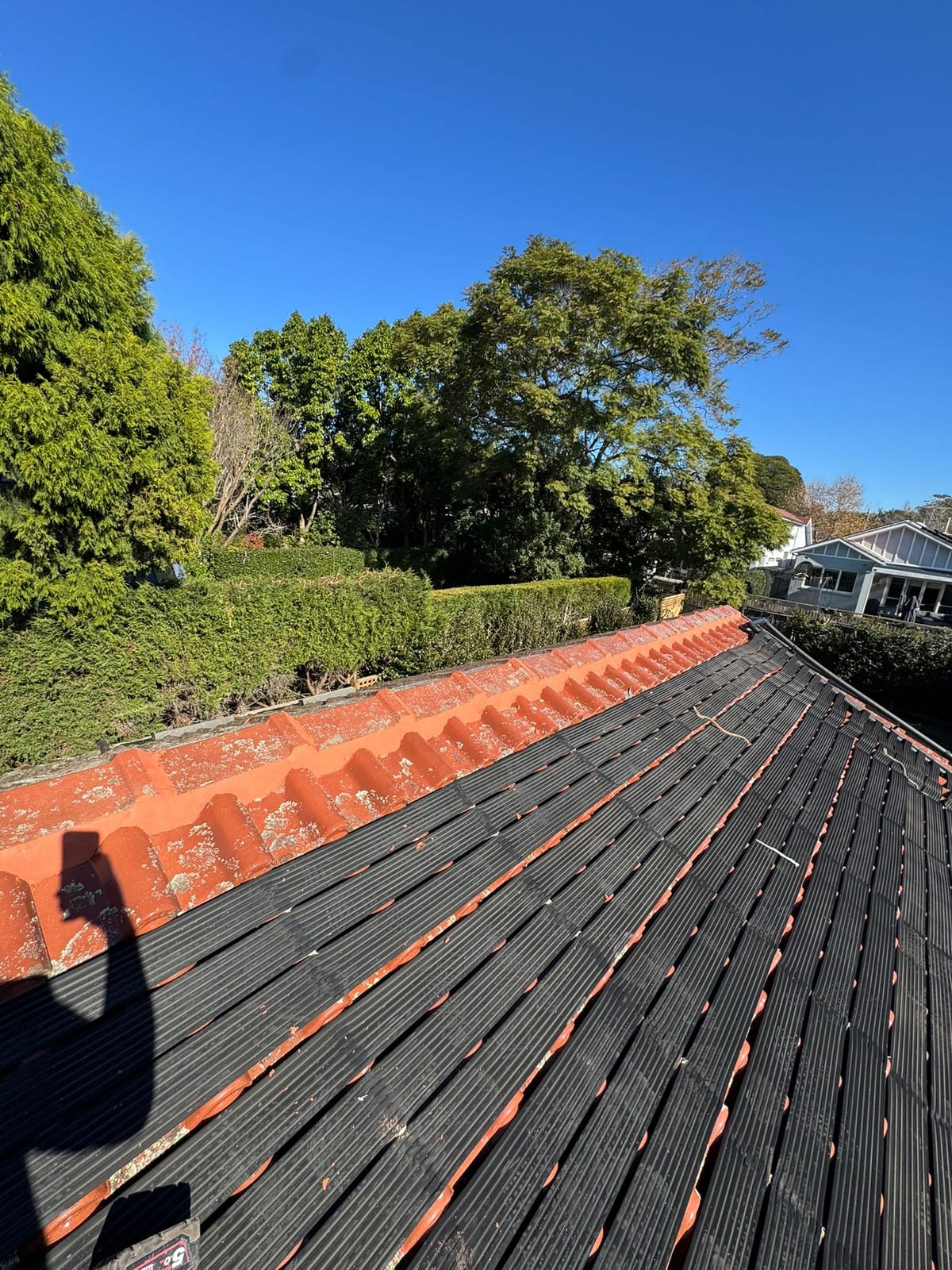
  • Freshly bedded and pointed ridge capping on a tiled roof with the garden below
    Freshly bedded and pointed ridge capping on a tiled roof with the garden below
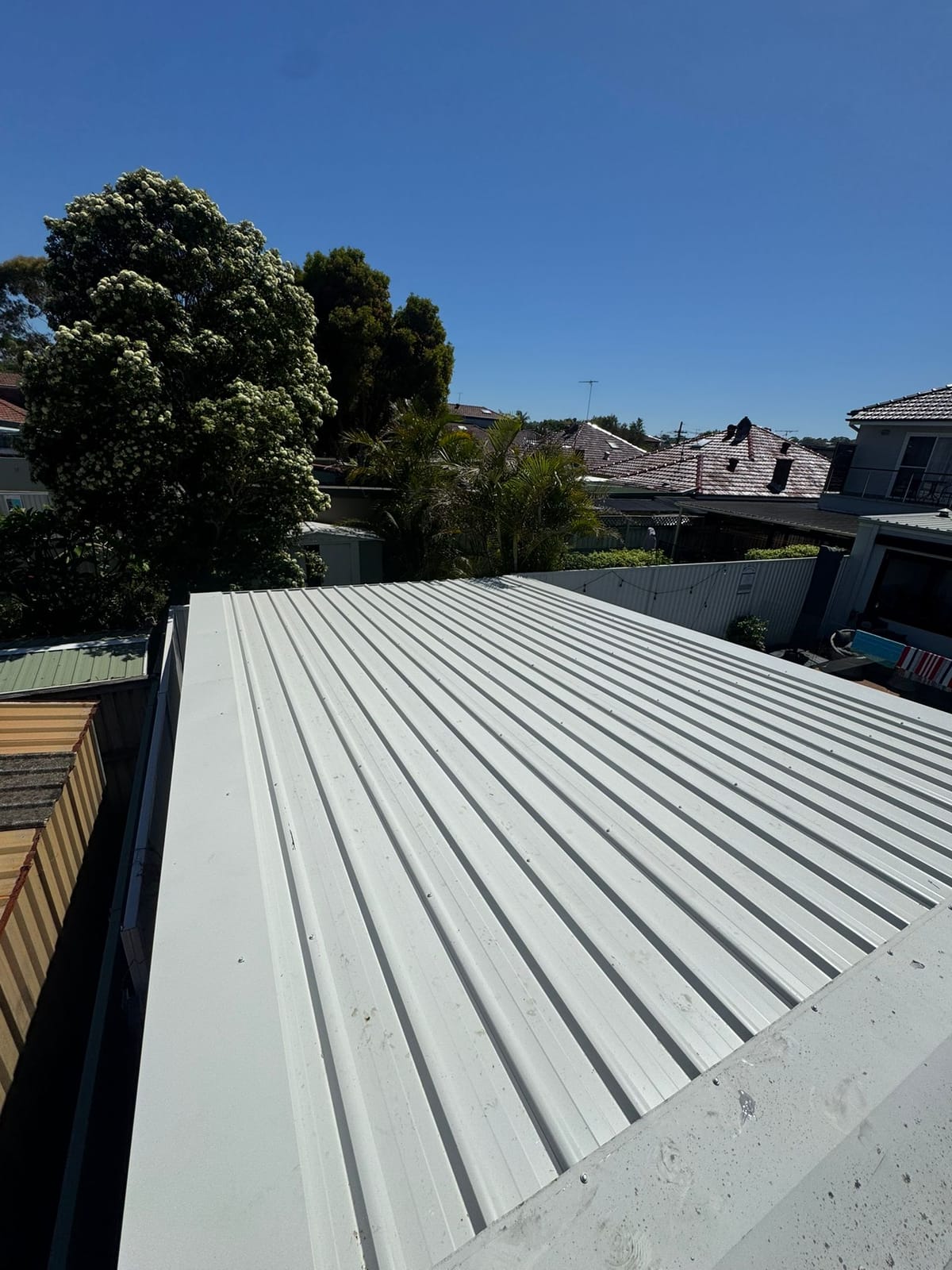
  • A new grey Colorbond roof over a house, neighbouring roofs behind
    A new grey Colorbond roof over a house, neighbouring roofs behind
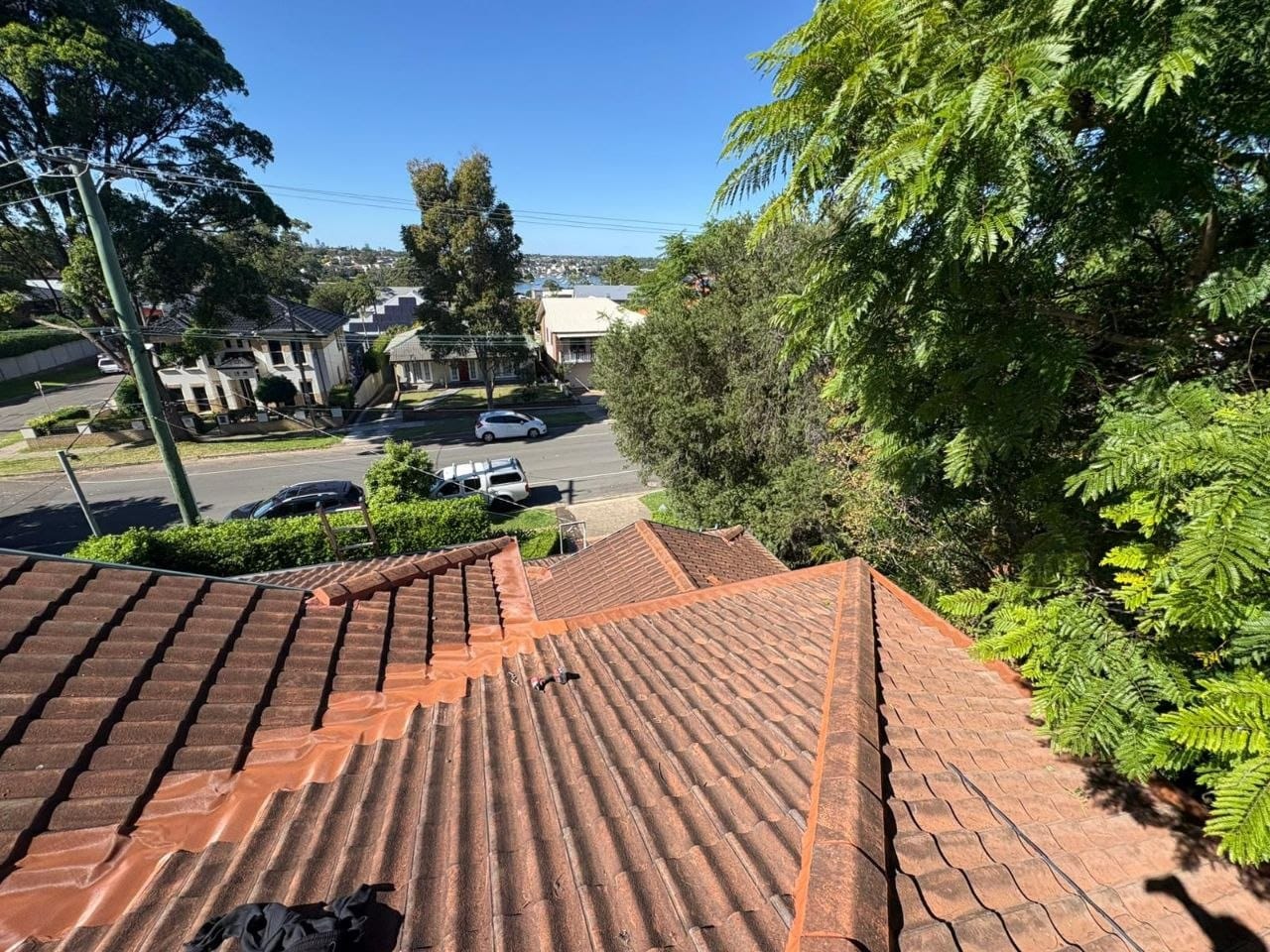
  • A restored terracotta tile roof with the suburb and trees beyond
    A restored terracotta tile roof with the suburb and trees beyond
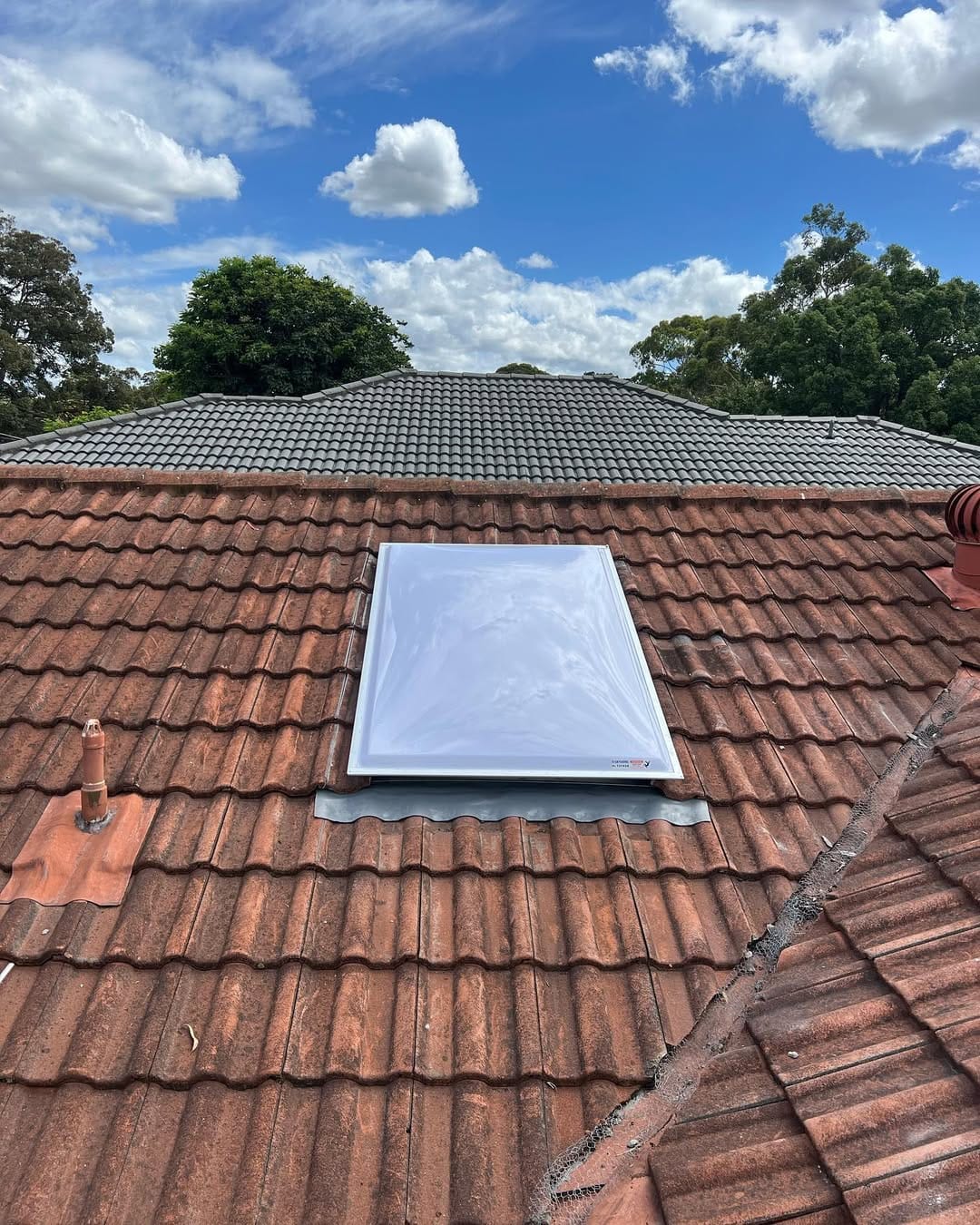
  • A new skylight installed in a tiled roof, flashed and sealed on all sides
    A new skylight installed in a tiled roof, flashed and sealed on all sides

Roofing in The Hills District: common questions

Do you charge extra to travel to the Hills District from Gladesville?

No. We are 25 to 35 minutes from most of the Hills via the M2 and we treat it as a normal service area, so the travel does not change the price. The quote is free and done on site, and we schedule Hills jobs together so a roofer is in the area most weeks. The only thing that affects price is the roof itself: size, pitch, storey and what needs doing.

My 1980s concrete tile roof looks tired. Does it need replacing or restoring?

Usually restoring. Concrete tiles from the 80s and 90s typically still have decades of structural life left; it is the pointing, bedding, valleys and surface coating that have worn out. A restoration addresses all of those for a fraction of a re-roof. Replacement makes sense when a large number of tiles are cracked or delaminating, the profile is discontinued and cannot be matched, or you want the lighter weight and lower maintenance of Colorbond. We inspect first and quote both options where both are realistic.

Why does the quote for my two-storey Castle Hill home include scaffold?

Because on a two-storey home with a 30-degree pitch, the gutter line is six to seven metres off the ground and SafeWork NSW rules under AS/NZS 1891 do not allow us to work that edge from a ladder. Scaffold or edge protection is a real cost, and we put it in the written quote up front rather than adding it on the day. If you have several small faults, doing them in one scaffolded visit means you only pay for access once.

My Kellyville home is four years old and the roof already leaks. Is that normal?

Sadly it is common. Fast-built estate housing often has ridge capping without flexible pointing, flashings sealed to brickwork rather than cut in, and box gutters undersized for a heavy storm. Under the NSW Home Building Act the builder's statutory warranty covers most defects for two years and major defects for six. We can inspect, document the fault with photos and give you a written report to take to the builder, or rectify it ourselves if the builder will not.

We are in a bushfire zone at Dural. What does that change about roof work?

On a BAL-rated block under AS 3959, gutters should have ember-rated mesh rather than standard aluminium, roof-to-wall junctions and vents need to be sealed against ember entry, and any full roof replacement must meet the construction requirements for your BAL level. It also changes material choice; Colorbond with sealed junctions performs well. We fit ember-rated gutter guard from $45 per lineal metre and can advise on the rest during a free inspection.

Book a free roof inspection in The Hills District

We come out, get on the roof, photograph what we find and put every line in writing. No obligation and no sales call afterwards.

Call 0404 839 843Request a quote