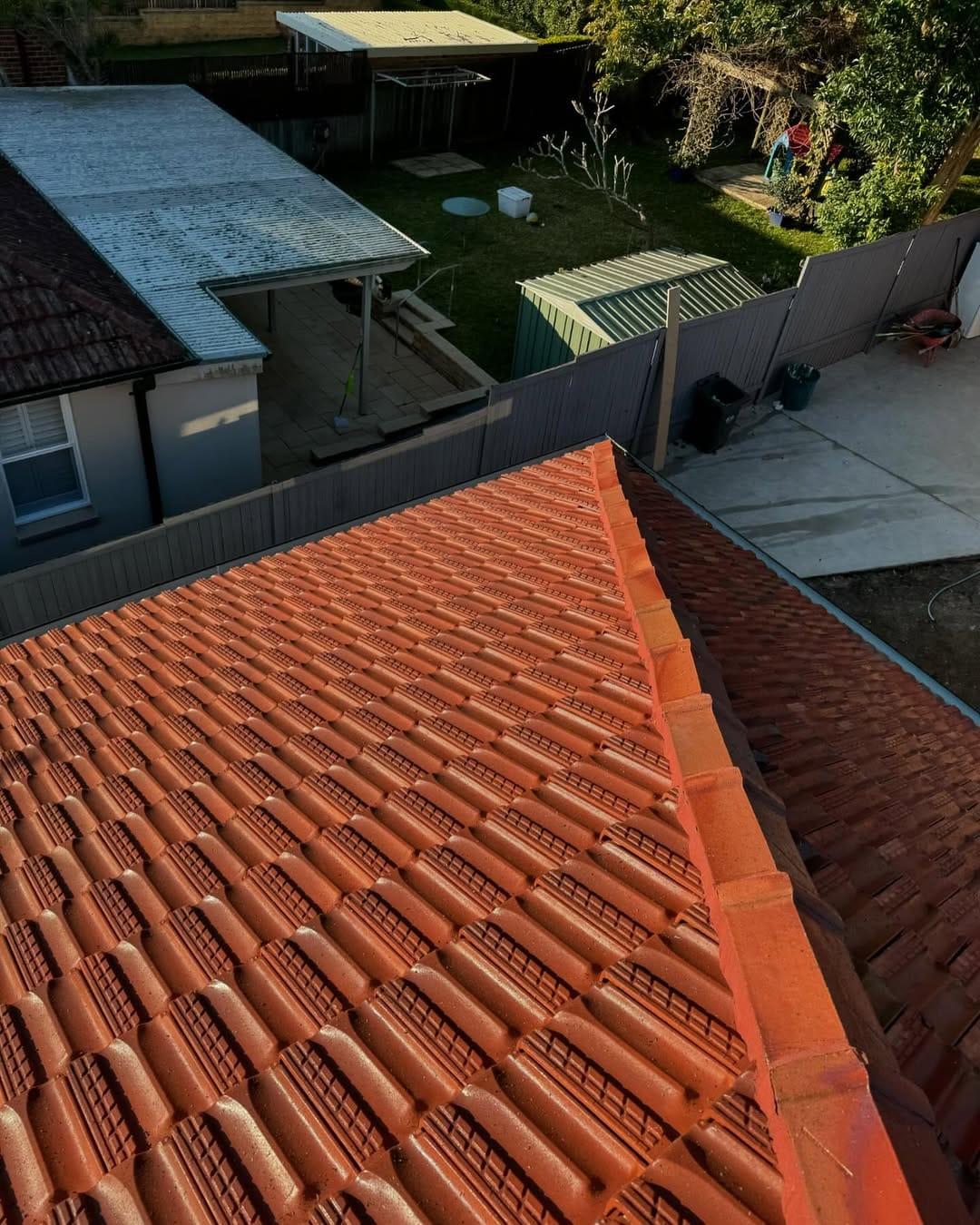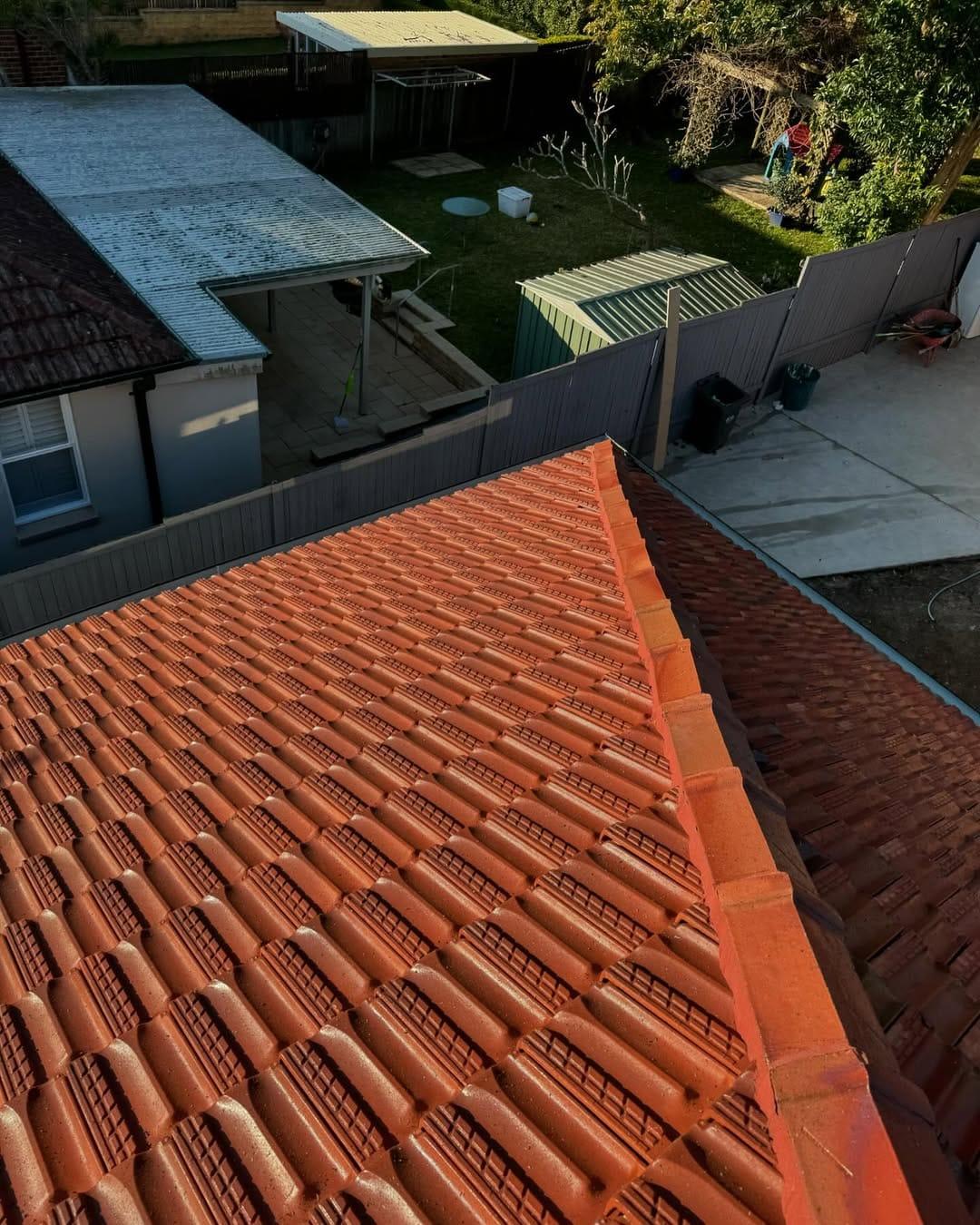
If there is one part of Sydney where roof restoration is the right answer more often than not, it is the Hills. The process is the same as anywhere: clean, repair, re-bed and re-point, prime, two coats of membrane. What is different in the Hills District is the age profile of the housing, the sheer size of the roofs, and the heat and storms they face from the west.
Why the Hills is restoration country right now
Baulkham Hills, Winston Hills and the older parts of Castle Hill were tiled in concrete between roughly 1978 and 1995. A concrete tile is good for 40 to 50 years structurally, but the things around it wear out on a shorter clock: the coloured surface layer goes chalky after 20 to 25 years, rigid mortar bedding under the ridge caps lets go at 20 to 30, and the original pointing is long gone. So a 1988 roof today is structurally fine and cosmetically and functionally worn out at the same time. That is precisely the roof restoration exists for.
The tell-tale signs on a Hills roof:
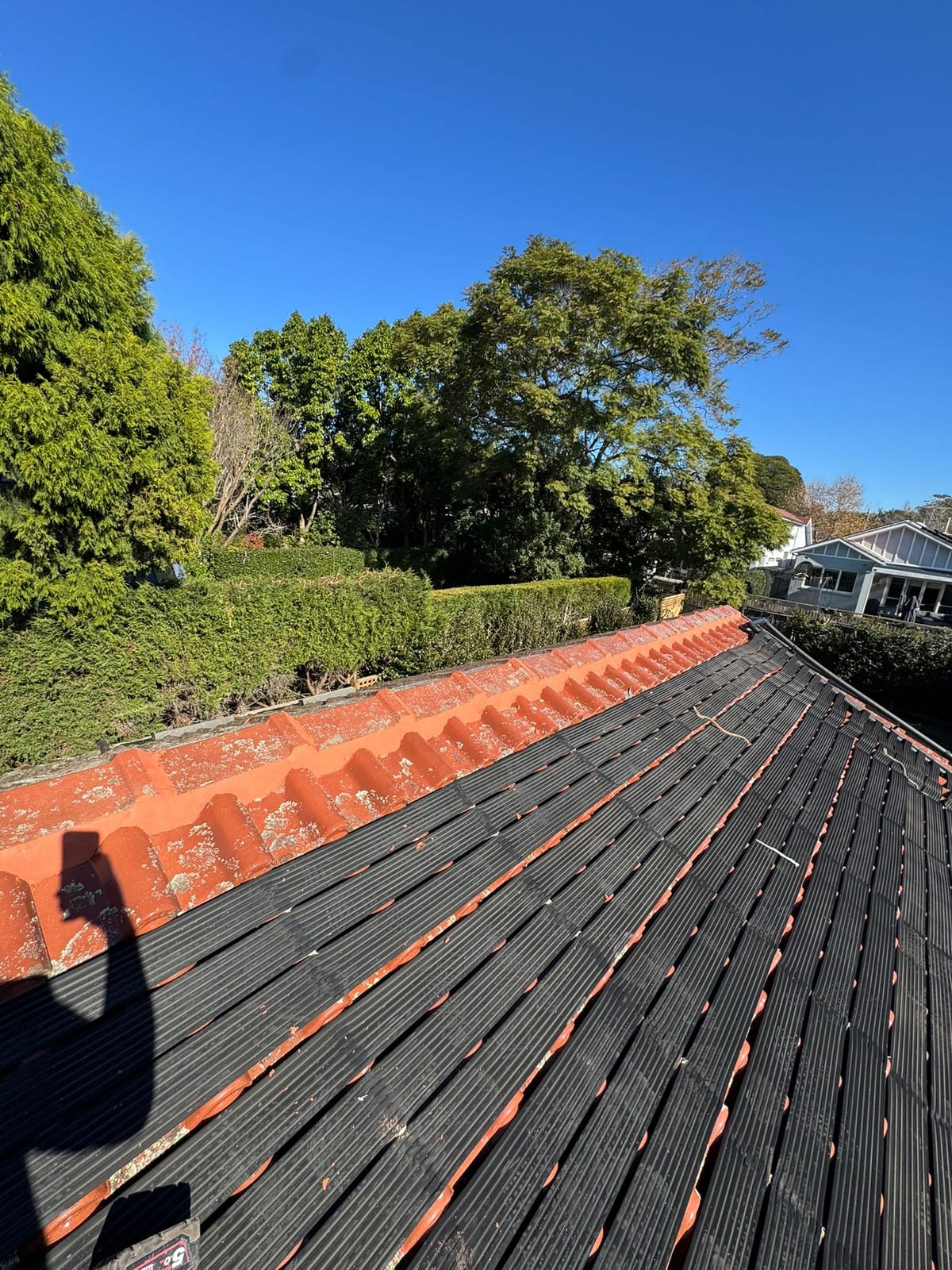
- Tiles that have gone from terracotta-red or slate-grey to a washed-out pink or pale grey, with moss and lichen on the south-facing pitches
- Ridge capping with cracked pointing and visible gaps, sometimes a cap missing altogether after a westerly
- Water marks on the ceiling under a valley, where the valley iron has rusted through under years of leaf litter
- Tiles that soak up water and take days to dry after rain, a sign the surface has gone porous
What is different about restoring a Hills roof
Size is the first thing. A single-storey Baulkham Hills home might have 180 to 220 m² of roof and 40 metres of ridge. A two-storey Castle Hill or Glenhaven home from the 90s can have 300 to 350 m² of roof, 80 metres of ridge and several hips and valleys, which roughly doubles the cleaning, the bedding, the pointing and the coating.
Height is the second. On a two-storey roof at 30 degrees we scaffold the perimeter or fit edge protection before anyone goes up, and that is included in our written price, not added later. It also makes the job take longer: a large two-storey restoration is typically four to six working days, weather permitting, against two to three for a single-storey home.
Heat is the third. West-facing pitches in the Hills take the full afternoon sun through summer, and roof cavity temperatures on a dark concrete tile roof go well past 60 degrees. We steer most Hills clients toward a lighter colour and a heat-reflective membrane, which makes a real difference to the upstairs bedrooms on a two-storey home. Colour choice is yours; we will show you the Colorbond-matched range and tell you honestly which colours hold up best.
Cost on a Hills roof
| Roof | Typical restoration (2026, inc. GST) |
|---|---|
| Single storey, ~180–220 m², Baulkham Hills or Winston Hills | From $4,500 |
| Two storey, 250–350 m², Castle Hill, Kellyville, Glenhaven | Above the single-storey starting price; priced on ridge length, pitch and scaffold |
| Ridge re-bed and re-point only, if the tiles are still sound and coloured | From $900 (about 20 lm of ridge) |
The number that moves a Hills quote most is ridge length, then scaffold, then how many tiles need replacing. The Sydney roof restoration cost guide walks through each variable. Every quote we give is free, in writing, and based on a walk over the actual roof.
When we will tell you not to restore
Restoration is a coating on top of a repaired roof, and it only makes sense if the tiles underneath have life in them. On a small number of Hills roofs, usually the earliest late-70s concrete, the tiles have started to delaminate and crumble at the edges. Coating those is throwing money away, and we will say so and price a tile-to-Colorbond replacement instead. The restore or replace guide lays out the decision if you want to think it through before we visit.
Booking a Hills restoration
We travel up the M2 from Gladesville, 25 to 35 minutes to most Hills suburbs. Spring and autumn are the best times to restore, when the coating cures well and the summer storm season has not started. If you would like a written price, request a free on-site quote and tell us the suburb, the storeys and roughly when the house was built.