Skip to content
Sam's Roofing Experts

Roofers in Western Sydney & Parramatta

Hail, wind squalls, 45-degree summers and tens of thousands of concrete tile roofs built between 1970 and 1995. Western Sydney is where Sydney's weather does its damage, and we are out here for most of the storm season.

NSW licence 502874C2-year workmanship warrantySame-day emergency attendance, where available4.9 on Google

City of Parramatta · Blacktown · Cumberland · Penrith

A different set of problems to the north shore

Western Sydney is the biggest housing market we work in and the one where the weather does the most damage. From Gladesville we come out along the M2 or the M4 and are usually on site in 20 to 40 minutes, Parramatta at the near end and Penrith at the far end. It is not our home turf the way Ryde is, and we say so. What we bring is four licensed roofers who spend a large part of every summer out here because this is where the storms land.

The hail and storm corridor

Sydney's worst hail tends to track across the west and north-west before it reaches the coast. Blacktown, Seven Hills, Penrith and the suburbs between them cop large hail and wind squalls most summers, and a bad event puts thousands of roofs on the insurers' books in a single afternoon.

Hail does three things to a tile roof. It cracks tiles outright, usually on the slope facing the storm and along the ridge line. It shatters the brittle mortar bedding under ridge caps that has been drying out for thirty years. And it breaks polycarbonate and fibreglass sheeting on patios and carports, which is often the first thing a homeowner notices. On metal roofs it dents the pans and can crack the paint film, cosmetic until the steel starts to rust.

What we do after a storm is the same every time: a make-safe with tarps if water is coming in, the same day where availability permits, then a written damage report with photos that gives your insurer's assessor what they need. We keep the report and the repair as separate decisions. If the cash settlement your insurer offers does not cover the real scope, you need to know that before you accept it. Our guide to the first 24 hours after storm damage sets out the order to do things in.

Estates from the 1970s, 80s and 90s

The other story out here is age. Blacktown, Seven Hills, Merrylands, the older streets of Penrith and the estates between them were built in concrete tile, and the bulk of those roofs are now 30 to 50 years old. The tiles themselves are usually fine. What has gone is everything around them: the mortar bedding under the ridges, the pointing on top of it, the valley irons, the lead and galvanised flashings around vents and chimneys, and the sarking, if any was installed in the first place.

That is the point at which restoration makes sense and replacement usually does not. A full restoration on a 200 m² single-storey home in the west starts from $4,500: high-pressure clean, re-bed and re-point every ridge, replace cracked tiles, then primer and two membrane coats. The restoration cost breakdown lists what moves the price. We recommend against restoring when the tiles are delaminating, the battens are rotten, or there is asbestos in the eaves that a licensed removalist will have to deal with anyway.

Penrith heat

Penrith has recorded close to 49°C and regularly runs 5 to 8 degrees hotter than the coast through summer. A dark concrete tile roof sits well above 70°C on those days, and the roof cavity under it becomes the main heat load on your air conditioning.

Two things help. A heat-reflective membrane in a light colour on a restored or painted roof drops the surface temperature substantially; the gap between a dark and a light coating is measurable, not marketing. Ventilation is the other half: a whirlybird or solar roof vent to move hot air out and eave vents to let cooler air in. We fit both, and we will say when a whirlybird alone will not help because the eaves are sealed.

Parramatta: commercial, strata and heritage pockets

Parramatta is the one part of the west where the job is as likely to be a box gutter on a strata block or a re-sheet on a warehouse as a tile roof on a house. Strata work runs through the committee and the managing agent, so we write condition reports and scopes that can be tabled at a meeting and priced against a capital works fund. Commercial jobs at Parramatta, Auburn and the Silverwater industrial strip need a SWMS, anchor points to AS/NZS 1891 and often after-hours access. Parts of Harris Park and North Parramatta sit in heritage conservation areas, so check with council before changing a roof profile or material there.

Councils and approvals

We work across City of Parramatta, Blacktown, Cumberland and Penrith councils. Like-for-like repair and restoration needs no approval. Changing material, for example tile to Colorbond, or altering the roof form can trigger a complying development check or a DA depending on the council and zoning. Any roof work over $5,000 must be done by a licensed contractor under NSW Fair Trading rules, and work over $20,000 needs Home Building Compensation cover. Check any licence at verify.licence.nsw.gov.au before you sign anything.

The faults we see most out here

  • Cracked and displaced ridge capping after hail and wind, on nearly every 1970s to 90s tile roof we inspect.
  • Rusted valley irons on the older tile stock, leaking into the ceiling at the internal corners of the house.
  • Storm-driven leaks that only appear when the rain comes from one direction, usually the south-west.
  • Broken polycarbonate on patios and carports after hail.
  • Blocked gutters and overflowing box gutters on the 1970s walk-ups around Parramatta, Merrylands and Auburn.
  • Heat-stressed dark roofs at Penrith where a reflective coating would pay for itself in power bills.

Getting a quote

Quotes are free, written and done on site. For insurance work the damage report fee is usually waived when we do the repair. Call 0404 839 843 or request a quote online and we will come out along the M4.
Suburbs we cover in Western Sydney & Parramatta

What we see on the roofs in each suburb, and, as jobs are completed, real photographed work from that street or the next one.

Parramatta is the only suburb in the west where half our calls are not about a house. Strata blocks along the river and around the CBD, 1970s brick walk-ups with box gutters, retail strips with parapet walls, and warehouses on the Silverwater side all sit alongside the older tile streets of North Parramatta and Harris Park. Strata jobs need a scope the committee can vote on, so we write one. The storm corridor runs straight over the top of Parramatta, and after a hail event the strata blocks are usually the last to be looked at because nobody lives directly under the roof. If a box gutter has been overflowing into a top-floor unit, that is the job to book first, before the insurer's deadline for lodging passes.

Blacktown is estate country. Street after street of three-bedroom brick veneer under concrete tile, built from the early 1970s through the 90s, and almost all of it now at the age where the ridge mortar has cracked, the valley irons are rusting and the original pointing has fallen out. Add the hail. Blacktown sits under the track of most of Sydney's big hail events, so a lot of the work here is insurance-driven: assess the damage, write the report, replace cracked tiles, re-bed and re-point ridges, and often talk the homeowner through why the settlement offer needs to cover more than the visible broken tiles. When the tiles are sound, a restoration from $3,800 is the sensible call. When they are delaminating, it is not, and we will tell you.

Penrith is the hottest part of Sydney and the roofs show it. Dark concrete tiles bake all summer, older coatings chalk and fade faster than anywhere else we work, and the roof cavity fights the air conditioning until midnight. Our first question on a Penrith roof is colour: a light heat-reflective membrane on a restored or painted roof makes a real difference to the surface temperature and, in a house with little ceiling insulation, to the rooms underneath. Ventilation is the second question, a whirlybird or solar vent paired with eave vents rather than on its own. Penrith also gets the tail of the hail corridor, so cracked tiles and lifted ridge caps are common after a storm. It is the far end of our run, about 40 minutes, so we schedule Penrith work in blocks.

Seven Hills is post-war tile, mostly 1960s and 70s concrete, on modest blocks with easy single-storey access. It sits squarely in the hail path, and the storm-damage claims we see here follow a pattern: cracked tiles on the windward slope, ridge mortar shattered, a leak that shows up weeks later when the next rain comes. We write the report, do the make-safe, and repair once the scope is agreed.

Merrylands has some of the densest concrete tile stock in Cumberland, much of it on 1960s and 70s homes that have never had the ridges touched. Ridge capping failure is the number one fault: bedding cracked through, pointing gone, caps shifting in wind. A whole-roof re-bed and re-point starts from $900 on a small roof with about 20 lineal metres of ridge and stops the leaks before the ceiling stains start.

Auburn is where the industrial work and the residential work sit side by side. Warehouse re-sheeting, box gutter rectification and safety anchor installs along the Silverwater side, and post-war tile and older metal roofs on the residential streets. Commercial jobs get a SWMS and after-hours scheduling where the tenant needs it; residential jobs get the same tile and ridge repairs as the rest of the west.

Also covering Westmead, Granville and surrounding suburbs.

Our work across Sydney

Region-tagged photos for Western Sydney & Parramatta will appear here as jobs are completed. These are from recent jobs across Sydney.

All recent work →
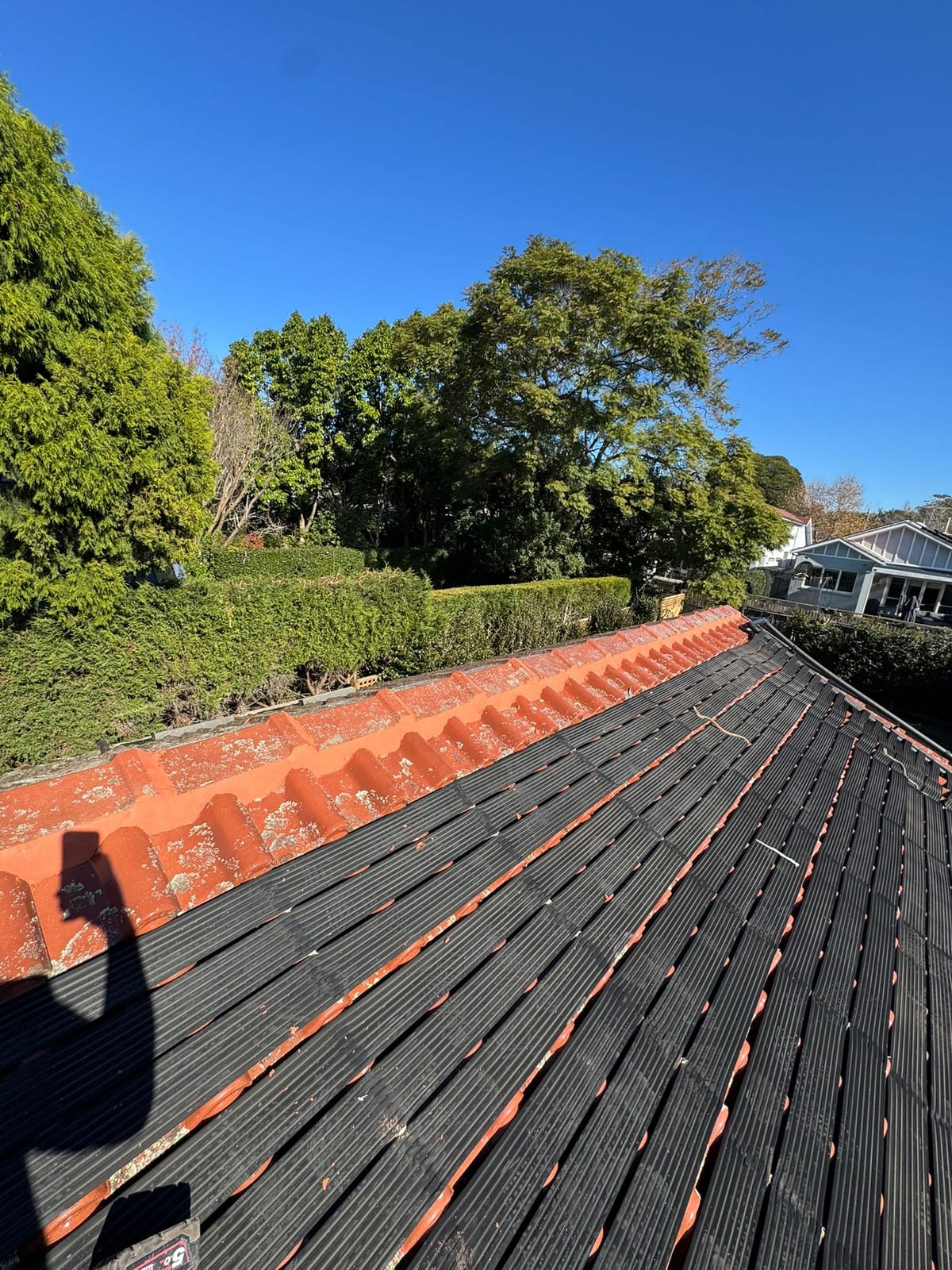
  • Freshly bedded and pointed ridge capping on a tiled roof with the garden below
    Freshly bedded and pointed ridge capping on a tiled roof with the garden below
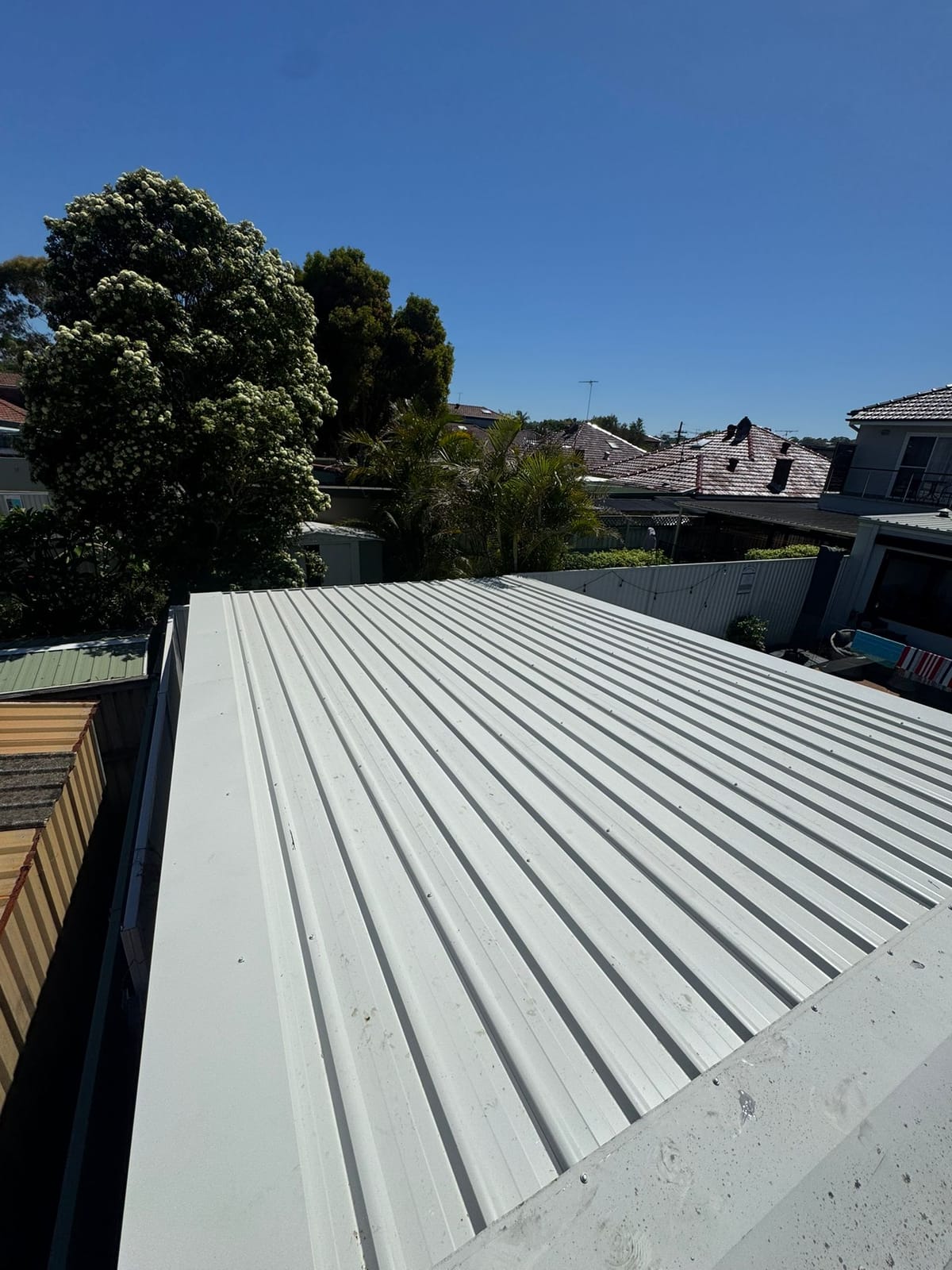
  • A new grey Colorbond roof over a house, neighbouring roofs behind
    A new grey Colorbond roof over a house, neighbouring roofs behind
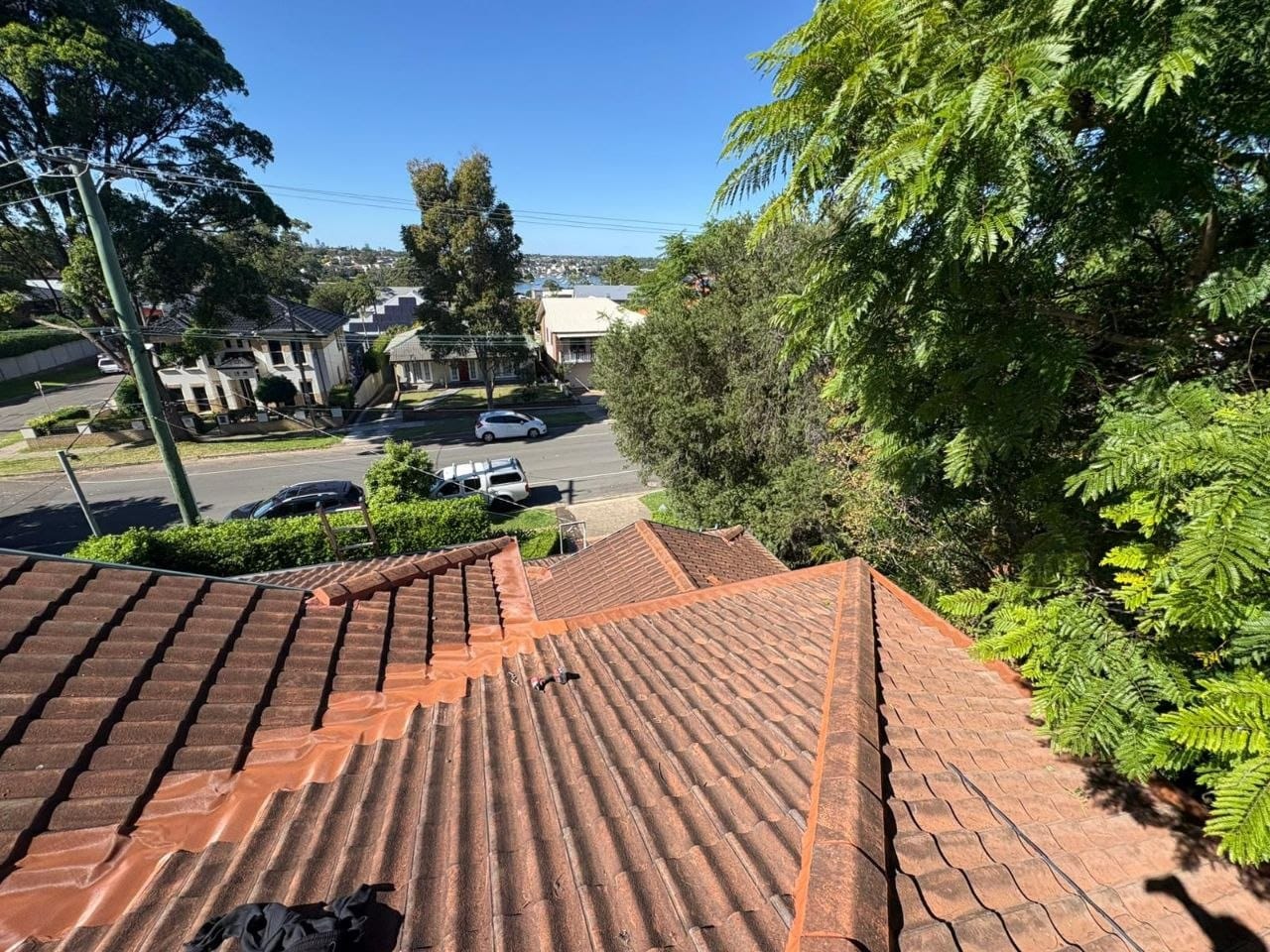
  • A restored terracotta tile roof with the suburb and trees beyond
    A restored terracotta tile roof with the suburb and trees beyond
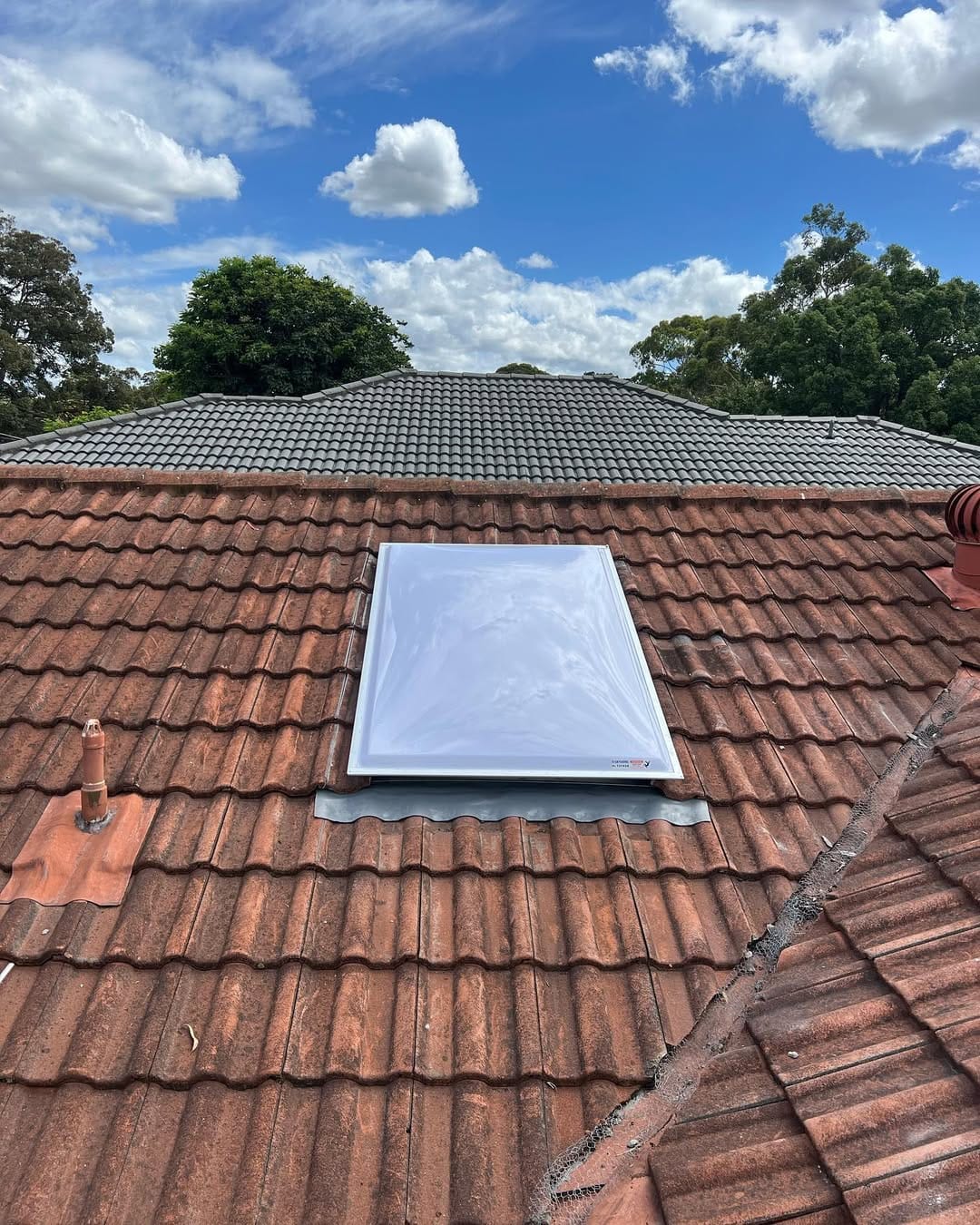
  • A new skylight installed in a tiled roof, flashed and sealed on all sides
    A new skylight installed in a tiled roof, flashed and sealed on all sides

Roofing in Western Sydney & Parramatta: common questions

Do you come out to Penrith, or is that too far from Gladesville?

We do. Penrith is the far end of our western run, around 40 minutes along the M4 on a normal day, and Parramatta or Blacktown is closer to 20 to 30. Because of the distance we usually schedule Penrith quotes and jobs in blocks rather than as single visits, which keeps the price the same as anywhere else in Sydney. Emergency make-safe after a storm is the exception: we attend the same day where availability permits rather than waiting for the next block.

My roof was hit by hail. Should I call you or my insurer first?

Call your insurer to lodge the claim, then call us. If water is coming in we will make safe the same day where availability permits, and the insurer will expect that. We then write a damage report with photos that matches what the assessor needs, and we keep that separate from the repair quote so you can see whether the settlement offer actually covers the scope. Most insurers accept our report; the fee is usually waived if we do the repair.

Is a 1980s concrete tile roof in Blacktown worth restoring, or should I replace it?

Usually restore. Concrete tiles from that era are mostly sound at 40 years; what fails is the ridge bedding, pointing, valley irons and flashings, and a restoration replaces all of that plus the coating, from $4,500 on a typical single-storey home. We would steer you to replacement if the tiles are delaminating, the battens are rotten, or you want to go to Colorbond for heat and weight reasons. We will tell you which on site.

Will a light-coloured roof coating really make a difference in Penrith heat?

Yes, and it is measurable. A dark tile roof can sit above 70°C on a 40-degree day; a light heat-reflective membrane brings the surface temperature down substantially and reduces the heat load on the ceiling and the air conditioning. It works best with adequate roof ventilation and some ceiling insulation. On its own it will not turn an uninsulated house into a cool one, but it is the cheapest of the three fixes and the one that happens as part of a restoration anyway.

Do I need council approval to change my tile roof to Colorbond in Blacktown or Cumberland?

Sometimes. Like-for-like repair and restoration never needs approval. A change of material can be complying development or need a DA depending on the council, the zoning and whether the house is in a heritage conservation area, which applies to parts of Parramatta. We check before we quote and tell you what the council requires. Whatever the answer, the work itself needs a NSW Fair Trading licensed contractor over $5,000 and HBC cover over $20,000.

Book a free roof inspection in Western Sydney & Parramatta

We come out, get on the roof, photograph what we find and put every line in writing. No obligation and no sales call afterwards.

Call 0404 839 843Request a quote