Storm-driven leaks
Most of the leak detection and repair work we do in Western Sydney and Parramatta starts with a storm and finishes weeks later. A hailstorm cracks a tile or shatters the mortar under a ridge cap. Nothing leaks that day, because the rain that comes with the hail is over quickly. Then a slow south-westerly front arrives in the following month, drives rain uphill under the caps and through the hairline cracks, and the ceiling stain appears in the hallway. The homeowner links it to the recent rain, not the hail, and the insurance claim window has narrowed.
So the first question we ask on a western Sydney leak is when the last hail was. If it was within a couple of months, we inspect for hail damage and document it, because the repair may be claimable as storm damage rather than paid out of pocket.
Finding the entry point on a tile roof
Water on a tile roof travels. It enters at a cracked tile or a lifted cap near the ridge, runs down the sarking or along the top of the battens, and drops through at the first obstruction, which might be two metres downhill from where it got in. On a 1970s estate roof with no sarking it drops straight through, but often at a batten, so the stain still sits a metre or more from the entry point.
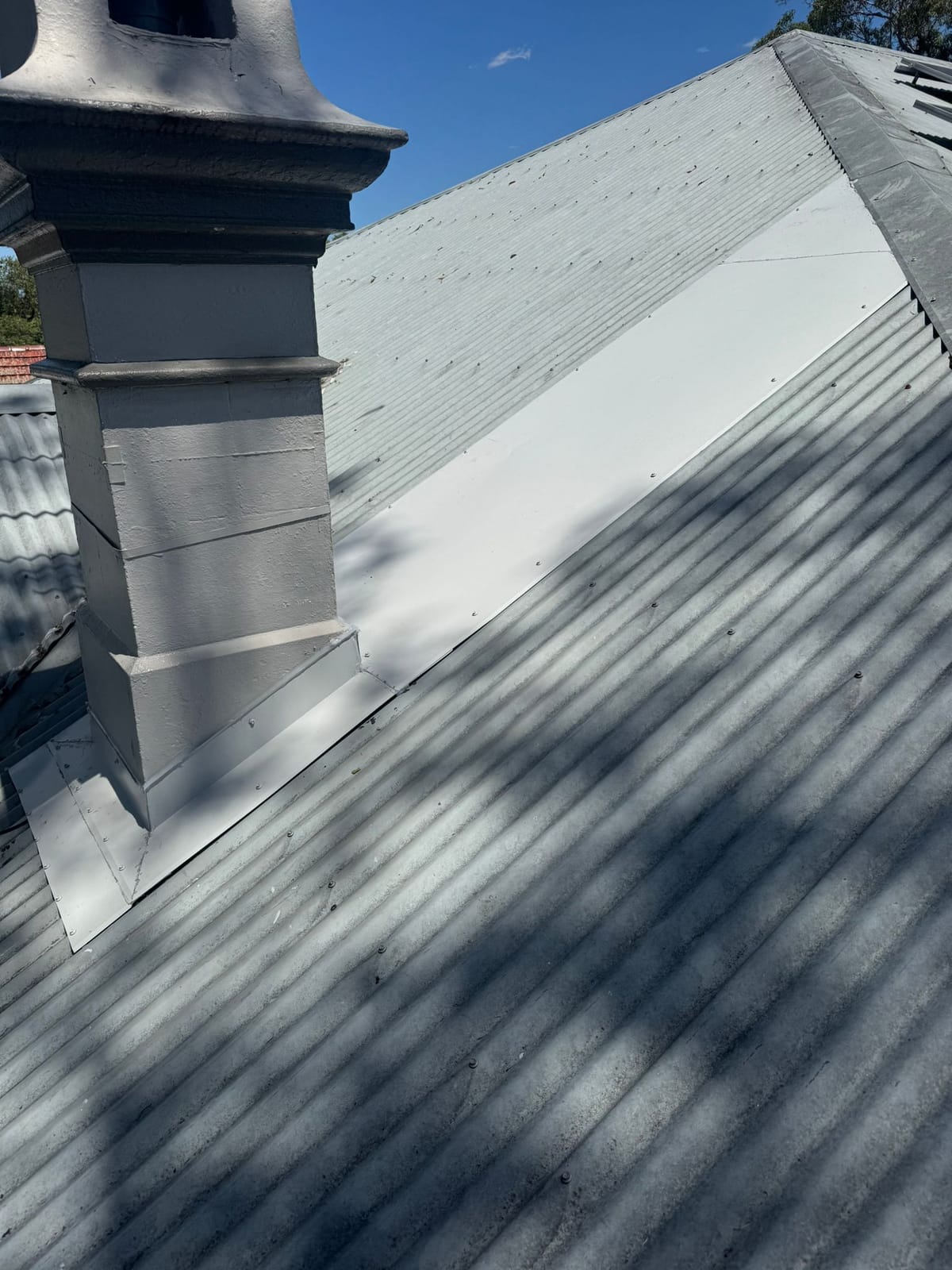
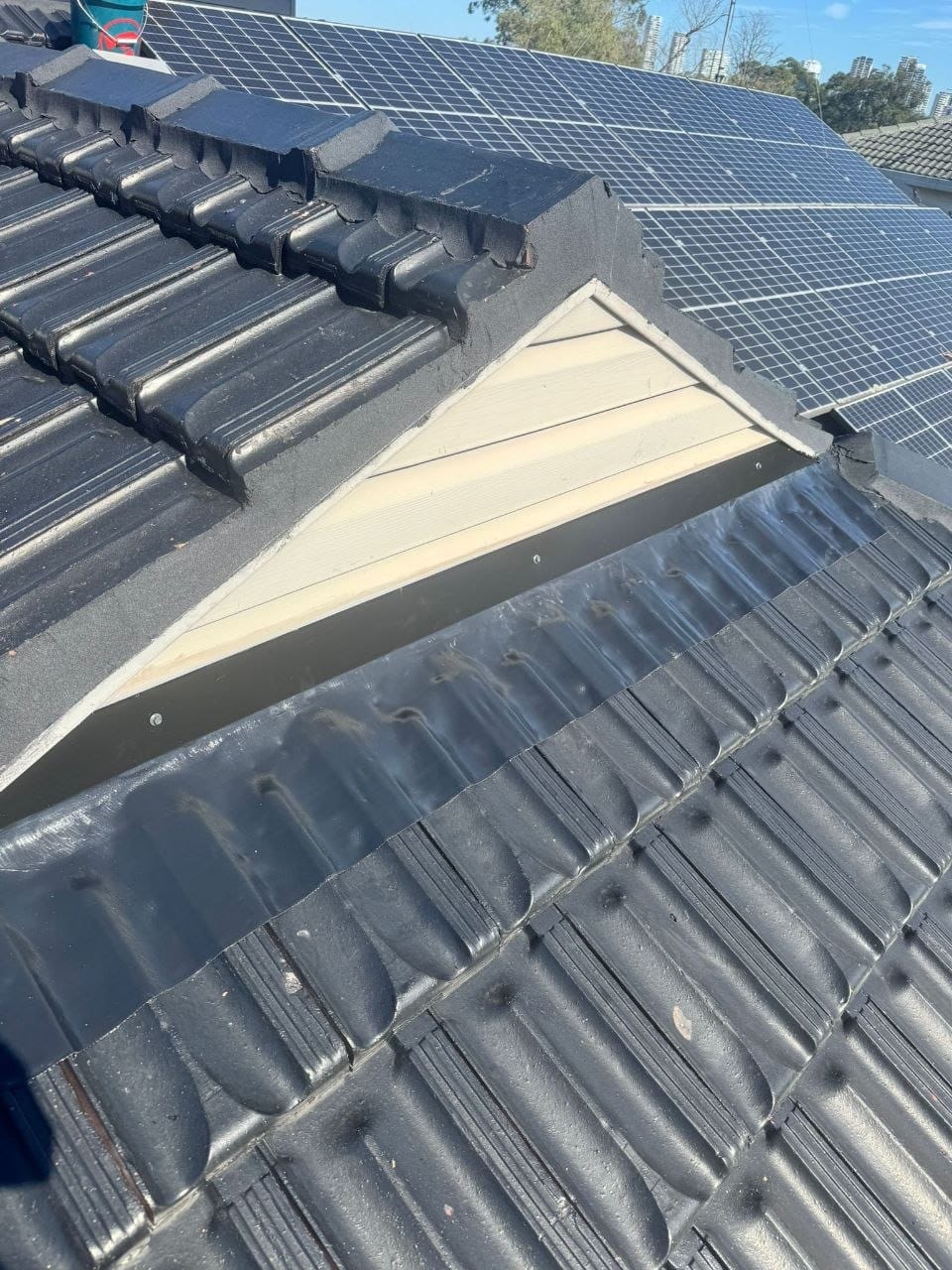
We walk the roof, check every ridge and hip for cracked bedding, check the valleys for rust and for tiles that have slipped into them, and check flashings around vents and any skylight. Where the entry point is not obvious we flood test slope by slope with a hose and someone in the roof cavity with a torch. Thermal imaging picks up wet insulation and the track of the water across the ceiling.
Condensation, not a leak
Penrith and Blacktown have a leak that is not a leak. Ducted air conditioning runs hard all summer, the ducts sweat in a 60-degree roof cavity, and the condensation drips onto the ceiling below and looks exactly like a roof leak. The giveaway is a stain that appears on hot dry days, not after rain, usually near a duct outlet. We check for this before we start looking for a hole in the roof, because the fix is duct insulation, not tiles.
Box gutters on strata blocks
Around Parramatta, Merrylands and Auburn, the leaks that do the most damage are on the 1970s walk-ups: internal box gutters behind parapets that silt up, back up in a storm and overflow into the top-floor unit. These are not tile problems, and the fix ranges from a clean and sump clear to a rebuild of the gutter with proper overflows to AS/NZS 3500.3. We write it up for the strata manager and the committee with photos and a scope, because a box gutter overflow is usually a common-property issue and the owner of the wet unit cannot fix it alone.
Cost and what happens on the day
| Leak job | Starting price (inc. GST) |
|---|---|
| Leak detection (flood test or thermal) and repair | From $350 |
| Complex leaks, multiple entry points, box gutters | From $1,200 |
| Emergency tarp and make-safe | $150 same-day call-out fee plus make-safe works: from $200 small to medium, from $250 larger or several areas |
If water is coming in now, call 0404 839 843. We do same-day make-safe across the west where availability permits, and tarp until the roof is dry enough to repair properly. The proper repair is usually one visit for a tile roof. Our guide to finding a roof leak covers what you can check yourself before we arrive, and how to read a ceiling stain to tell rain from condensation. Quotes are free, written and on site; request one here.