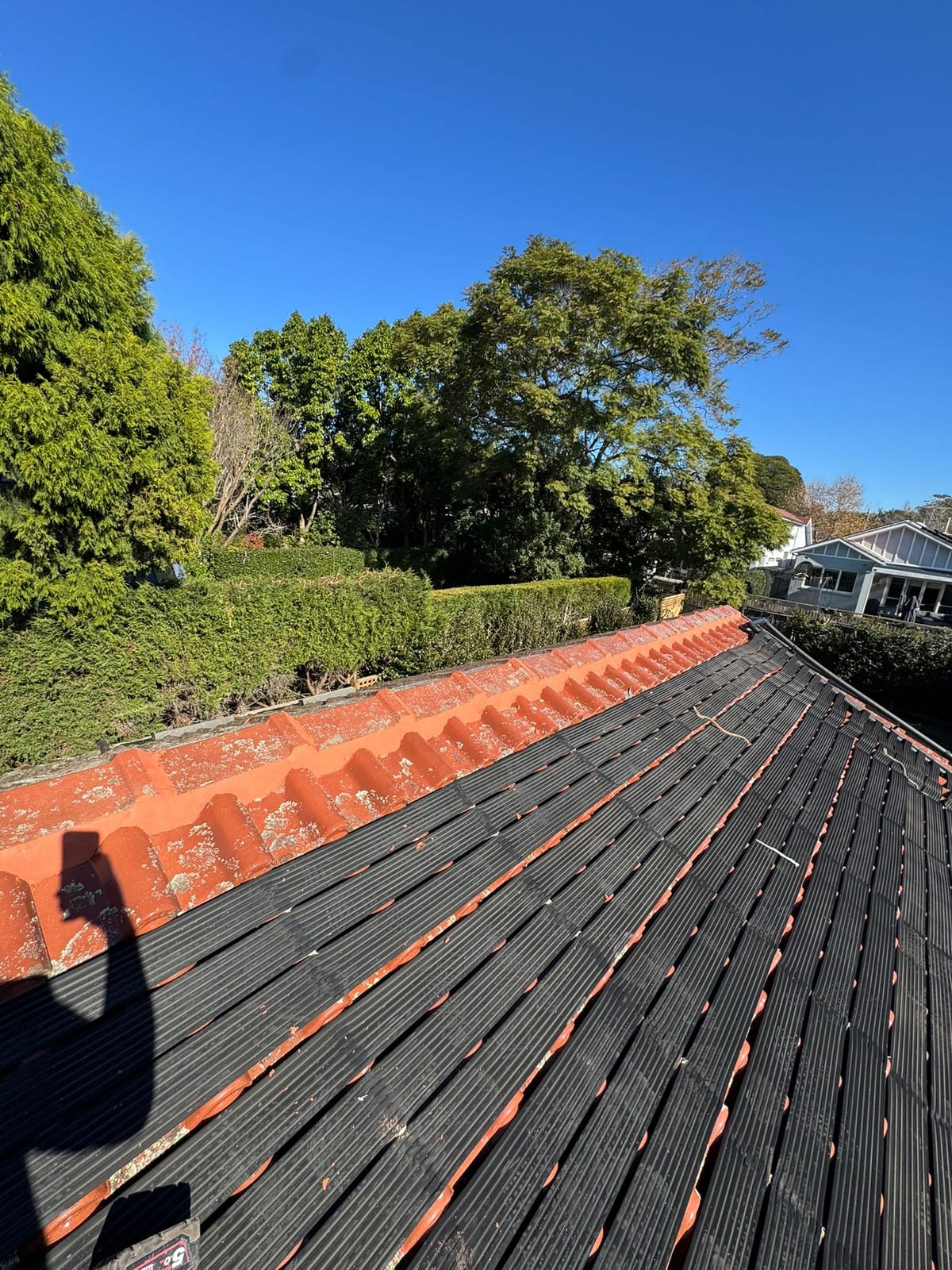
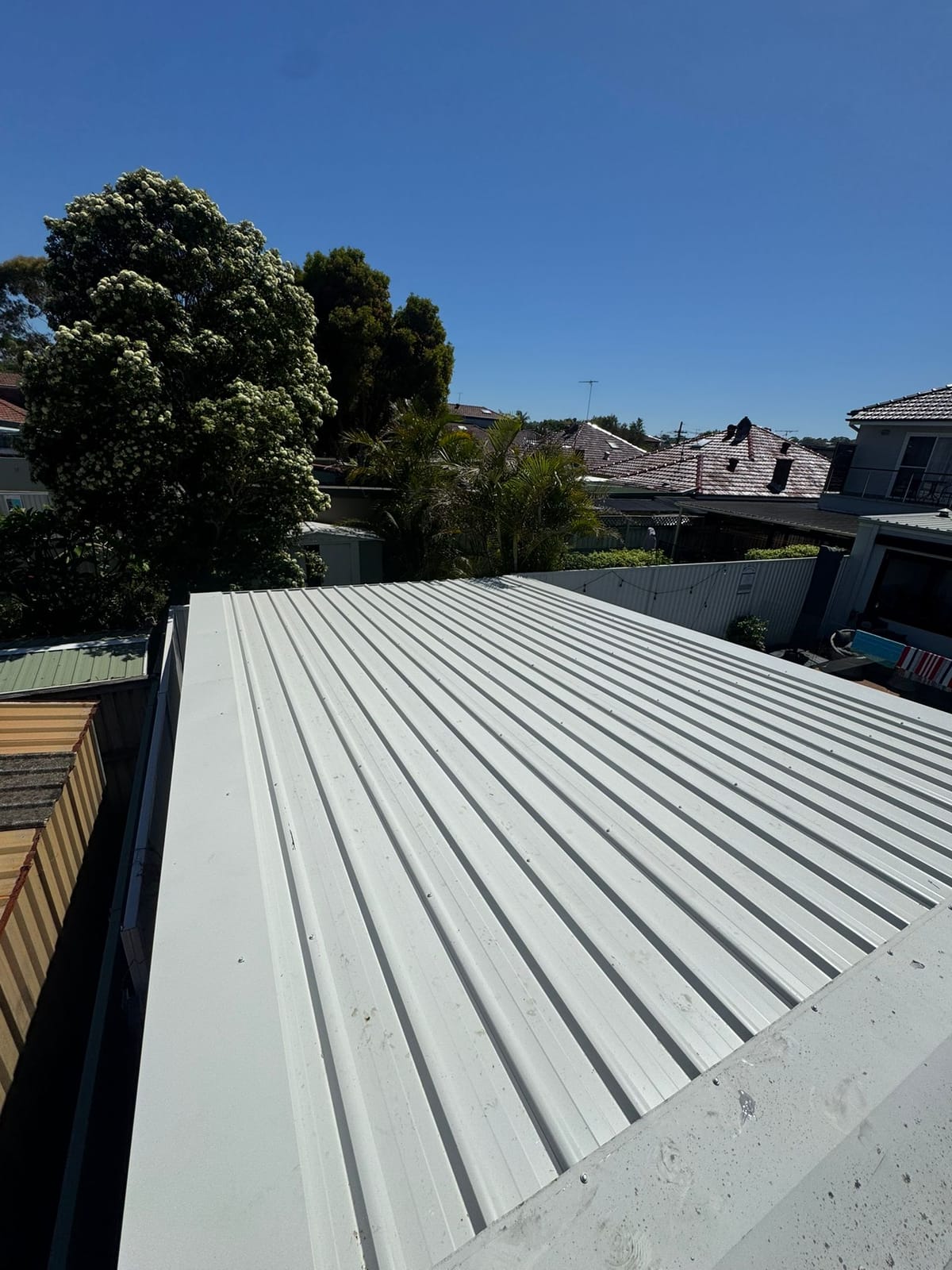
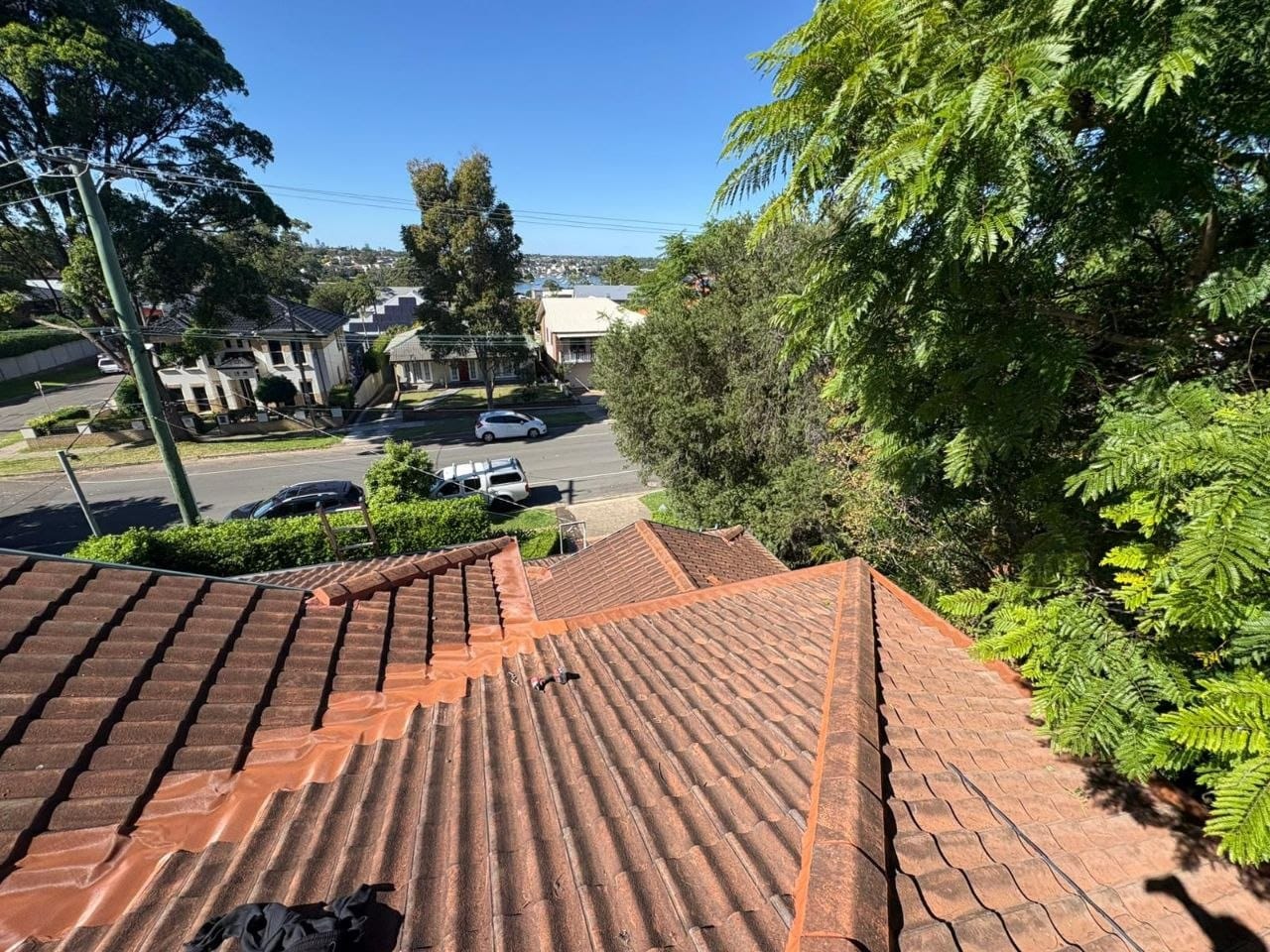
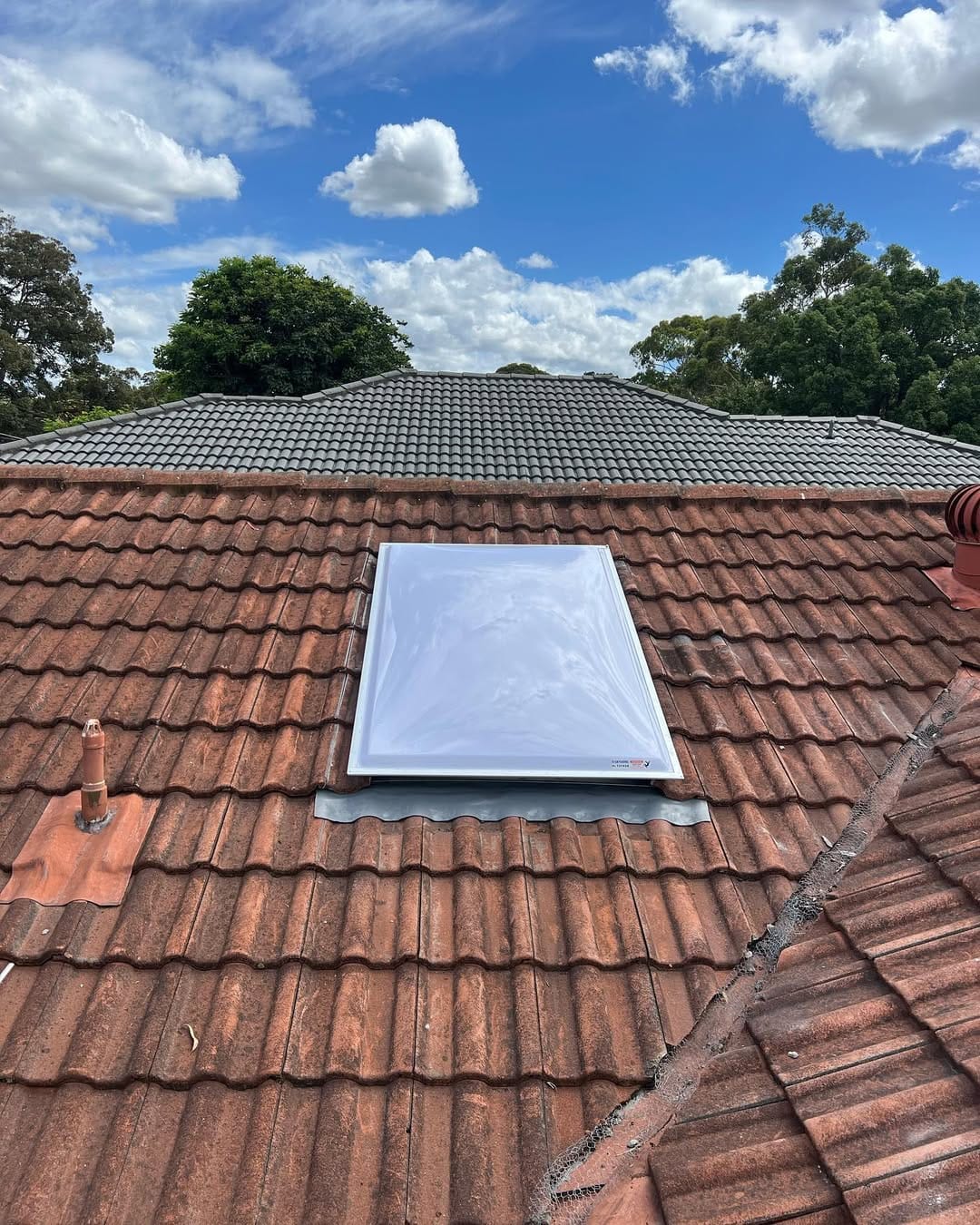
Hornsby is the postcode we get the most calls from in this district, and the jobs follow a pattern. The houses between the Pacific Highway and the Berowra Valley are mostly 1960s to 80s brick veneer under concrete tile, on big blocks under big gums, and a good share of them back onto bushland with a BAL rating to match. Ridge capping that has lost its bedding, valley irons rusted out under leaf mulch, and gutters that overflow at the first heavy rain are the three faults we see most. On the bush edge, ember-rated gutter guard and a sealed ridge line are worth more than any coating. Hornsby is at the far end of our run from Gladesville, 25 to 35 minutes up Pennant Hills Road or the M2, and we are up here most weeks.
Roofing in Hornsby and the northern district
Hornsby, Epping, Beecroft and the suburbs between them sit on the sandstone ridge between two national parks, and that shapes almost every roofing job we do here. The streets are big, the trees are bigger, and most of the houses were roofed with concrete tile somewhere between 1960 and 1985. Those three things explain most of the calls we take from the 2077, 2119, 2120 and 2121 postcodes.
We are based at Gladesville and drive up the M2 or Pennant Hills Road to get here. Epping and Carlingford are 20 to 30 minutes from the depot; Hornsby itself is 25 to 35 minutes in normal traffic. We work in the district most weeks, so a quote or a repair rarely waits for a special trip.
The housing stock: tile roofs at restoration age
The bulk of the district was built out in two waves. Beecroft, Epping and the older parts of Hornsby have Federation and interwar houses, many still under original terracotta. The bigger wave came after the war, when Carlingford, Thornleigh, Pennant Hills and the Hornsby fringes filled with brick veneer on quarter-acre lots, nearly all of it under concrete tile.
A concrete tile roof from 1970 is now 55 years old. The tiles themselves are usually fine. What fails is everything around them: the mortar bedding under the ridge capping cracks and lets the caps lift, the pointing crumbles, valley irons rust through under decades of leaf litter, and the sarking, if there was any, has gone brittle. That is why roof restoration and ridge re-bedding are the two jobs we quote most often up here, and why a full tile-to-Colorbond replacement comes up so often in Carlingford, where some roofs are past the point where a restoration is good value.
Trees, gutters and the bushland edge
Hornsby Shire has more remnant bushland than almost any council area in Sydney. Berowra Valley National Park runs along the western side of Hornsby and Thornleigh, Ku-ring-gai Chase is to the north-east, and Lane Cove National Park pushes into Pennant Hills and Cheltenham. Between the parks, the streets are lined with blue gums, turpentines and blackbutts, plus liquidambars and jacarandas planted in the 1920s and now enormous.
For a roof, that means two things. First, gutter load. A single-storey home under mature gums in Hornsby or Beecroft can fill its gutters twice a year, and gum leaves pack down into a mat that holds water against the fascia. Blocked valleys are the most common cause of the ceiling leaks we chase in this district. Gutter cleaning here is not a once-a-decade job; for most homes it is annual, and on the heavier blocks it is spring and autumn.
Second, ember risk. A large part of the district sits on the council's bushfire-prone land map, and homes along the bush edge at Hornsby, Thornleigh, Pennant Hills and Beecroft carry BAL ratings under AS 3959. Embers get into a house through the roof long before flame reaches the walls: gutters full of dry leaves, gaps under lifted ridge caps, cracked tiles. Ember-rated gutter guard, sealed ridge capping and clean gutters going into summer are the practical fixes, and the RFS Get Ready checklist puts gutters near the top for a reason.
Access: big lots and steep ground
The large lots are a mixed blessing. There is almost always room for a scaffold or a tower, and the tipper can usually get onto the driveway. But the district is anything but flat. Thornleigh and the western side of Hornsby fall away steeply into the valley, so a house that is single storey at the street is often two or three storeys at the back. We price these jobs with the right access from the start rather than discovering it on the day: a mobile scaffold, an EWP where the driveway allows it, and fall-arrest anchors to AS/NZS 1891 on the steep pitches.
Councils and heritage
Most of the district is in Hornsby Shire Council. Epping and Carlingford sit in the City of Parramatta following the 2016 boundary changes, which matters mainly for development applications.
Beecroft and Cheltenham are a heritage conservation area under Hornsby Shire's planning controls, and parts of Epping and Pennant Hills have individual heritage listings. In practice, like-for-like repairs and a restoration in the existing colour are fine. Changing the roof material, changing the profile, or swapping terracotta for Colorbond on a contributory house usually needs council approval or a heritage exemption, and we tell you which before you spend anything on a quote.
Epping's two housing markets
Epping is now two places. Around the station the apartment blocks have gone up fast, and those buildings bring strata roofing problems: box gutters, membrane roofs, overflows that were never sized properly. Walk five minutes east or west and you are back in original brick and tile, much of it now changing hands to owners who want the roof sorted before a renovation. We do both, and we quote them very differently.
What we see most in the district
- Ridge capping lifting or pointing missing on 1960s to 80s concrete tile
- Valley irons rusted through under leaf litter, usually found after a ceiling stain appears
- Gutters overflowing at the corners on homes under gums
- Cracked or slipped tiles after hail; the northern district cops a hail cell every few years
- Storm-lifted flashings on chimneys and skylights after branch strikes
Getting a quote
Every quote is free, written, and done on site, because there is no way to price a Hornsby roof from a satellite photo under all those trees. We get up on the roof, photograph what we find, and put a price against each item so you can decide what to do now and what can wait. Ask for a quote and we will usually be in touch within 24 to 48 hours.