Skip to content
Sam's Roofing Experts

Roofers in Eastern Suburbs

Terraces behind parapets, Art Deco blocks on flat membranes, and salt on every fixing. Roofing in the Eastern Suburbs is mostly box gutters, flashings and waterproofing, and we quote it that way.

NSW licence 502874C2-year workmanship warrantySame-day emergency attendance, where available4.9 on Google

Waverley · Woollahra · Randwick · Bayside

Not tile country

Most roofing work in Sydney is pitched tile: re-bed the ridges, swap the cracked tiles, coat the lot. The Eastern Suburbs are different, and a roofer who treats Bondi like Baulkham Hills will get the diagnosis wrong. From Paddington through Bondi Junction and down the coast to Maroubra, the housing stock is Victorian and Federation terrace rows, interwar Art Deco apartment blocks, 1960s red-brick walk-ups and a thinner scatter of post-war brick-and-tile.

That means the roof you cannot see from the street is the one that matters. Terraces hide low-pitched roofs behind parapet walls, with a box gutter running along the party wall or behind the front parapet. Art Deco blocks are often flat or near-flat, with a membrane or a metal deck draining to internal box gutters and a handful of sumps. When these fail, the water does not drip off an eave. It goes straight into the building.

Salt and wind

The coast from Bondi to Maroubra sits well inside what BlueScope treats as a severe marine environment. Salt settles on everything within a kilometre or two of the water and it works fastest on the small things: screw heads, rivets, gutter brackets, cut sheet edges and the galvanised straps holding flashings on. We regularly find Colorbond sheets that are sound in the middle and rusted through at every fixing.

Coogee, Bronte and the cliff-top streets at North Bondi also cop wind uplift that inland roofs never see. A southerly loads the sheets from underneath, and a fixing that has lost its grip in corroded timber lets go one screw at a time. The first sign is usually a noise, not a leak. Marine-grade fixings, correct screw patterns to AS 1562.1 and Colorbond Ultra on exposed elevations are not upgrades here. They are the baseline specification.

Parapets, box gutters and membranes

The three things we spend most of our time on in the east:

  • Parapet walls. Rendered brick parapets crack, the capping flashing lifts, and water tracks down inside the wall to show up as a damp patch two floors below. The roof covering is often fine.
  • Box gutters. Undersized for modern rainfall, blocked with leaf litter and render dust, and missing the overflows that AS/NZS 3500.3 requires. Most terrace box gutters we inspect would not pass the standard as built.
  • Membranes. Flat roofs on Art Deco and 1960s blocks rely on a torch-on or liquid-applied membrane with a service life of roughly 15 to 25 years. Once the laps open or the upstands pull away from the parapet, the whole roof leaks at once.

None of these are fixed with a bucket of pointing compound. They need proper flashings, correctly sized outlets, and membranes terminated into the parapet with a chase and a counter-flashing.

Strata and who signs off

A large share of Eastern Suburbs roofs sit over strata schemes. The roof, the box gutters and the membrane are common property, so the person with the leak is rarely the person who can approve the repair. We are used to this. We write the report so the strata manager and the committee can read it, itemise the make-safe separately from the permanent fix so urgent work can be approved quickly, and we supply the public liability and SWMS paperwork that strata managers ask for before anyone goes on the roof.

For owners, the practical advice is simple: photograph the ceiling, note the date and the weather, and send it to your strata manager the same day. Leaks reported early are cheaper for everyone.

Councils and heritage

Four councils cover the region: Waverley, Woollahra, Randwick and Bayside. Paddington is almost entirely a heritage conservation area under Woollahra, and much of Waverley's terrace stock is treated the same way. Like-for-like repair of a heritage roof is generally exempt from approval. Changing the material, the profile or the visible colour is not, and swapping slate for Colorbond on a Paddington terrace will be refused. We tell you which side of that line your job falls on before we quote it.

Double Bay and Woollahra carry slate, copper and lead detailing that needs a roofer who has worked with those materials rather than one who will suggest ripping them off.

The faults we see most

  1. Box gutter overflow into the ceiling below during a heavy southerly.
  2. Failed parapet capping and cracked render letting water into the wall cavity.
  3. Membrane laps opening on flat-roofed apartment blocks.
  4. Rusted fixings and gutter brackets on coastal metal roofs.
  5. Fretting ridge mortar and broken tiles on the older Randwick and Maroubra tile stock.
  6. Party-wall flashings lifted by a neighbour's renovation.

Access

Terrace rows mean the roof is reached from a back lane, a courtyard or through a neighbour's property. We plan access before we arrive, and where scaffold has to sit on a footpath we handle the council permit. Parking is the other honest constraint: a tipper cannot sit on Bondi Road for a day, so waste removal is scheduled rather than improvised.

Travel from Gladesville

We are based at Gladesville. The Eastern Suburbs are 30 to 40 minutes away through the city or over the bridge and down the Eastern Distributor, depending on the hour. For emergency make-safe we attend the same day where availability permits, and we tell you the real arrival time when you call rather than promising something we cannot do. Scheduled work is quoted free, in writing and on site: request a quote and we will look at the roof properly, including the parts you cannot see from the street.
Suburbs we cover in Eastern Suburbs

What we see on the roofs in each suburb, and, as jobs are completed, real photographed work from that street or the next one.

Bondi is where we get the most calls in the east, and most of them concern Art Deco apartment blocks rather than houses. The typical fault is a parapet box gutter that has rusted at the sump or blocked at the outlet, sending water through the top-floor ceiling during a storm. Salt exposure between Campbell Parade and Bondi Road is as severe as anywhere in Sydney, so we specify marine-grade fixings and Colorbond Ultra on anything metal, and stainless steel for box gutter outlets. Because most of these roofs are common property, we write the report for the strata committee, separate the make-safe from the permanent fix, and give the strata manager the insurance and SWMS paperwork up front. Roof repairs in Bondi are a diagnosis problem first and a materials problem second.

Randwick splits into two roofing jobs. The Federation terraces around The Spot and along Avoca Street have slate or terracotta pitched roofs behind parapets, with box gutters and party-wall flashings that fail long before the roof covering does. The 1960s red-brick walk-ups closer to the hospital and the university have low-pitched metal or concrete-tile roofs, often with the original galvanised gutters and downpipes now rusted through. On the walk-ups the usual call is a leak into a top-floor unit that turns out to be a blocked internal downpipe or a corroded gutter joint. On the terraces it is a lifted flashing at the party wall. Both are strata or shared-wall situations, so we document the fault in a way the neighbour or the committee can act on.

Coogee cops wind straight off the ocean, and the cliff-top and hillside streets are where we see fixings fail rather than sheets. Salt corrodes the screw head and the timber around it, a southerly loads the sheet from underneath, and the edge starts to lift. Left alone, that becomes a sheet on the neighbour's car. On a Coogee metal roof we check every fixing on the exposed elevation, replace with Class 4 or stainless screws and new washers where uplift is high, and re-fix to the pattern in AS 1562.1 rather than the pattern the original roofer used. On the flat-roofed blocks near the beach, the same salt attacks the box gutter and the membrane upstands.

Waverley's terrace rows share walls and, too often, share a box gutter. The typical leak is a party-wall flashing lifted by movement or by a neighbour's renovation, and a box gutter that overflows because its outlet was never sized for a modern downpour. We inspect from the roof, not the ceiling, and we tell you which side of the wall the fault is on.

Double Bay's older homes carry slate roofs with copper valleys, lead flashings and sometimes copper box gutters. These are repairable and should be repaired, not swapped for something cheaper. We slip in matching slates on copper nails, re-dress lead rather than smear sealant over it, and treat a copper gutter as the fifty-year asset it is. Woollahra Council heritage controls usually apply.

Maroubra is the one part of the east with a real stock of post-war brick-and-tile homes, and they are showing their age: fretting ridge mortar, cracked concrete tiles and rusted valley irons. Salt off the beach corrodes valleys and gutter brackets faster than the same house would suffer inland, so we use Colorbond valley iron and marine-grade brackets when we repair them.

Almost all of Paddington is a heritage conservation area under Woollahra Council. Like-for-like repairs to slate, terracotta and the original box gutters and flashings usually proceed without approval. Changing materials or visible profiles does not. We tell you which category your job is in before quoting, and we work from the rear lanes where the terrace rows allow no front access.

Also covering Vaucluse, Rose Bay and surrounding suburbs.

Our work across Sydney

Region-tagged photos for Eastern Suburbs will appear here as jobs are completed. These are from recent jobs across Sydney.

All recent work →
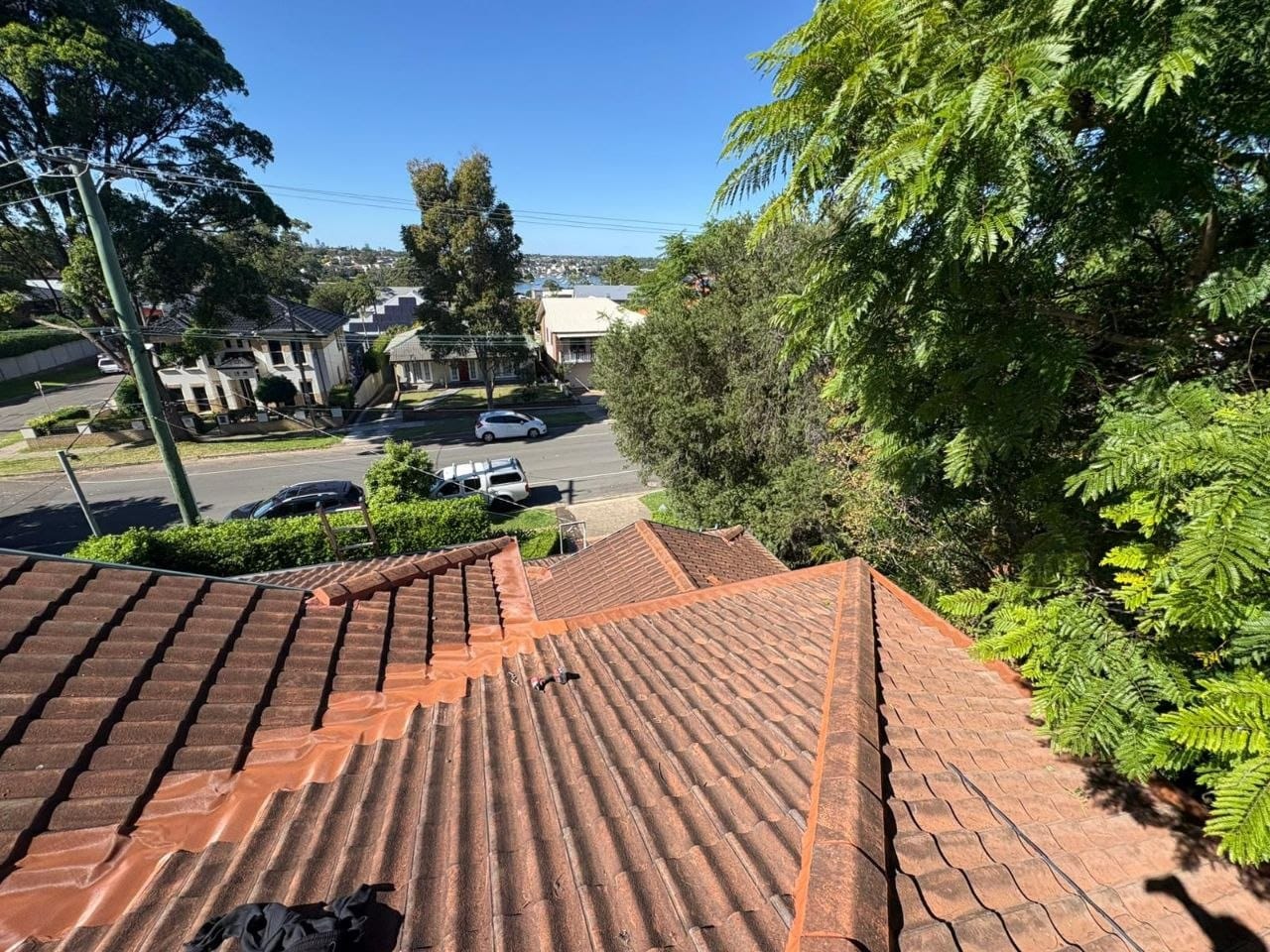
  • Freshly bedded and pointed ridge capping on a tiled roof with the garden below
    Freshly bedded and pointed ridge capping on a tiled roof with the garden below
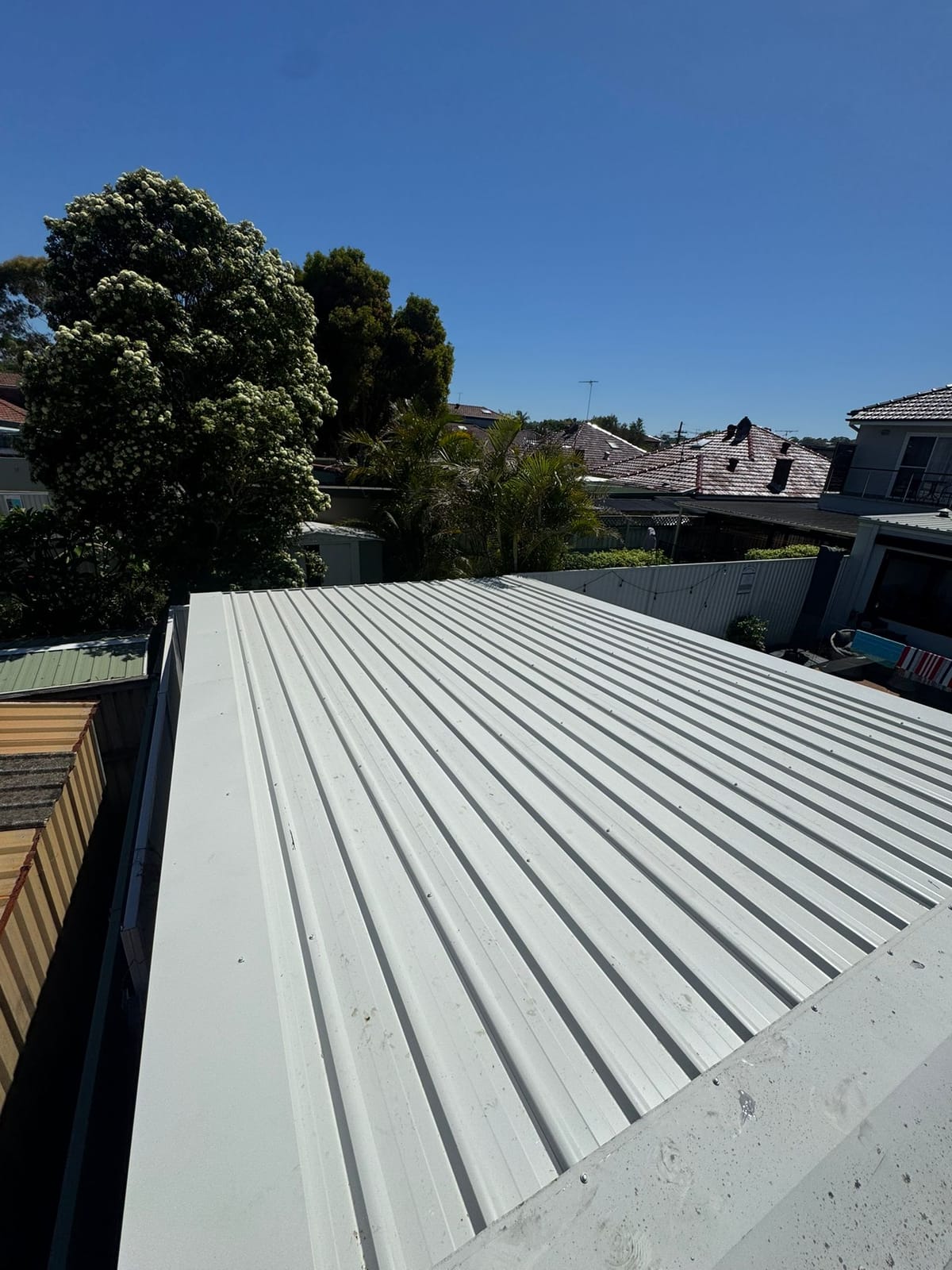
  • A new grey Colorbond roof over a house, neighbouring roofs behind
    A new grey Colorbond roof over a house, neighbouring roofs behind
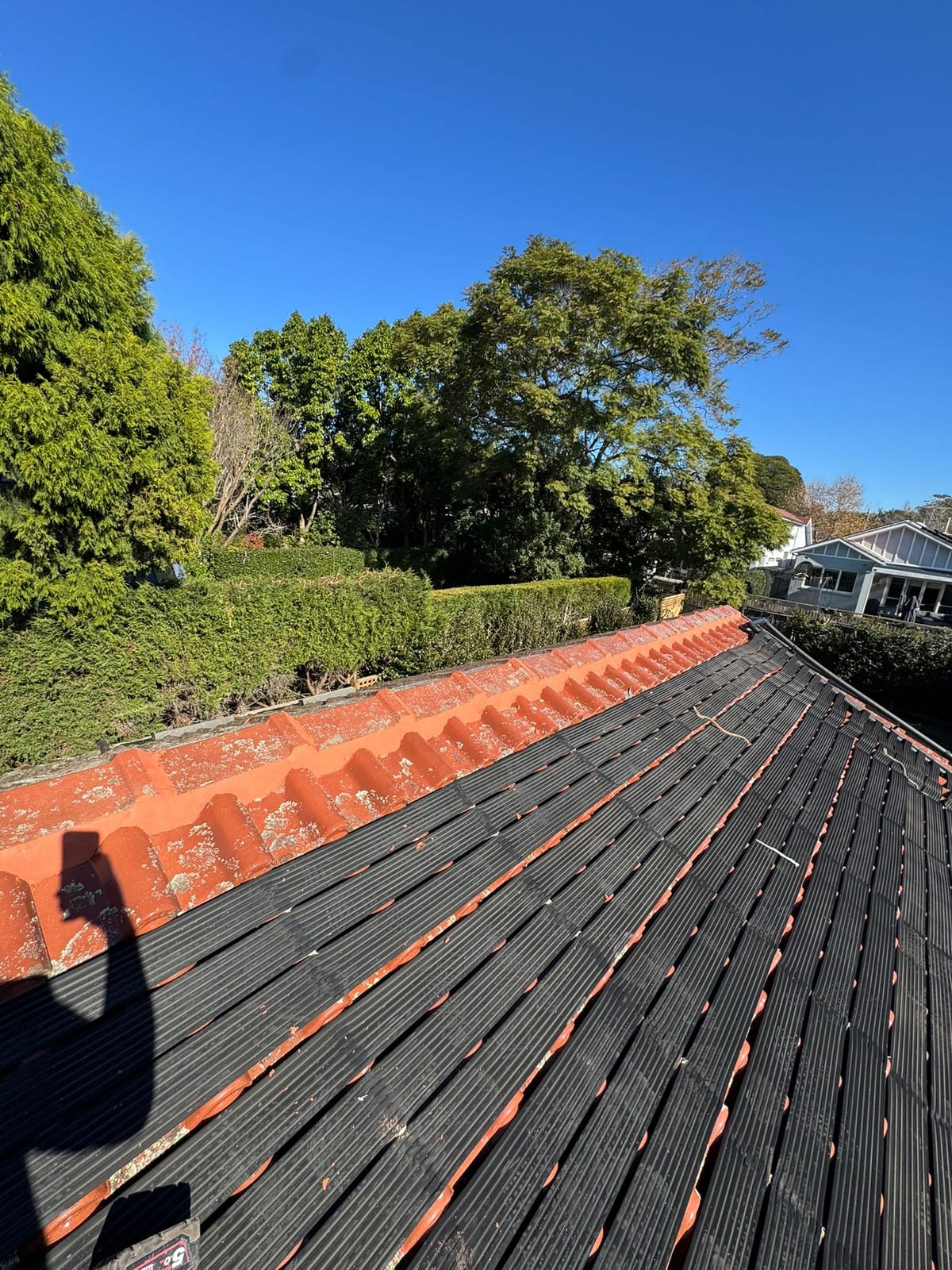
  • A restored terracotta tile roof with the suburb and trees beyond
    A restored terracotta tile roof with the suburb and trees beyond
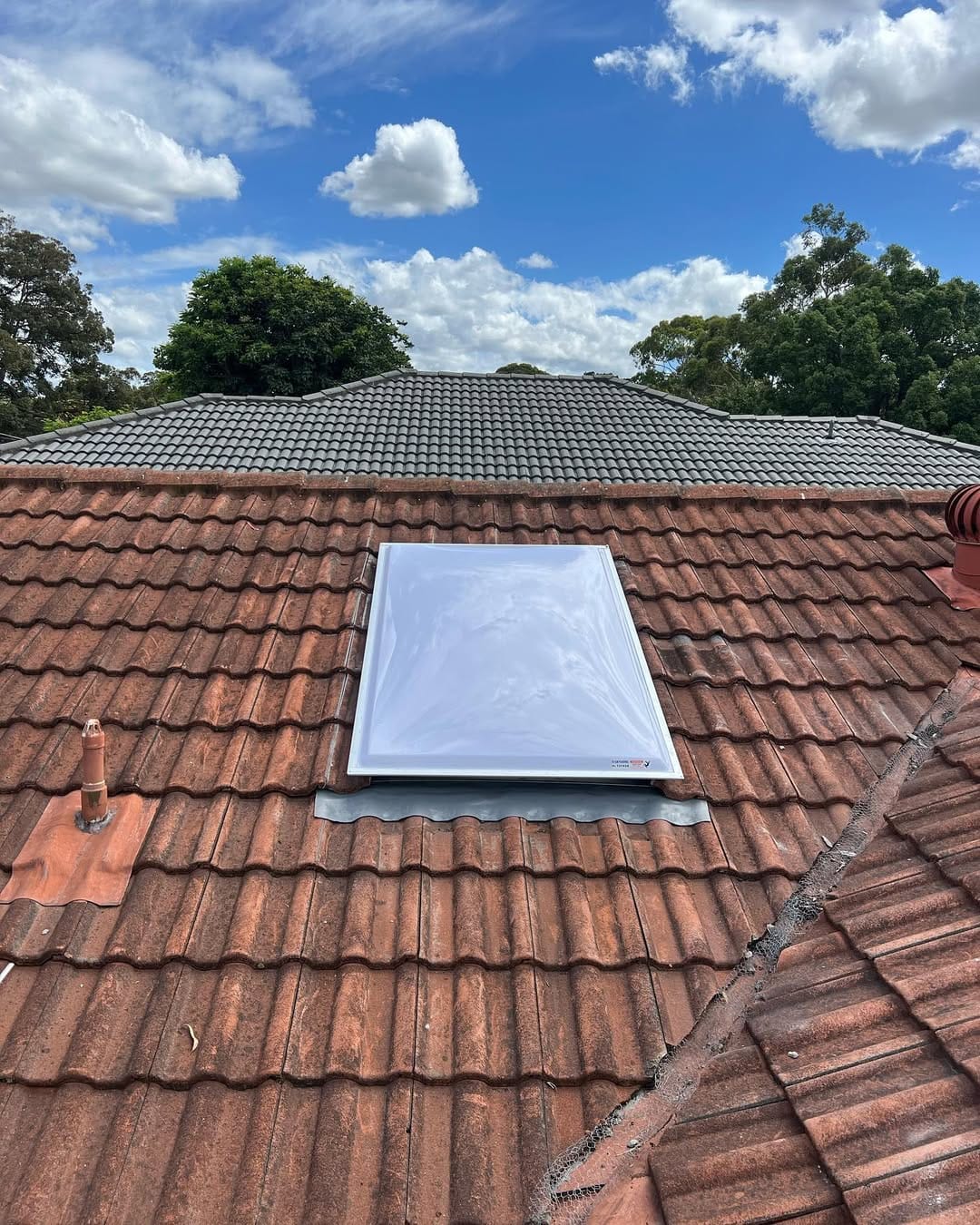
  • A new skylight installed in a tiled roof, flashed and sealed on all sides
    A new skylight installed in a tiled roof, flashed and sealed on all sides

Roofing in Eastern Suburbs: common questions

Do you work on strata buildings and apartment blocks in the Eastern Suburbs?

Yes, and a good share of our work in the east is exactly that. The roof, box gutters and membrane on an apartment block are common property, so we write our inspection report for the strata manager and committee, price the make-safe separately from the permanent repair, and supply insurance certificates and a SWMS before starting. If you are an owner with a leak, report it to your strata manager the same day with photos. We can attend and inspect before the committee meets so the decision is based on what is actually wrong.

Why does my terrace leak when the roof itself looks fine?

Because on a terrace the roof covering is rarely the problem. Water usually enters at the parapet capping, the party-wall flashing or the box gutter hidden behind the parapet, none of which are visible from the street or the backyard. Cracked render on a parapet lets water into the wall cavity, and it can show up as a damp patch a full storey below the entry point. We inspect from the roof, flood test the box gutter if needed, and trace the water path before quoting anything.

Do I need council approval to repair my roof in Paddington or Woollahra?

Usually not for a like-for-like repair. Replacing broken slates with matching slate, re-dressing lead flashings or renewing a box gutter in the same position is generally exempt maintenance, even inside the heritage conservation area. You do need approval to change the material, profile or visible colour, for example replacing slate with Colorbond or altering a parapet. We will tell you which category your job sits in before we quote, and we will not do work we know the council would refuse.

How quickly can you get to Bondi from Gladesville?

Honestly, 30 to 40 minutes in normal traffic, longer in a peak-hour storm when everyone else is also on the road. For emergencies we give you a realistic arrival time when you call rather than a promise we cannot keep, and we talk you through what to do in the meantime, such as moving furniture and catching water. For scheduled work, we book a time window and turn up in it. Quotes are free, written and done on site.

Is a metal roof a bad idea this close to the beach?

Not if it is specified for the environment. Standard Colorbond within a few hundred metres of breaking surf will corrode early at the fixings and cut edges, which is where most coastal metal roofs fail. Colorbond Ultra, marine-grade or stainless fixings, sealed cut edges and keeping copper and lead away from the steel make a metal roof a sensible long-term choice in Bondi, Coogee or Maroubra. BlueScope publishes reduced warranty periods for severe marine sites, and we quote to the product that actually carries a warranty at your address.

Book a free roof inspection in Eastern Suburbs

We come out, get on the roof, photograph what we find and put every line in writing. No obligation and no sales call afterwards.

Call 0404 839 843Request a quote