Skip to content
Sam's Roofing Experts

Roof Repairs in Sydney

A few cracked tiles, a ridge cap that has let go, a flashing that was never sealed properly. Most roof repairs in Sydney are small jobs, and the difference between a repair that lasts and one that leaks again next winter is what the roofer does with the part you cannot see.

NSW licence 502874C2-year workmanship warrantySame-day emergency attendance, where available4.9 on Google

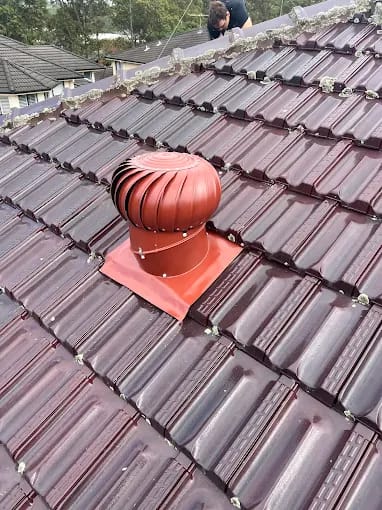
Whirlybird roof vent fitted and sealed into a terracotta tile roof

What roof repairs costs in Sydney

These are 2026 Sydney starting prices including GST. The thing that moves them most is access: a single-storey roof with a clear driveway is priced at or near the starting price, a two-storey roof needing scaffold costs more. Every job is priced on site, in writing, for free.

JobStarting price, inc. GST
Broken tile replacementFrom $250 call-out including first tiles; extra tiles from $8 each
Minor repair (flashing, a few tiles, small leak)From $350
Moderate repair (valley iron, flashing runs, section re-bed)From $900
Ridge capping re-bed and re-pointFrom $45 per lm; whole roof from $900 at about 20 lm of ridge
Emergency make-safe (tarp, temporary fix)$150 same-day call-out fee plus make-safe works from $200
Insurance damage reportOften free with the repair

The variables that move the price

  • Single or two storey, and whether scaffold or edge protection is required
  • Roof pitch and how safely it can be walked
  • Tile profile availability (current, discontinued, or terracotta)
  • Length of ridge, valley or flashing involved
  • Whether the fault is one item or several found on inspection
  • Urgency for storm call-outs

These are 2026 Sydney starting prices from our own quoting, not a promise for your roof. Every job is quoted free, on site and in writing after we have been on the roof. That is the number you can hold us to.

What is actually going wrong up there

Most calls we get for roof repairs come down to a short list of faults. Cracked roof tiles from someone walking the roof to fit an aerial or solar panels. Broken ridge capping where the old cement mortar has shrunk, cracked and let the caps work loose. Flashings around chimneys, skylights and walls that have lifted, rusted, or were never dressed in properly. Valley irons rusted through under twenty years of leaf litter. And on older roofs, sarking that has torn or perished, so wind-driven rain that gets past the tiles has nowhere to go but the ceiling.

Very few of these are visible from the ground, and a ceiling stain almost never sits under the entry point; water tracks along sarking and rafters for metres first. That is why we do not quote repairs from a photo of a stain.

How we assess it

Every quote starts with a roofer on the roof, not a salesperson at the door. We walk the whole roof, because a roof with one failed ridge usually has others on the way. We check:

  • Tiles: cracked, slipped, going soft on the surface, and whether the profile is still made
  • Ridge and hip capping: bedding condition, pointing condition, movement when pushed
  • Flashings: chimney, wall, apron and penetration flashings, and the sealant under them
  • Valley irons: rust, debris, and whether the tiles are cut back far enough for water to run
  • Sarking: torn, missing, or absent altogether (many pre-1980s Sydney roofs were built without it)
  • Gutters and downpipes, since a blocked gutter causes half the "roof leaks" we are called out to

You get a written quote, usually within 24 to 48 hours, with photos of what we found and a clear line between what must be done now and what can wait a season. If you are comparing us against two other quotes, ask each roofer for their photos. A quote without them is a guess.

What the work involves

Cracked and broken tiles

We carry common Monier and Boral concrete profiles and a range of terracotta on the truck. Matching a discontinued 1960s or 70s profile takes longer; we source from second-hand tile yards, and failing that we take matching tiles from behind a chimney and fit the substitute there. Broken tiles are lifted out from under the course above, the sarking checked beneath, and the new tile clipped or wired where the original was.

Ridge capping: re-bedding and re-pointing

This is the single most common repair on Sydney tile roofs. Ridge caps sit on a bed of mortar; over the bedding is the pointing, the finished surface you can see from the street. Old cement pointing is rigid. Every hot day the roof moves a fraction and the pointing does not, so it cracks and falls away, and once the bedding is exposed it washes out and the caps loosen.

Proper re-bedding and re-pointing means lifting the caps, chipping out the old bedding, laying a fresh sand-and-cement bed, re-seating the caps straight, then pointing with a flexible pointing compound (an acrylic-based product designed to move with the roof rather than crack). Re-pointing over old bedding without re-bedding is cheaper, and it is what a lot of quotes are quietly offering. It lasts a few years. Ask which one is being priced.

Flashing

A flashing is the piece of metal that makes the join between the roof and anything that comes through it or meets it: chimneys, walls, skylights, vent pipes. Most flashing leaks are either a sealant failure (silicone lasts five to ten years in Sydney sun, then splits) or a flashing that was surface-fixed and sealed instead of being chased into the brickwork. We replace with Colorbond or lead as appropriate, chase into mortar joints where the wall allows it, and use a neutral-cure roofing sealant rather than the general-purpose tube from the hardware.

Valley iron

Valleys carry more water than any other part of the roof. The valley iron under the tiles rusts from the underside first, so it can look fine from above and be perforated. Replacing it means stripping the tiles either side, removing the old iron, fitting new Colorbond valley iron with the correct overlap and end dressing, then re-laying the tiles cut back to leave a clear water channel. A typical run of five to eight metres is a half-day job for two roofers.

Sarking

Sarking is the reflective foil membrane under the tiles. It catches whatever gets past the tiles and carries it down to the gutter. Re-sarking a whole roof means stripping it (that is a roof replacement), but we repair torn sections during a valley or tile job and lay new sarking to AS 4200.1 under any section being re-laid.

Storm damage and insurance

After a storm we prioritise make-safe: tarping and temporary fixes to stop the water while the permanent repair is scheduled. If the storm damage is being claimed, we write an insurance report describing the cause, the damage and the scope of works in the format assessors expect, with photos. The report fee is usually waived when we do the repair. See what to do in the first 24 hours after storm damage and our emergency roof repairs page for the emergency process.

What roof repairs cost in Sydney

Most minor repairs (a flashing, a handful of tiles, a small leak) start from $350. Moderate repairs such as a valley iron replacement, a run of flashings or re-bedding a section of ridge start from $900. Whole-roof ridge re-bedding and re-pointing is priced per lineal metre and starts from $900 on a small roof with about 20 lineal metres of ridge. The table below has the starting prices; the quote is free, written and on site.

How long it takes

Most repairs are done in a single visit of two to five hours. Full ridge re-bedding on a hipped roof is usually a day. We need dry weather for pointing and sealant work, so a wet forecast can push a job by a day or two.

When a repair is not the right fix

We will tell you if we think you are throwing money at a roof that is past it. The signs: concrete tiles that are soft and shedding their surface, more than about 15 per cent of the ridge failed, valleys rusted through on more than one run, or a roof that has been repaired in three places in two years. At that point roof restoration or replacement is cheaper over ten years than patching. Our guide to restoring versus replacing sets out how we make that call.

If the source of a leak is not obvious, start with roof leak detection, which flood-tests to find the entry point before anything is replaced.

Warranty, licensing and where we work

All repair work carries our 2-year workmanship warranty. Roofing work over $5,000 in NSW requires a NSW Fair Trading licence, and you can check any roofer's licence at verify.licence.nsw.gov.au before you sign anything; our guide to checking a NSW roofing licence shows how. We are licensed NSW roofers based in Gladesville and repair roofs across all nine regions of Sydney, from Ryde and the North Shore to Hornsby, the Hills, the Northern Beaches, the Inner West, the Eastern Suburbs, Western Sydney and the Sutherland Shire. Request a free on-site quote and you will have a written price, usually within 24 to 48 hours of the inspection.
What is included, and what is not

Hold this against the other quotes you have. If a line below is missing from theirs, ask why.

Included as standard

  • On-roof inspection of the whole roof, not just the leak area, with photos
  • Written, itemised quote separating urgent work from work that can wait
  • Supply and fit of replacement tiles in matching or nearest available profile
  • Ridge and hip capping re-bedded in fresh mortar and re-pointed with flexible compound
  • Flashings re-dressed or replaced in Colorbond or lead, chased into brickwork where possible
  • Valley iron replacement including tile strip and re-lay
  • Sarking repair under any section we open up
  • Removal of all old materials and debris from site

Not included, or quoted separately

  • Scaffold or elevated work platform on two-storey and steep roofs (quoted separately)
  • Whole-roof re-bedding when only a section is quoted
  • Sourcing discontinued tiles beyond what second-hand yards can supply
  • Internal ceiling and plasterboard repairs after a leak
  • Gutter cleaning or replacement unless included in the quote
  • Structural timber repairs to rafters or battens found after tiles are lifted
  • Asbestos handling (licensed removalist required for any pre-1990 material)

Guides that go with this service

Roof Repairs: our own jobs

Photographed on site by our roofers. No stock photos.

All recent work →
  • Whirlybird roof vent fitted and sealed into a terracotta tile roof
    Whirlybird roof vent fitted and sealed into a terracotta tile roof
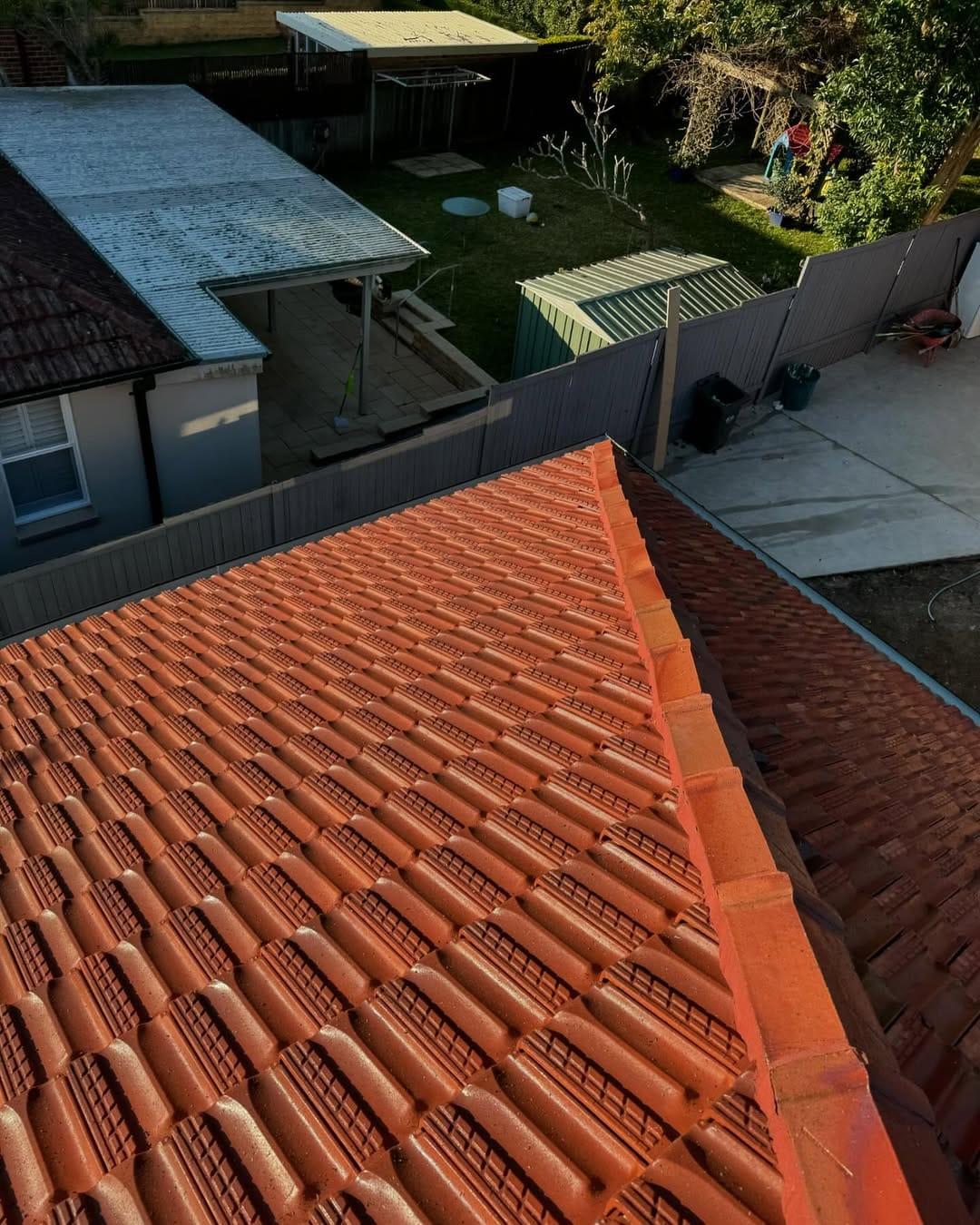
  • A terracotta tile roof seen from above after the tiles were reset and cleaned
    A terracotta tile roof seen from above after the tiles were reset and cleaned
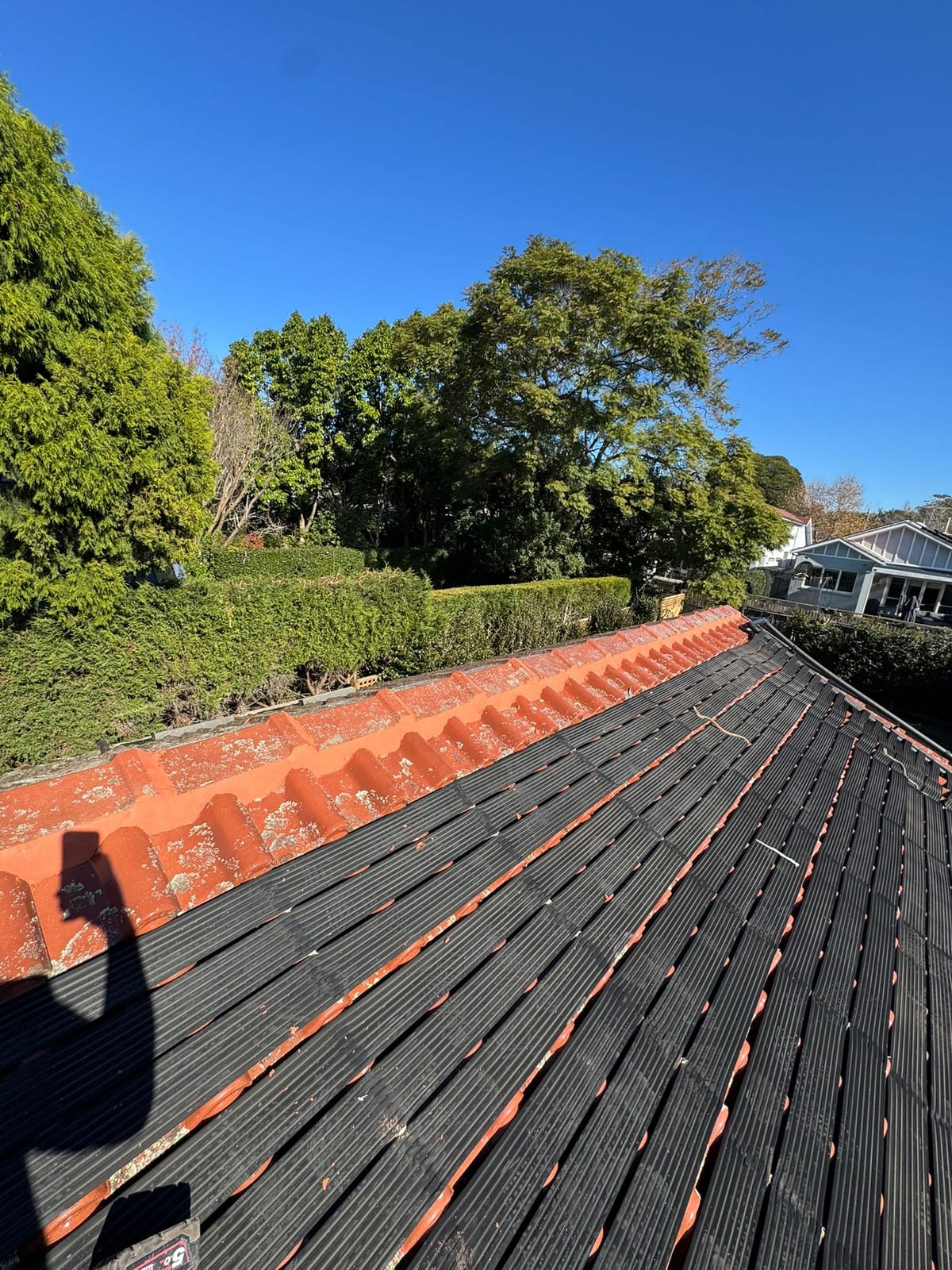
  • Freshly bedded and pointed ridge capping on a tiled roof with the garden below
    Freshly bedded and pointed ridge capping on a tiled roof with the garden below
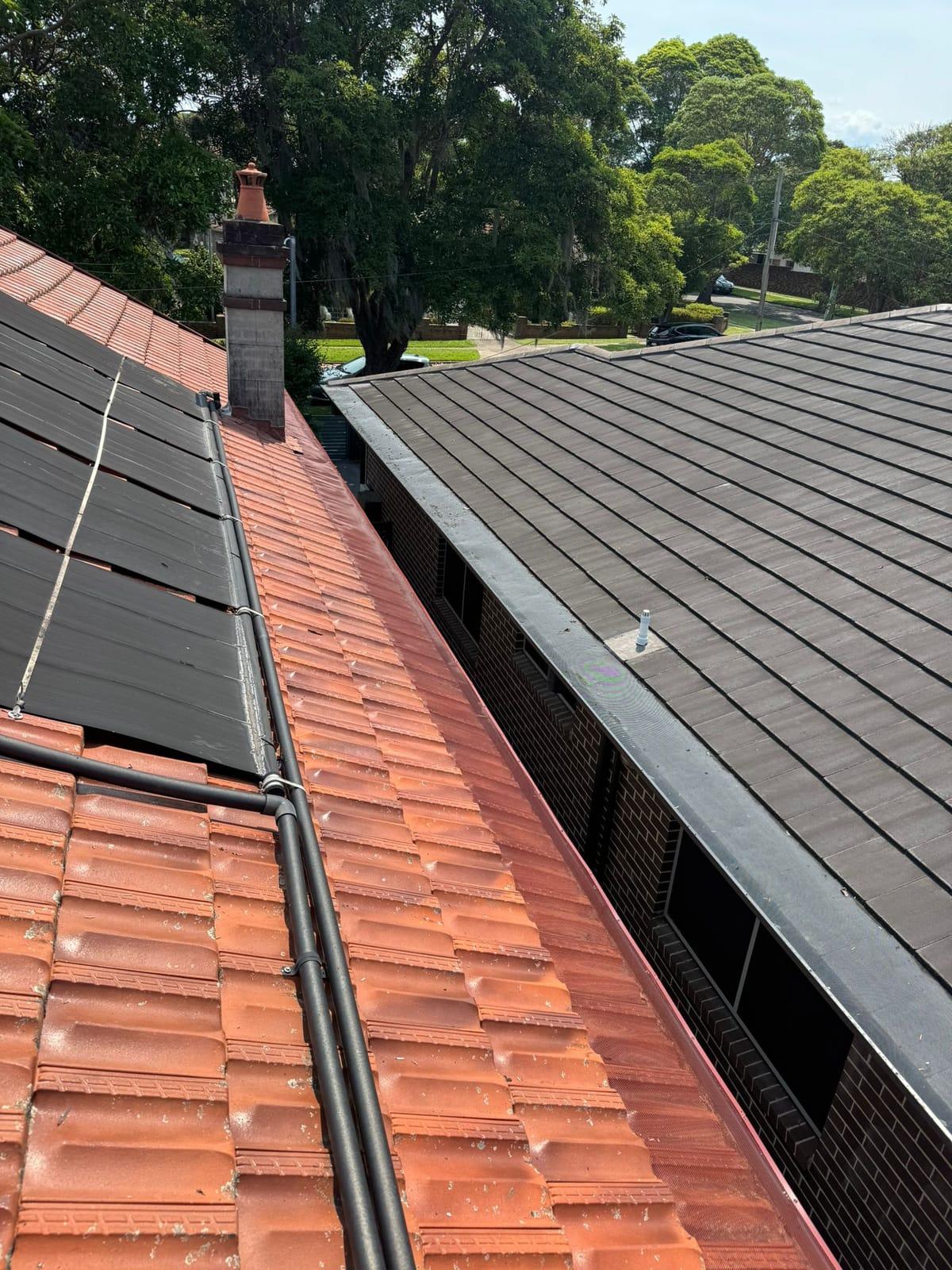
  • New gutter and fascia fitted along the edge of a dark tiled roof
    New gutter and fascia fitted along the edge of a dark tiled roof

Roof Repairs: questions we get asked

Can you match my 1970s tiles if the profile has been discontinued?

Often, but not always. We start with second-hand tile yards around Sydney, which hold a lot of older Monier and Boral concrete profiles and some terracotta. If nothing matches, we take good tiles from a hidden part of your roof (behind a chimney, on a rear hip) to use where they show, and fit the closest modern profile in the hidden spot. Terracotta from smaller makers is the hardest to match, and we will tell you before starting if we think it cannot be done.

Do the ridge caps need re-bedding, or can they just be re-pointed?

Push on a cap. If it moves, or you can see the bedding has washed out beneath the pointing, it needs re-bedding. Re-pointing alone only works when the original bedding is still hard and holding the caps firmly, which is rare on a roof more than 20 years old. Re-pointing over failed bedding looks fine from the street for two or three years, then the flexible pointing cracks because the caps underneath are moving. We quote both options when both are genuinely viable.

Can you repair the roof before my insurer has sent an assessor?

Yes, and you should not wait to make it safe. Insurers expect you to prevent further damage, so a tarp or temporary fix straight after the storm is normal and does not affect the claim. Photograph the damage first. For the permanent repair, most insurers want a report and quote before work starts, which we provide in the format assessors expect. Our guide to NSW storm damage insurance claims explains the sequence.

Do you need a licence for a small roof repair under $5,000?

In NSW a contractor licence is legally required for residential roofing work over $5,000 including materials, so a $600 flashing repair does not require one. In practice, though, the roofer doing your small repair is the one you will call for the big job later, so it is worth using a licensed roofer from the start. You can check any licence in about a minute at verify.licence.nsw.gov.au. Work over $20,000 also requires Home Building Compensation cover.

Will the repair actually stop the leak, or will it come back?

If we have found the true entry point, the repair stops it, and our 2-year workmanship warranty covers that. The risk is when the visible fault is not the only one: a cracked tile above a stain is replaced, but the real leak is a flashing three metres uphill. That is why we inspect the whole roof and, where the source is not obvious, flood-test before we quote. If a leak persists after our repair, we come back at no charge and find it.

How quickly can you get to my area?

We are based in Gladesville and work across all of Sydney. Ryde and the lower North Shore are minutes away; the Hills, Northern Beaches, Inner West and Eastern Suburbs are generally 20 to 45 minutes; Western Sydney and the Sutherland Shire are 30 to 60 minutes depending on traffic. Emergency make-safe is same-day where availability permits. For a standard repair we book an inspection, then send a written quote, usually within 24 to 48 hours.

Get a free roof repairs quote

We come out, get on the roof, photograph what we find and put every line in writing. No obligation and no sales call afterwards.

Call 0404 839 843Request a quote