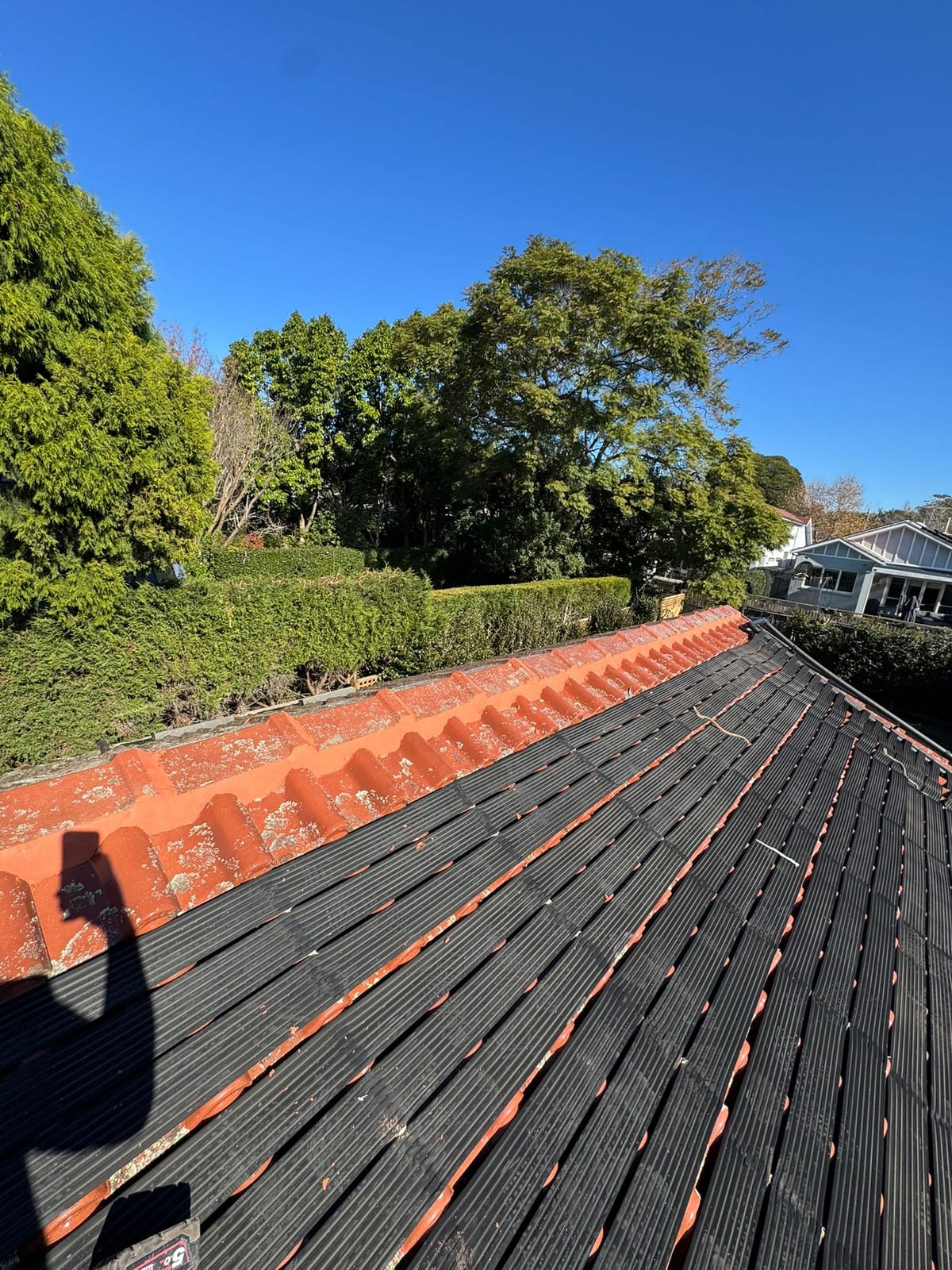
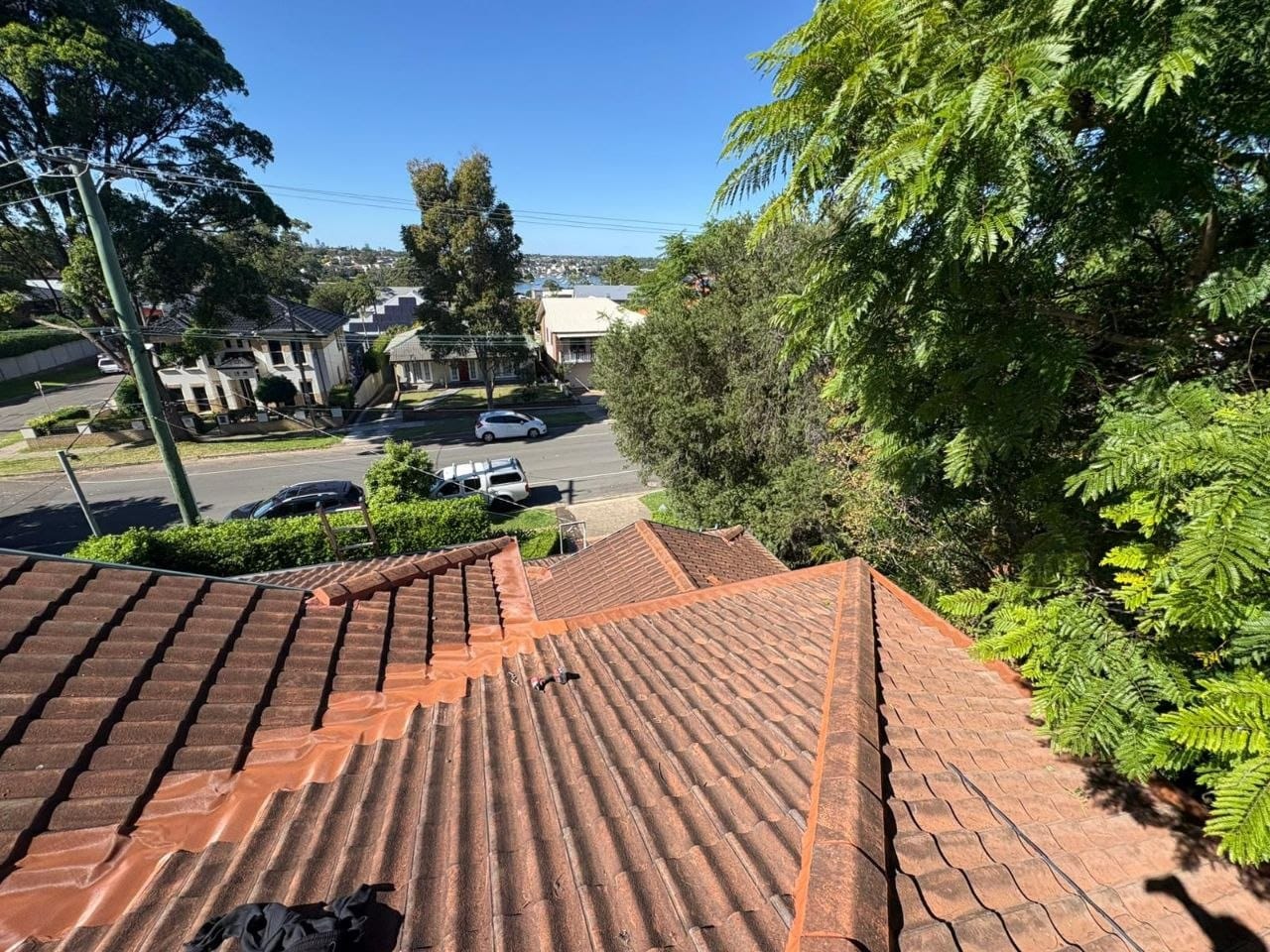
Gladesville is our depot suburb, so a roofer is usually at your place within minutes of leaving the yard. The older streets between Victoria Road and the river are Federation and interwar homes with their original terracotta tiles, and those roofs are the ones we know best: sound tiles, tired ridge mortar, no sarking, and timber battens that have taken a century of Sydney weather. The figs and gums along Victoria Road drop a leathery leaf that mats across gutters rather than washing through, so overflow at the corners is the most common call we get here. Re-bedding ridges, matching a discontinued terracotta profile and clearing valleys under heavy canopy are routine work for us in Gladesville.
We are based here
Our depot is on Buffalo Road in Gladesville, which makes this the one region on the site where we do not have to estimate travel time. Gladesville, Hunters Hill and Putney are a few minutes from the yard. Ryde, West Ryde and Meadowbank are five to ten. Macquarie Park and Eastwood are ten to fifteen up Lane Cove Road or through Denistone, depending on the hour. When a storm comes through, the first job a crew reaches is usually a Ryde one, simply because it is closest.
Being local also means we know the housing better than anywhere else we work. We drive past it every day, and a large share of the 500-plus clients we have worked for over 11 years live between the Parramatta River and the M2.
The housing stock, and what it means for the roof
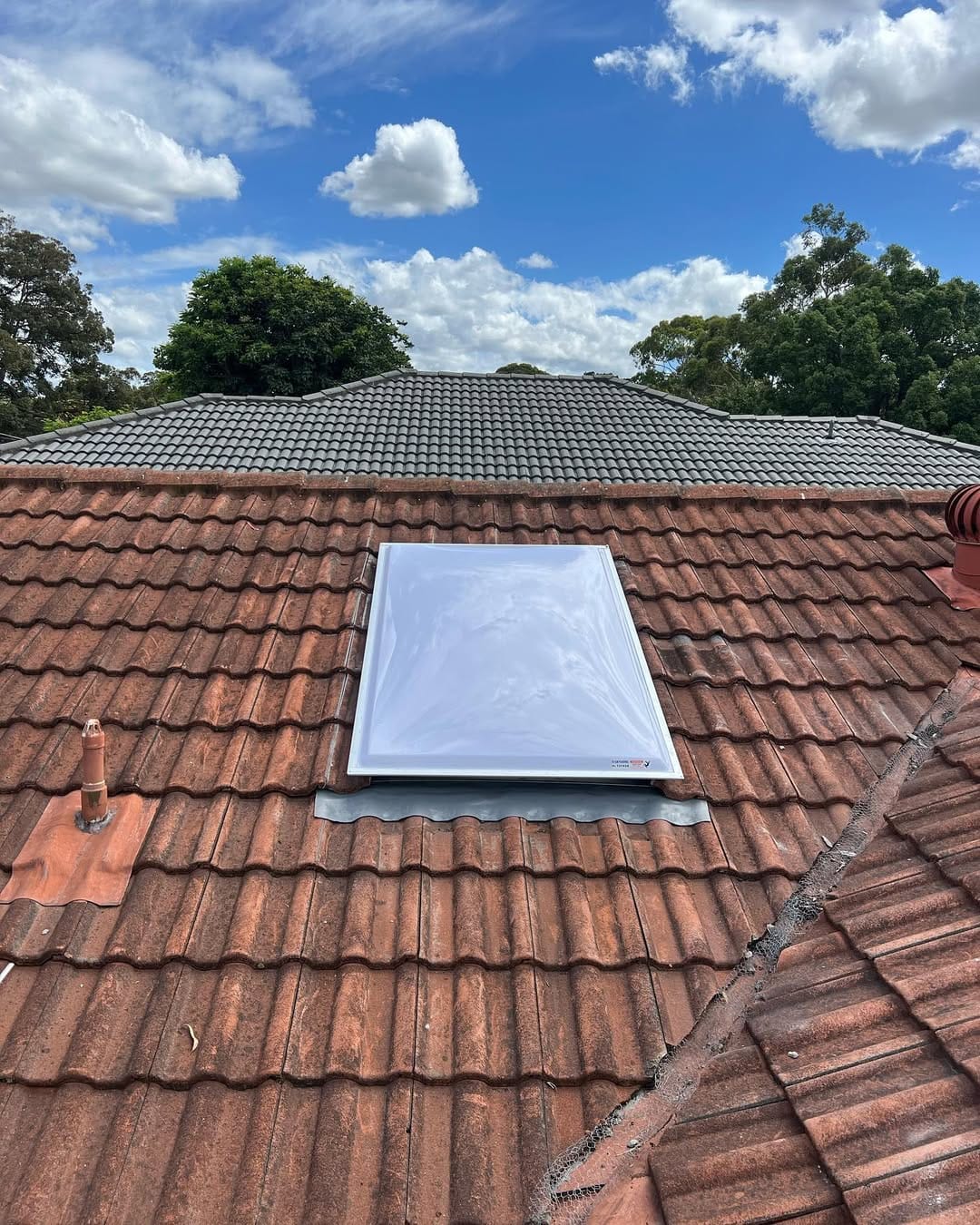
Most of the district was built out between the early 1950s and the mid 1970s. That gives us a lot of single-storey brick veneer and double-brick homes with concrete tile roofs at a moderate pitch, on blocks big enough to set up a ladder and a tile lift without fuss. Those concrete tiles are now 50 to 70 years old. The tile itself is often fine. What fails is the bedding mortar under the ridge capping, the pointing on top of it, and the valley irons, which were usually galvanised steel and have rusted through along the bottom edge where water sits.
The older pockets tell a different story. Gladesville and Hunters Hill have Federation and interwar homes with original terracotta tiles, some slate, and the timber-framed roofs that go with them. Terracotta from the 1920s is usually still sound, but the ridges need re-bedding and any sarking has long since perished.
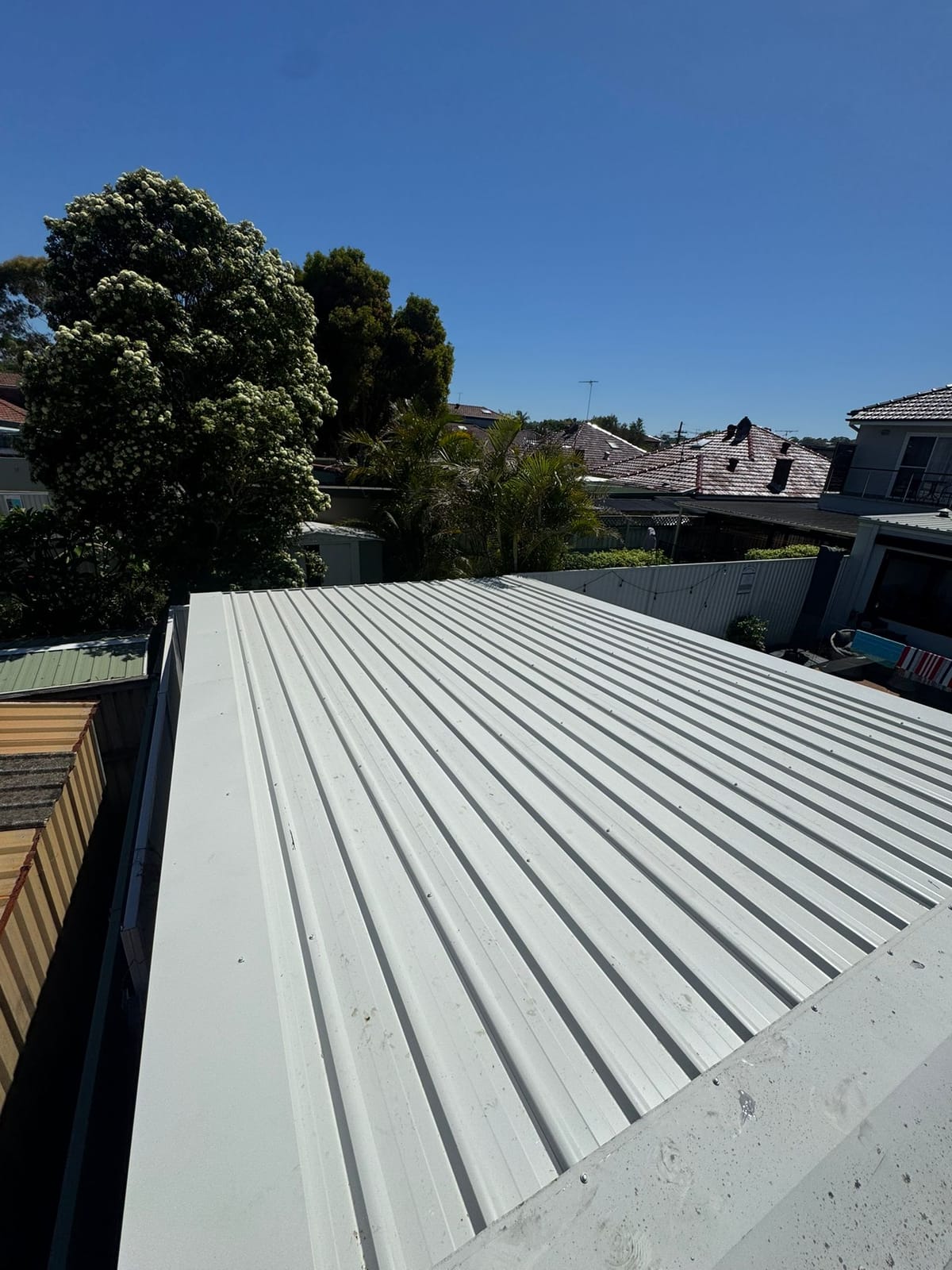
Then there is Macquarie Park, which is not residential in the same sense at all. It is office parks, apartment towers built since the early 2000s, and a lot of large-span metal roofing with box gutters, plant decks and membrane over concrete. That is strata and facilities-manager work, done under a SWMS with anchor points, often after hours.
Trees, and why gutters here fill faster than you expect
Victoria Road from Gladesville through to Ryde is lined with mature figs and gums, and the side streets behind it are much the same. Eastwood and the Denistone ridge have some of the biggest private-garden trees in Sydney. Fig leaves are leathery and slow to break down, so they form a mat across the gutter rather than washing through. Gum bark and seed pods do the rest. If your gutters overflow in the first big autumn rain, that is usually the reason, and it is why we do more gutter cleaning in this district than anywhere else.
Canopy also means shade, and shade means moss and lichen on the south side of a tile roof. It is cosmetic until it lifts the pointing, which it eventually does.
Councils and heritage
The district sits across City of Ryde and Hunters Hill Council. For most of Ryde, a like-for-like roof restoration or replacement is exempt development and needs no approval. Hunters Hill is different: most of the peninsula is a heritage conservation area, and changing the roof material, profile or colour on a listed or contributory house usually needs a heritage exemption or a development application. We can tell you which category your house falls into before anyone spends money on drawings.
Gladesville has a smaller conservation pocket around the older streets near the river, and the same rule of thumb applies. Like-for-like repair is fine. Changes are where council gets involved.
Faults we see most in Ryde and Macquarie Park
- Ridge capping cracked, loose or missing on 1950s to 70s concrete tile roofs
- Valley iron rusted through, showing as a leak that only appears in heavy rain
- Gutters overflowing at the corners under fig and gum canopy
- Perished sarking and cracked tiles under old TV aerial and solar mounts
- Box gutter overflow on Macquarie Park commercial and strata roofs
- Wind-driven rain getting under lapped sheeting on riverfront apartments at Meadowbank
Restore, repair or replace?
For a 1960s concrete tile roof in Ryde, the honest answer is usually roof restoration: re-bed and re-point the ridges, replace the cracked tiles, clean, prime and coat. A typical three-bedroom home here starts from $4,500 for that. Where the tiles themselves are spalling, or the owner wants to lose the weight and go to Colorbond, roof replacement is from $14,400 for a small home with about 120 m² of roof, at from $120 per m². If the roof is borderline we put both options in writing on the same visit, so you can compare them properly.
Pricing in the district
Because we are not driving across Sydney to get here, small jobs stack up well in this region. A roof repair call-out for a handful of tiles or a section of pointing starts from $350, and we can usually fit it in the same week. Quotes are free, written and on-site, and there is no travel component on anything inside the district.
How to get us out
Call 0404 839 843 or request a free quote. If water is coming in right now, say so when you call and we will treat it as an emergency make-safe, attended the same day where availability permits.