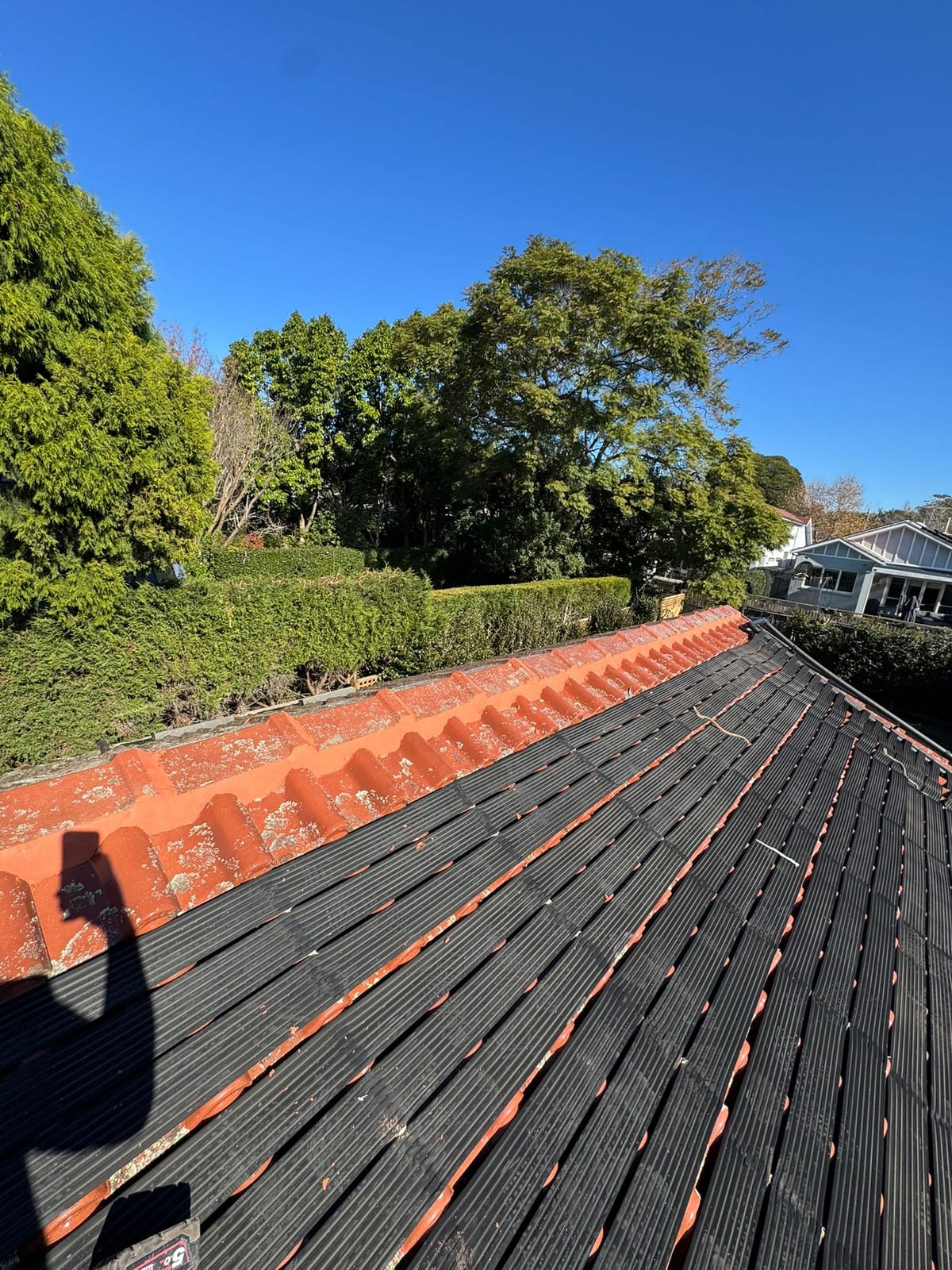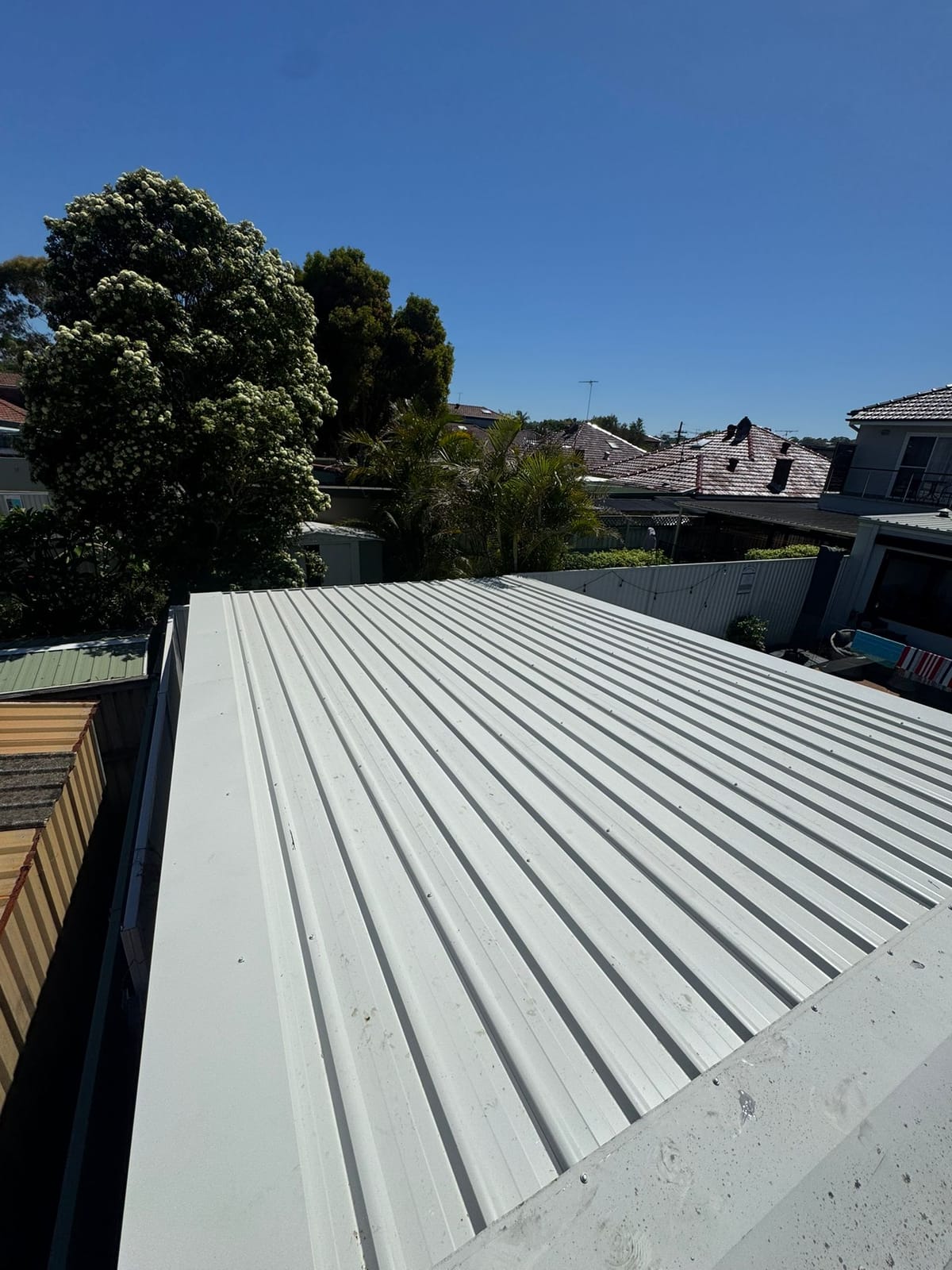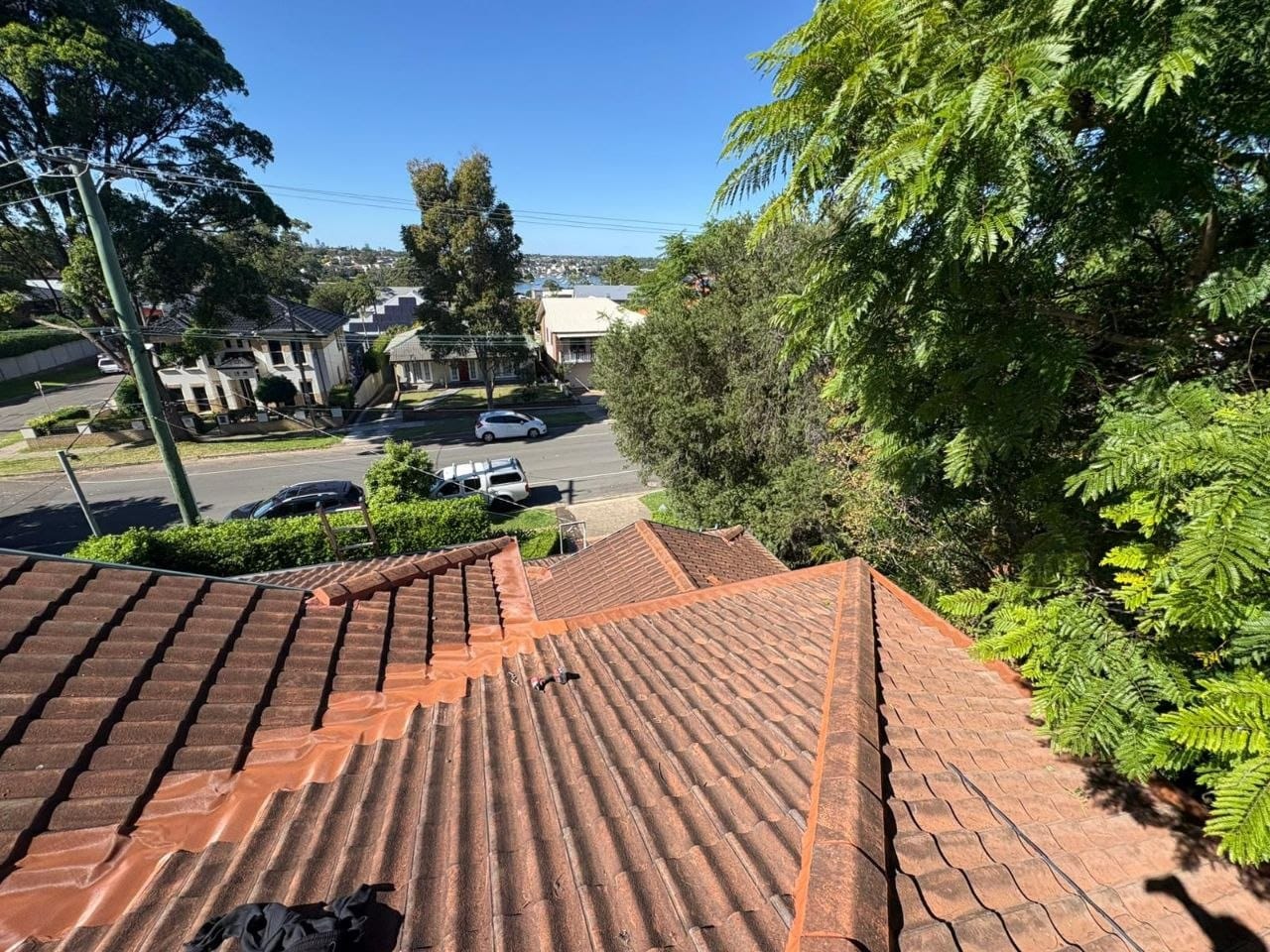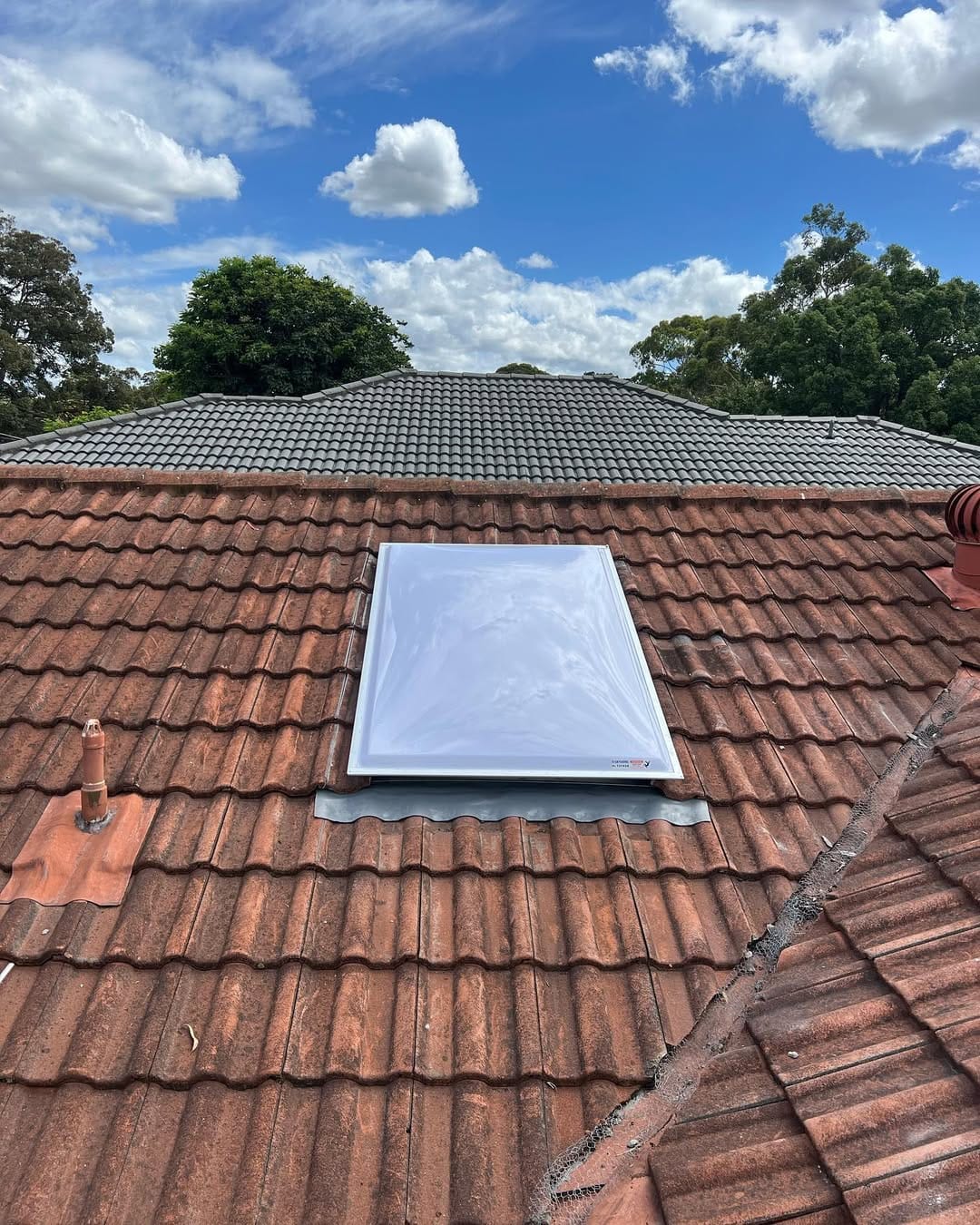
Marrickville is where the two halves of the Inner West meet: Federation semis on one side of the street and converted warehouses on the other. The semis share a central valley or box gutter along the party wall, and that gutter is the source of most of the leak calls we take here. The warehouse stock brings parapet walls, long low-pitch metal runs, internal box gutters with undersized outlets, and often a strata or commercial owner rather than a household. Both types need the same discipline: find the true entry point, replace the flashing properly rather than sealing over it, and size the overflow so the next big storm has somewhere to go.
A different kind of roof
Most of Sydney's roofing trade is built around the freestanding brick-and-tile house: a hipped concrete tile roof, eaves gutters on all four sides, a driveway to park on. Almost none of that applies between Balmain and Strathfield.
The Inner West was built in two big waves. The Victorian terraces of Balmain, Leichhardt, Newtown and Petersham went up from the 1870s to the 1890s, mostly with slate or corrugated iron roofs behind parapet walls. The Federation and interwar homes of Marrickville, Ashfield, Burwood, Strathfield and Concord followed from about 1900 to 1940, with terracotta tiles, timber-framed gables, and in the grander streets, slate with lead and copper detailing. On top of that sit the warehouse conversions and post-war infill around Marrickville and Five Dock.
What these roofs share is that the water rarely runs off the edge. It runs into the middle.
Box gutters, party walls and secret gutters
A terrace roof usually drains inward to a box gutter running along the party wall, or to a secret gutter tucked behind the front parapet. Those gutters were sized for 1880s rainfall and 1880s expectations. They are often galvanised steel that has been patched with bitumen, silicone and whatever else was to hand over 140 years.
When a box gutter fails, the water does not drip off the eave where you would notice it. It goes into the party wall, down through the cornice, and shows up as a ceiling stain two rooms away from the actual problem. It also goes into the neighbour's side just as readily as yours.
This is why leak work here is slower and more careful than in the suburbs. We open the ceiling access, trace the fall of the gutter, check the sump and overflow (which are often missing entirely), and flood test before we commit to a fix. A proper rectification usually means a new Colorbond or stainless box gutter with a compliant overflow to AS/NZS 3500.3, new party-wall flashings chased into the brickwork, and re-sheeting the low-pitch section either side. That is a different job to swapping a few tiles, and it is priced differently: from $2,500 for a full box gutter rectification, depending on length, access and whether the neighbour's side is done at the same time.
Slate and the grand Federation homes
Burwood, Strathfield and parts of Ashfield and Balmain still carry original Welsh and Australian slate. Slate does not wear out the way concrete tile does; the failure point is almost always the fixings (the old nails rust through), the lead or copper valleys and flashings, and the timber battens underneath. A slate roof that is shedding the odd slate each winter usually needs a proper re-fix rather than piecemeal patching, and that is a specialist conversation about whether the slate can be lifted, sorted and relaid on new battens with sarking to AS 4200.1.
Terracotta on the Federation stock has a different problem set: fretting and delaminating tiles on the weather side, cracked ridge bedding on the gables, and corroded valley iron under decades of leaf litter from the street plane trees.
Heritage overlays and who approves what
Four councils cover this region: Inner West Council (Balmain, Leichhardt, Marrickville, Ashfield, Newtown), City of Canada Bay (Drummoyne, Five Dock, Concord), Burwood Council and Strathfield Council. Large parts of Balmain, Haberfield, Strathfield and Burwood sit inside heritage conservation areas, and individual houses across every suburb are heritage listed.
In practice that means: like-for-like repairs generally proceed without approval, but a change of material or colour visible from the street (slate to Colorbond, terracotta to a different profile, a new roof colour on a listed house) usually needs a development application or a heritage exemption. We tell you this at quote stage, not after the tiles are off. Haberfield's controls are among the strictest in Sydney and even gutter profiles matter there.
Getting to the roof
Nobody in Balmain has a driveway wide enough for a tipper, and Newtown terraces are often reached only through the house or a rear lane. We plan access before we quote: where the skip goes, whether we need a council permit for a bin on the street, whether materials go up through the courtyard or over the front parapet. For shared box gutters we ask you to speak to your neighbour early, because the right fix nearly always involves both sides of the wall and the cost is far lower when it is done once.
Salt on the harbour side
Balmain, Rozelle and Drummoyne sit on the harbour and get enough salt in the air to shorten the life of galvanised and older Zincalume roofing. We see pinholing along the laps and fastener heads rusting out on 20-year-old metal roofs that would be fine at Burwood. For replacement sheeting on those elevations we specify Colorbond Ultra and marine-grade fixings; the premium is from 20 per cent on the sheet cost and worth it.
What we see most
- Box gutter overflow into party walls and cornices
- Failed parapet and party-wall flashings, usually sealant over old lead
- Corroded valley iron under terracotta on Federation homes
- Slate slippage from rusted nails and rotted battens
- Ridge bedding failure on interwar tile
- Blocked secret gutters behind parapets
- Salt corrosion on metal roofs at Balmain and Drummoyne
Travel time and quoting
We are 15 to 25 minutes from most of the Inner West, Drummoyne and Five Dock at the near end and Newtown and Marrickville at the far end. Quotes are free, on site and written, and for terrace work we would rather spend an extra half hour in the roof space than guess. Book a quote and tell us the suburb and whether the house shares a wall.