Skip to content
Sam's Roofing Experts

Roofers in Northern Beaches

Salt does most of the damage on the Northern Beaches. If your roof is within a kilometre of the surf, the sheet grade and the screws matter more than anything else on the quote, and we will tell you which side of that line your house sits on.

NSW licence 502874C2-year workmanship warrantySame-day emergency attendance, where available4.9 on Google

Northern Beaches Council

What salt air does to a roof between Manly and Palm Beach

The Northern Beaches is the most corrosive roofing environment we work in. Salt spray carries well inland on a nor'easter, settles on every surface and pulls moisture out of the air each night. On a metal roof it goes for the cut ends of sheets, the heads of screws, the laps and the underside of flashings first. On a tile roof it eats the galvanised valley irons and the steel gutters long before the tiles themselves give any trouble.

The pattern we see most is a roof that looks fine from the street and is failing at the fixings. Zinc-plated screws rust, the seal under the head breaks down, and water tracks down the thread into the batten. The sheet around each screw goes with it. By the time it shows as a ceiling stain the roof has often lost enough holding strength to matter in a storm.

Marine-grade fixings and Colorbond Ultra

Two specifications decide how long a beaches roof lasts. The first is the fixings. Within sight of the surf we use Class 4 coated screws as the minimum and 316 stainless steel where the roof takes direct spray, and we replace the neoprene washers, not just the screws. Mixing metals matters too: a stainless screw through a zinc-coated flashing sets up its own corrosion cell, so the flashings and the fixings have to be chosen together.

The second is the sheet itself. BlueScope publishes environment guidance for Colorbond, and in the severe marine band, roughly within a kilometre of breaking surf, standard Colorbond falls outside its warranty. Colorbond Ultra is the product for that band. It adds from 20 per cent to the sheet cost, and it is the difference between a roof that is warranted for decades and one that is not. Standard Colorbond is fine further back at Frenchs Forest, Belrose and Terrey Hills. The line is not exact. Headlands, wind direction and how open the block is all move it, and we walk it with you at the quote.

Wind uplift

Beachfront and headland blocks see a level of wind exposure the inner suburbs never do. Older metal roofs were often screwed at the minimum pattern for a sheltered site, and once the fixings have corroded there is not much left holding the sheet in a southerly. When we re-sheet on an exposed block we increase the fixing density at eaves, ridges and corners in line with AS 1562.1.

The housing stock, pocket by pocket

The beaches are not one market. Manly has Federation and interwar cottages, terracotta and corrugated iron, on lanes a ute can barely turn in. Dee Why, Brookvale and Collaroy are dominated by 1960s and 70s three-storey walk-ups: concrete slab roofs with sheet membranes, parapets and internal box gutters that were undersized when they were built. Mona Vale, Newport and Avalon are project homes and beach houses from the 70s onward, mostly metal roofs on steep blocks, many now at the end of their first roof. Frenchs Forest and Belrose are inland brick-and-tile suburbs under heavy canopy, where the problems are gutters, ridge capping and moss rather than salt.

Narrabeen has its own issue. The lagoon keeps the air humid, and on a cold night a metal roof without an anti-condensation blanket sweats on the underside. It is condensation, not a leak, and the fix is a blanket and ventilation, not sealant.

Bushfire at the western edge

Ingleside, Duffys Forest, Terrey Hills and the escarpment behind Avalon and Bilgola sit in bushfire-prone land under Northern Beaches Council mapping. Roofing work in those pockets is built to AS 3959: sarking that meets the standard, ember-sealed ridges and eaves, and ember-rated gutter guard rather than the plastic kind that melts. Avalon is the awkward one, because the escarpment blocks get bushfire exposure from behind and salt from the front, and the mesh, the screws and the sheet all have to satisfy both.

Council, heritage and approvals

Northern Beaches Council covers the whole region since the 2016 merger. Like-for-like repairs and restoration need no approval. Manly has heritage conservation areas where changing a roof material or profile, or replacing terracotta with metal, usually needs a development application or an exemption. Re-roofing in a mapped bushfire area may need a BAL assessment as part of the approval, and we will tell you before you commit to anything.

Getting to you from Gladesville

We are based in Gladesville, which is 30 to 45 minutes from most of the beaches depending on the Spit Bridge and Mona Vale Road. We are honest about that. We schedule beaches work in runs, usually two or three jobs a day in the same pocket. Emergency call-outs are attended the same day where availability permits, and we will give you a real arrival time on the phone rather than a promise we cannot keep.

What we do here

Every job comes with a free written on-site quote and a 2-year workmanship warranty. Book a quote and we will fit you into the next beaches run.
Suburbs we cover in Northern Beaches

What we see on the roofs in each suburb, and, as jobs are completed, real photographed work from that street or the next one.

Manly is the sharpest salt exposure on the peninsula: ocean on one side, harbour on the other, and spray reaching well back from the Corso. Heritage cottages here still carry original terracotta and corrugated iron, and the corrugated iron is usually the problem. Zinc-plated screws rust through, sheet ends rot at the gutter line, and lead flashings pit. We fix with 316 stainless where the roof takes direct spray and Class 4 coated screws elsewhere. Access is the other half of the job. Lanes off Pittwater Road and around Fairy Bower do not fit a tipper, so tile and sheet come in and out by hand, parking is booked in advance, and we price the extra labour up front. In the heritage conservation areas a change of roof material usually needs council approval; like-for-like repairs do not.

Dee Why is strata country. The 1960s and 70s three-storey walk-ups along Pittwater Road and behind the beach have concrete slab roofs with sheet membranes, parapet walls and internal box gutters that were never sized for a modern downpour. The faults we find are the same on almost every block: membrane laps lifting at the parapet, blocked sumps, overflows that do not exist, and rust in the box gutter where the salt sits in standing water. We inspect the whole roof, photograph every defect, and write the report so a strata committee can put it to a vote and get quotes on a proper scope. Box gutter rectification and membrane work are commercial jobs and we price them per block, not per unit. Where the slab and membrane are beyond repair we say so early.

Mona Vale is where we see the clearest case for Colorbond Ultra. Most of the housing stock is 1970s to 90s metal-roofed project homes, and the roofs that went on in standard Colorbond or Zincalume within a kilometre of the beach are now showing edge corrosion, rust bleeding from every screw head and pinholes at the laps. Restoration works when the corrosion is on the surface; once it is through at the ends of the sheets, the honest advice is to re-sheet in Ultra with stainless or Class 4 fixings and treat the flashings the same way. We quote both options side by side with the numbers, and we tell you how far your street is from the surf, because that distance is what decides which product BlueScope will warrant on your house.

Narrabeen gets a fault the rest of the beaches do not: winter drips from a roof that is not leaking. Lagoon humidity and cold nights make the underside of an uninsulated metal roof sweat, and the water runs to the lowest purlin and drops. We flood test to be sure, then fit an anti-condensation blanket and improve ventilation. Sealant does nothing for it. The salt story still applies on the beach side of the lagoon.

Avalon gets both exposures at once. The escarpment blocks back onto bushfire-prone land, so gutter guard has to be ember-rated to AS 3959 and roof edges sealed, while the same roof takes salt off the beach. Steel mesh rusts here; aluminium or stainless is the answer, with stainless screws. Steep, narrow driveways often mean scaffold or a small EWP, and we allow for it in the quote rather than surprising you.

Frenchs Forest is the inland pocket, and the problems are different. Salt is a minor factor; canopy is the main one. Concrete tile roofs from the 1960s to 80s are at restoration age, with cracked ridge pointing, moss holding moisture on the southern side, and gutters full of gum and Norfolk pine litter. Standard Colorbond is fine for replacements here, and annual gutter cleaning does more to protect the house than anything else.

Brookvale is the industrial area behind Dee Why: warehouses and factory units with large-span metal decks, box gutters and translucent skylight sheets that have gone brittle. Re-sheeting sections, replacing skylights and rectifying box gutters are the common jobs, usually after hours or on weekends so tenants keep trading. Access is by EWP with anchor points to AS/NZS 1891 and a SWMS on file before anyone goes up.

Also covering Collaroy, Newport and surrounding suburbs.

Our work across Sydney

Region-tagged photos for Northern Beaches will appear here as jobs are completed. These are from recent jobs across Sydney.

All recent work →
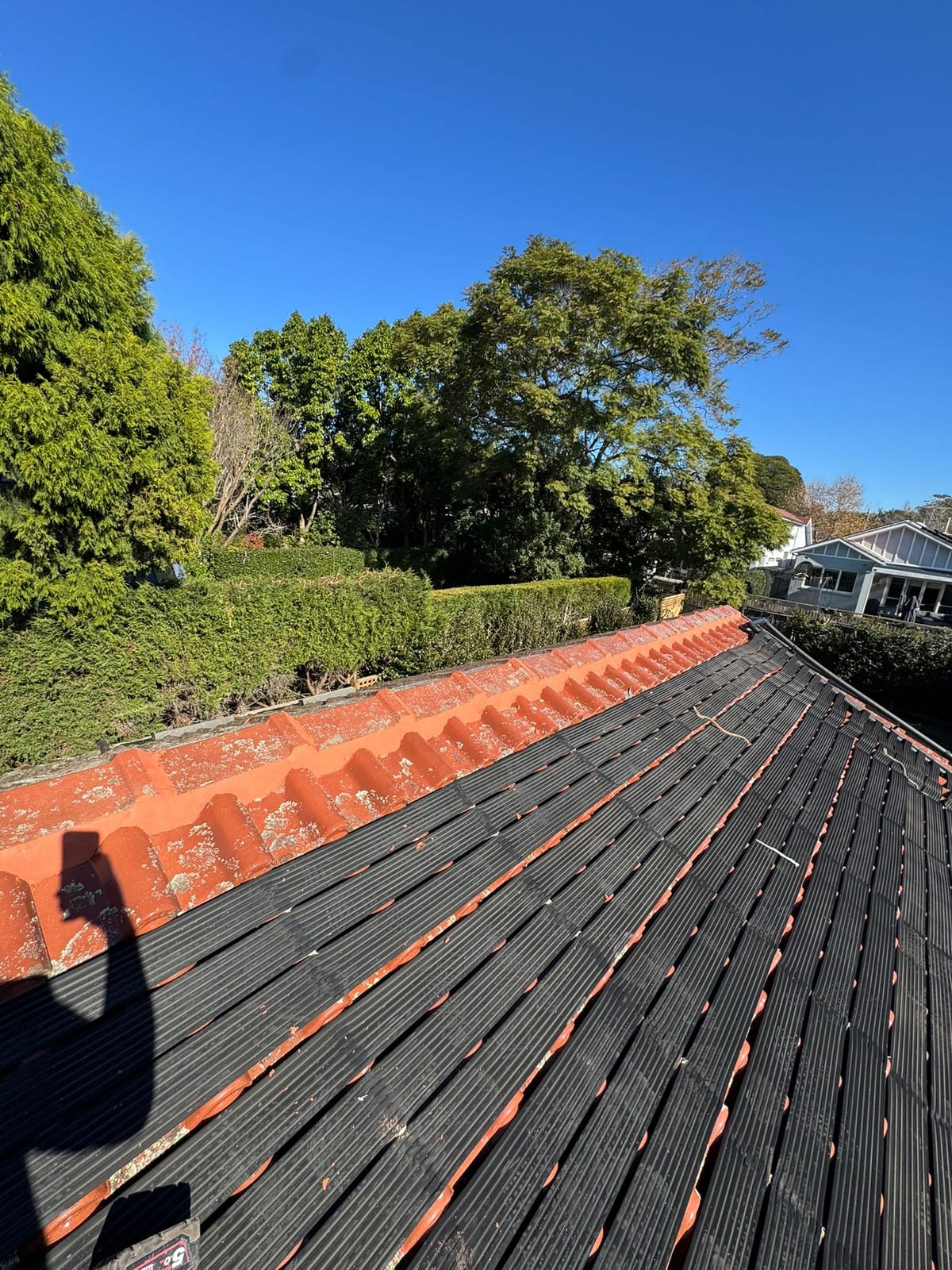
  • Freshly bedded and pointed ridge capping on a tiled roof with the garden below
    Freshly bedded and pointed ridge capping on a tiled roof with the garden below
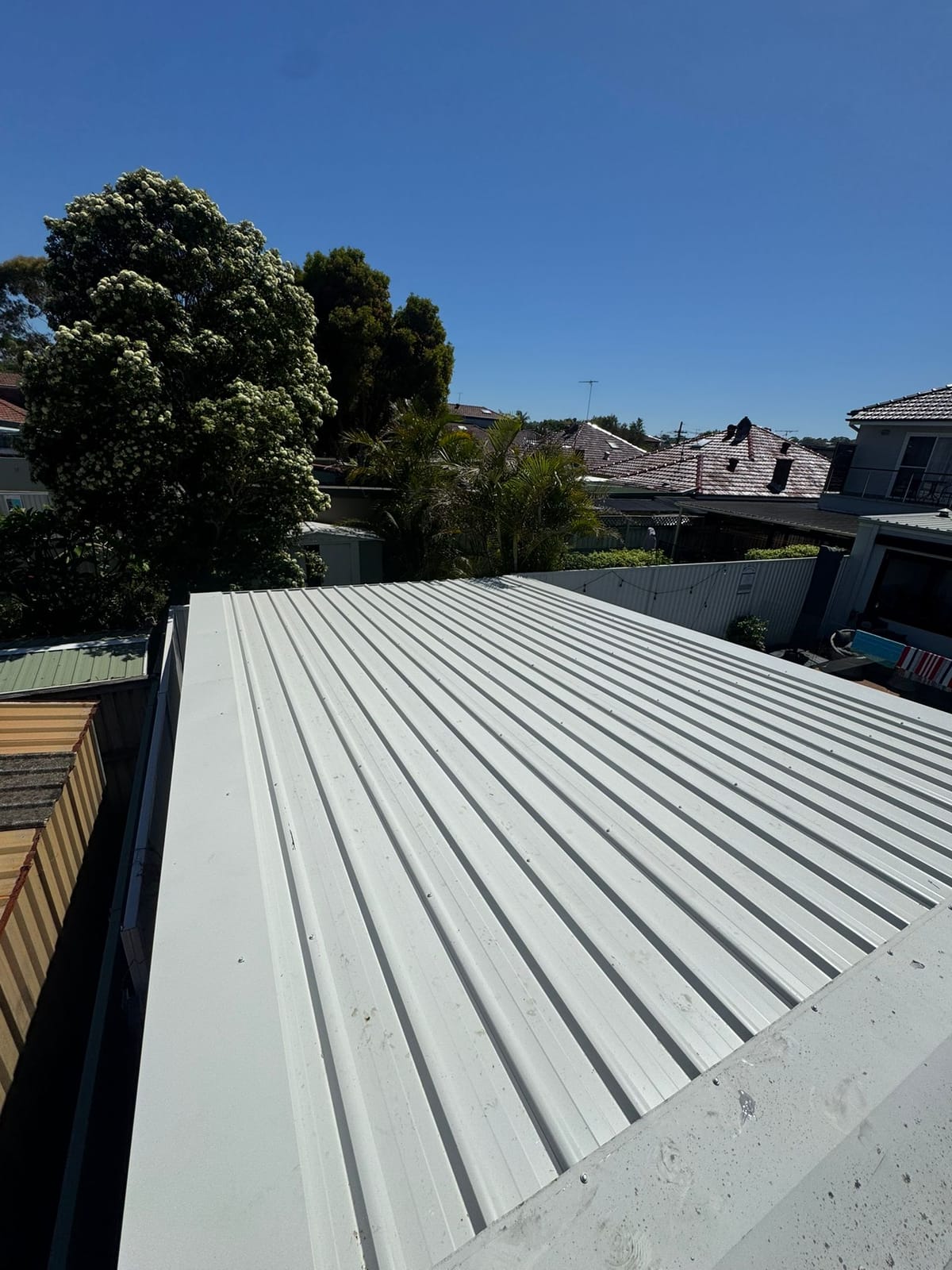
  • A new grey Colorbond roof over a house, neighbouring roofs behind
    A new grey Colorbond roof over a house, neighbouring roofs behind
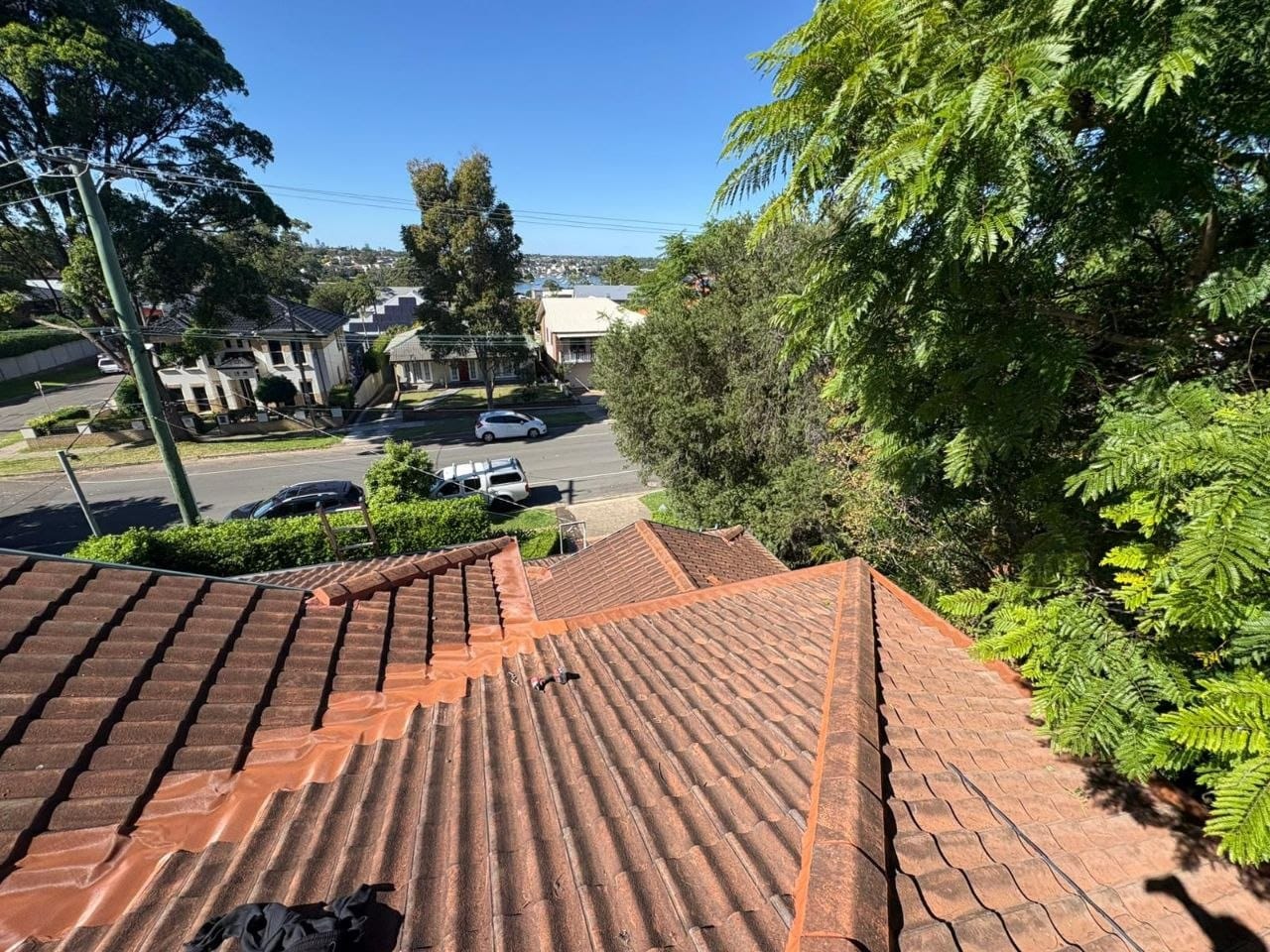
  • A restored terracotta tile roof with the suburb and trees beyond
    A restored terracotta tile roof with the suburb and trees beyond
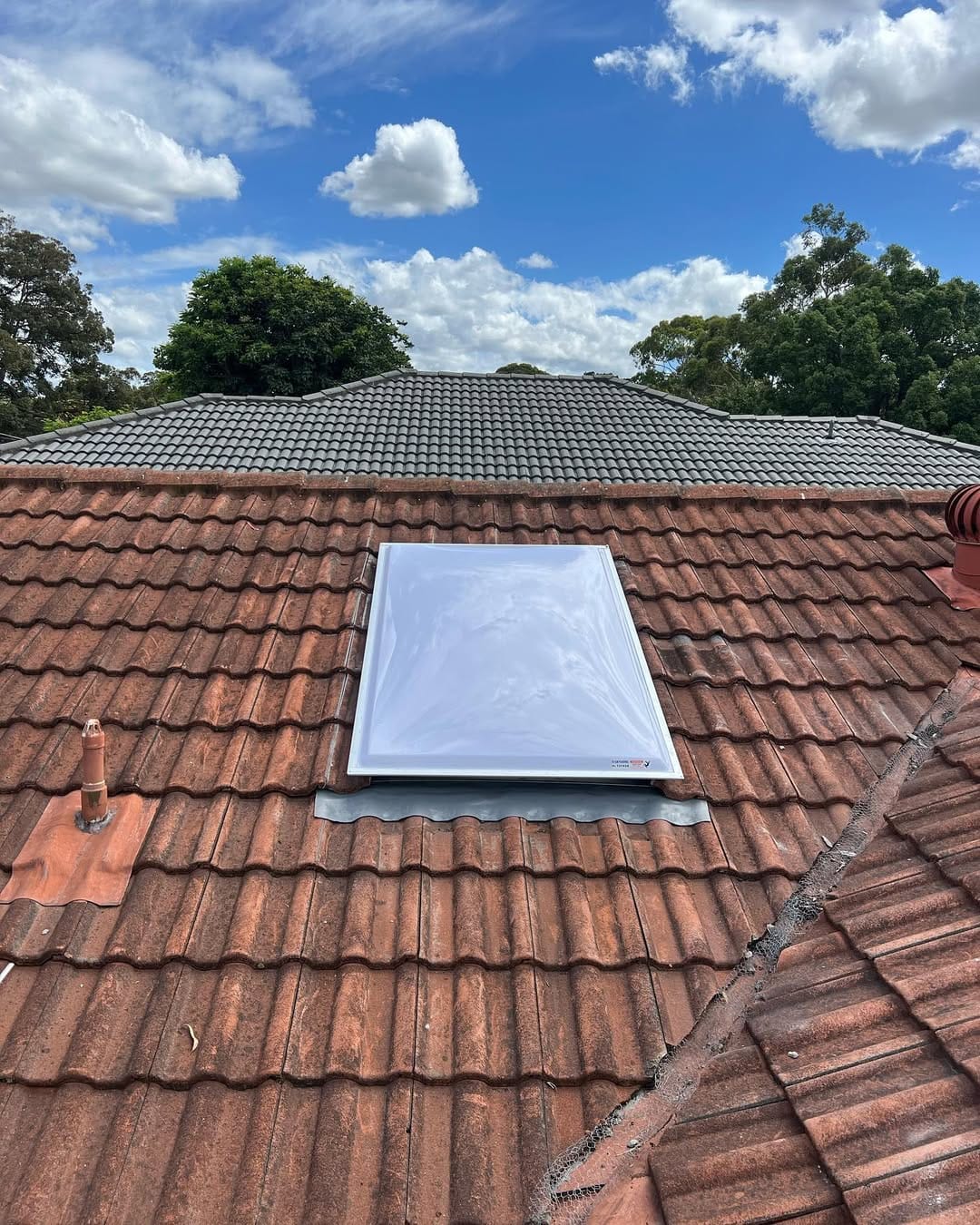
  • A new skylight installed in a tiled roof, flashed and sealed on all sides
    A new skylight installed in a tiled roof, flashed and sealed on all sides

Roofing in Northern Beaches: common questions

How far from the beach do I need Colorbond Ultra?

BlueScope's guidance puts the severe marine band at roughly within a kilometre of breaking surf, and that is where standard Colorbond is outside its warranty and Ultra is the product to use. It is not a hard line. A headland block at Newport a kilometre back can be more exposed than a sheltered street in Narrabeen half that distance. We look at how open the site is to the prevailing wind and tell you which product we would put on our own house there.

Can you restore a salt-damaged metal roof or does it have to be replaced?

It depends where the rust is. Surface corrosion on the face of the sheet cleans up, primes and coats well, and that restoration is worth doing. Rust that has gone through at the sheet ends, around the screw holes or along the laps cannot be coated over; the coating will look good for a season and then fail. We check the sheet ends and lift a few screws before we quote, and if it is past saving we say so and quote a re-sheet instead.

My roof only drips in winter and never when it rains. What is going on?

That is almost always condensation, and we see it most around Narrabeen and the lagoon. Humid air under a cold metal roof condenses on the underside of the sheet, runs down and drops off a purlin. No amount of sealant fixes it because nothing is leaking. The fix is an anti-condensation blanket under the sheets and better roof-space ventilation, which we can do as a retrofit or during a re-sheet.

You are based in Gladesville. How quickly can you get to the Northern Beaches?

Thirty to forty-five minutes for most of the peninsula, longer at Palm Beach or if the Spit Bridge is up. For quotes and scheduled work we group beaches jobs into runs so you are not waiting weeks for a slot. For emergencies we attend the same day where availability permits and give you a real arrival time on the phone based on where the crew is, not a blanket promise.

Do I need council approval to change my roof on the Northern Beaches?

Like-for-like repairs, restoration and coating do not need approval. Changing the material, for example tile to Colorbond, or altering the roof profile can need a development application or a complying development certificate from Northern Beaches Council, and in Manly's heritage conservation areas it usually does. In mapped bushfire-prone land a BAL assessment may be required. We tell you what applies to your street before you commit.

Book a free roof inspection in Northern Beaches

We come out, get on the roof, photograph what we find and put every line in writing. No obligation and no sales call afterwards.

Call 0404 839 843Request a quote