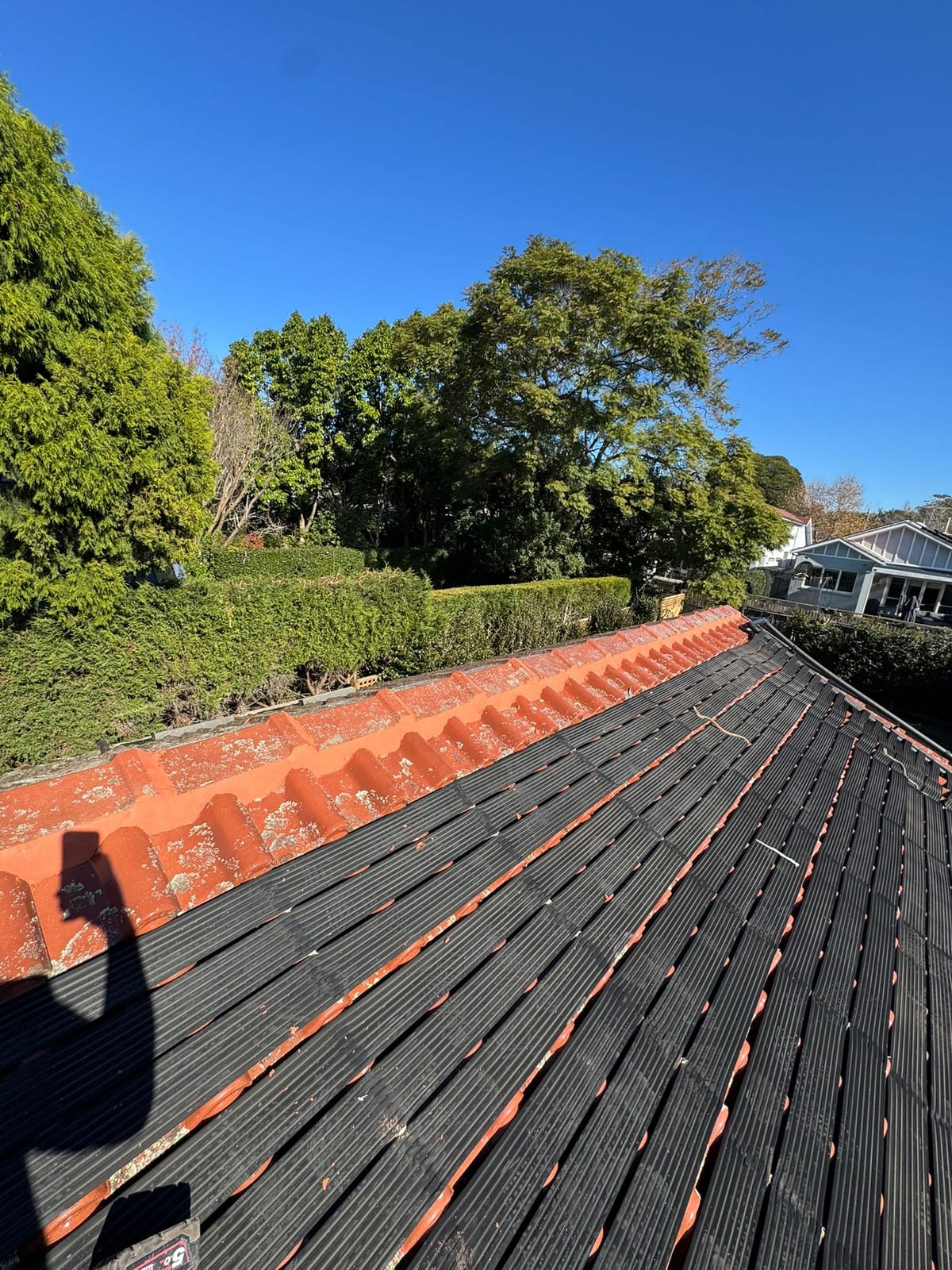
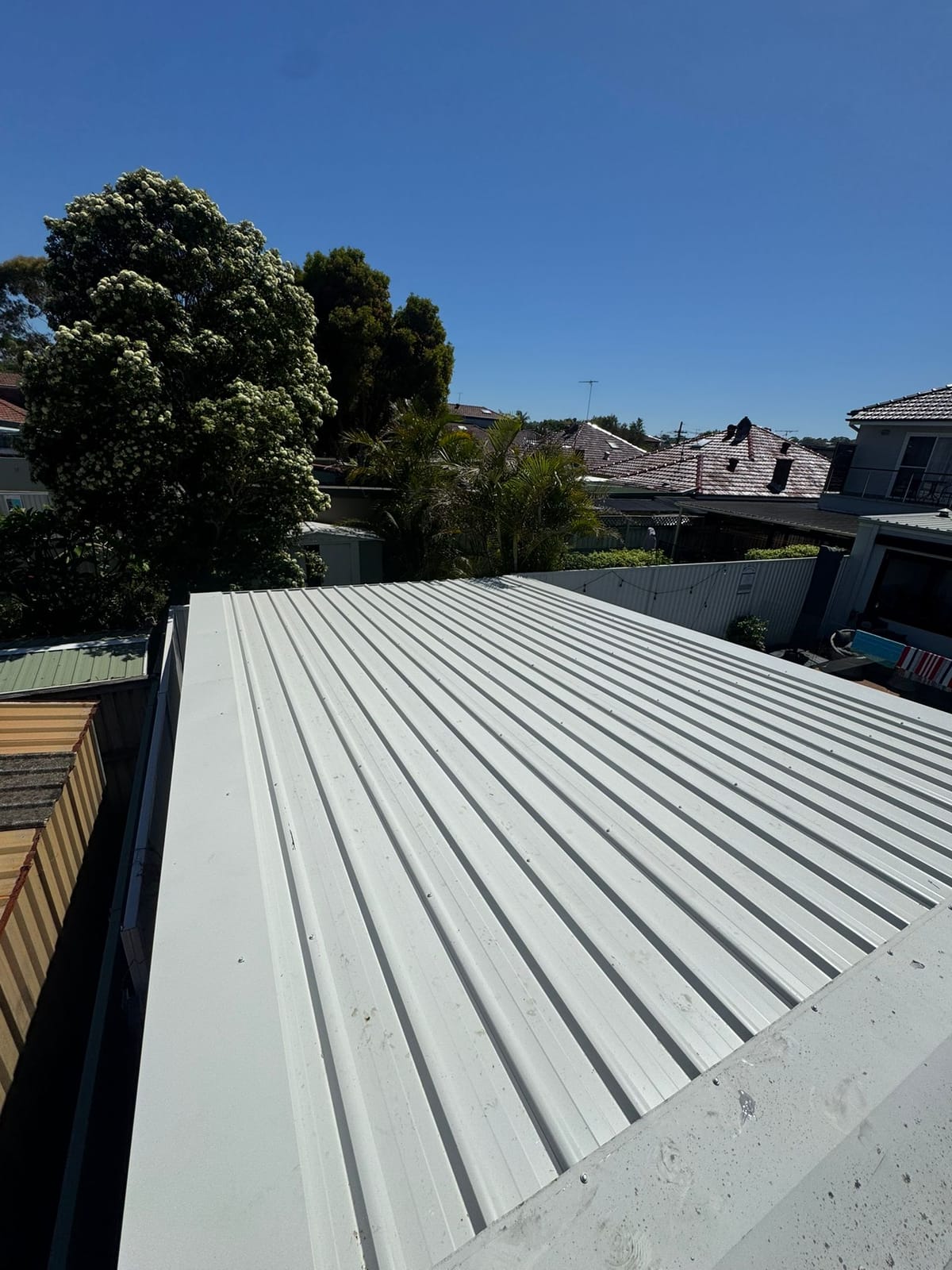
Chatswood is two jobs in one suburb. On the ridge west of the highway are Federation and interwar homes on large blocks with original terracotta, timber valleys and mature trees, where the calls are broken tiles, rusted valleys and gutters overwhelmed by leaf. East of the rail line it is strata: apartment towers, walk-ups and mixed commercial, where the roof is a membrane or a metal deck draining to internal box gutters. The strata work needs a different approach: a written condition report for the committee, after-hours access to lift wells and plant rooms, and a scope that the strata manager can put to a vote. We do both, and Chatswood is one of the few North Shore suburbs with measurable search demand for roof repairs, which tells you how much of the stock is due.
What is on the roofs up here
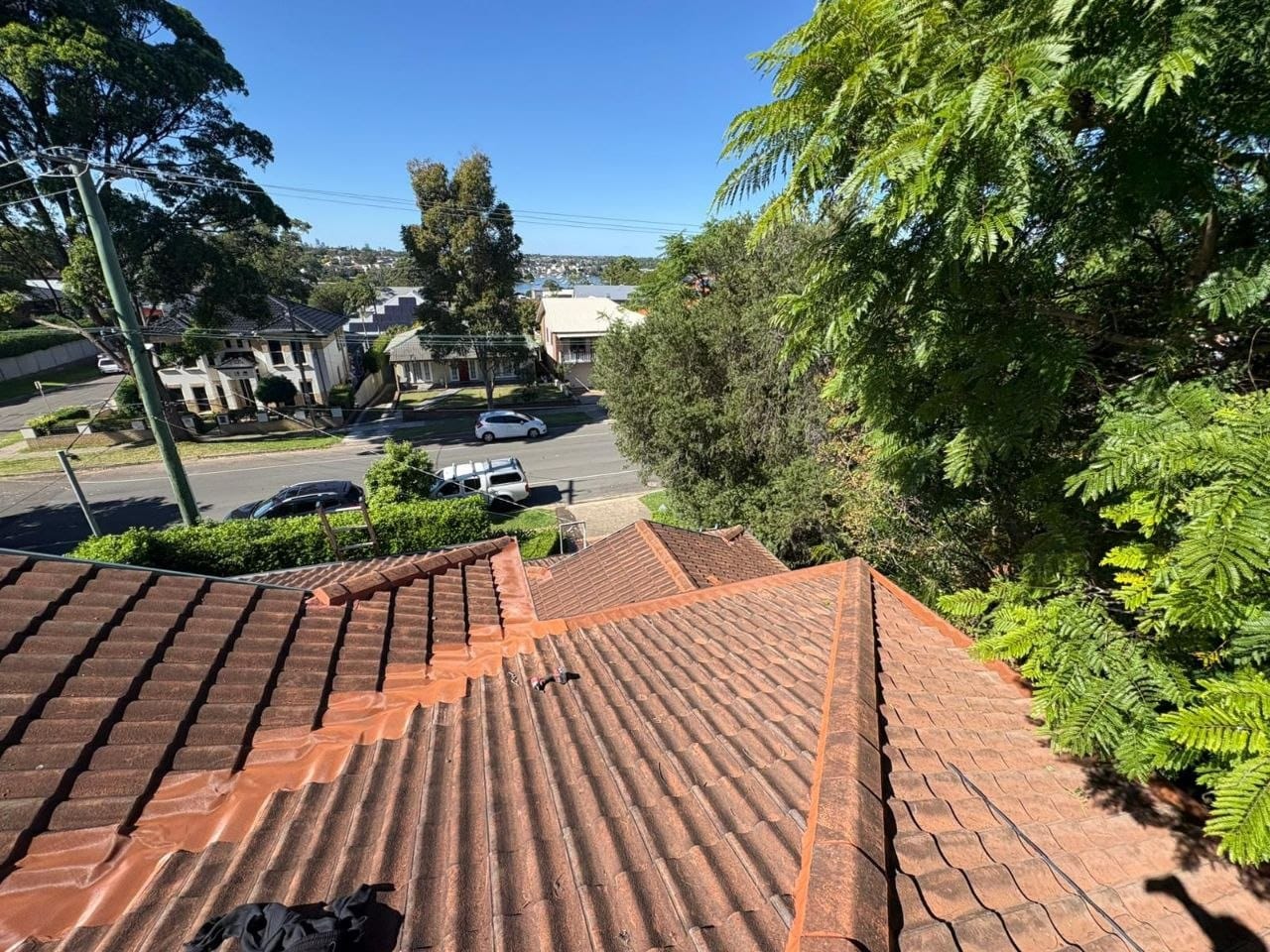
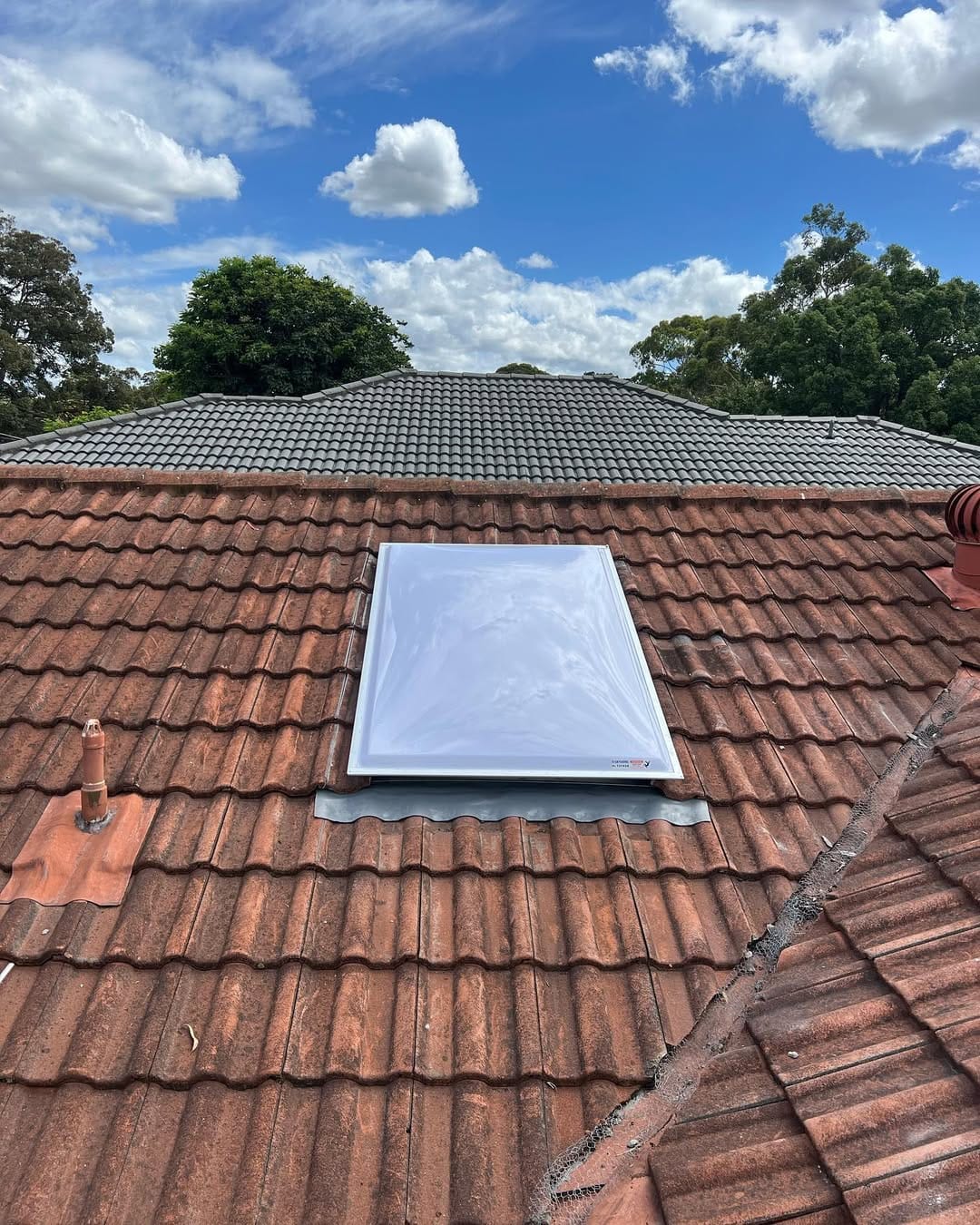
The North Shore is not one kind of roof. Along the Pacific Highway ridge from Roseville up to Gordon and St Ives, most of the stock is Federation and interwar: terracotta Marseilles-pattern tiles, some slate, timber battens, and often no sarking at all because it was not used when the house was built. Down towards Willoughby, Artarmon and Lane Cove there is a heavy band of 1950s to 1970s brick veneer under concrete or terracotta tile, much of it now past 50 years and at the point where ridge capping, valleys and pointing all fail in the same decade.
Closer to the harbour at Mosman, North Sydney and Crows Nest, the picture changes again: slate on the older houses, terraces with box gutters and party walls, Art Deco flat blocks with membranes, and a growing number of tile-to-Colorbond conversions on the renovated homes. Then there are the strata towers and commercial buildings of Chatswood and North Sydney, where the roof is a membrane or a metal deck draining to internal box gutters nobody sees until the top floor gets wet.
The canopy is the first problem
Ku-ring-gai has the densest tree canopy in Sydney and it drops leaf, twig, bark and gum nut all year, not just in autumn. Blue gums and turpentines shed strips of bark that sit in valleys and bridge across gutters. On a house at Gordon, Killara or St Ives, a gutter cleaned in March can be full again by June.
The damage shows up as water tracking behind the fascia and rotting the eaves lining, as overflow at valley outlets where the debris dams, and as rust in the gutter sole from wet leaf mulch sitting there for months. Most of the leak calls we take between Roseville and St Ives are not roof leaks at all; they are blocked valleys and gutters. That is why annual or twice-yearly gutter cleaning, and a properly fitted gutter guard, are the two services we do most in Ku-ring-gai.
Steep blocks, high walls and getting a ladder up
A lot of North Shore houses sit on blocks that fall away sharply to a creek or the harbour. Lane Cove, Longueville, Mosman and the eastern side of Gordon all have homes where the back of the house is three storeys off the ground even though the front is one. Ladders do not reach, and even where they do, the working-at-heights rules under AS/NZS 1891 mean we will not send a roofer over a two-storey drop without an edge protection system, a scaffold or an elevated work platform.
We price this honestly rather than hiding it. A scaffold or EWP hire on a steep Lane Cove block can add from $800 to the cost of a restoration or re-roof, and it is on the written quote so you can compare like with like.
Salt at Mosman, embers at St Ives
Mosman, Cremorne and Neutral Bay get harbour salt on every onshore breeze, enough to pit unpainted Zincalume, rust through cheap galvanised gutter screws and eat the exposed nail heads on a slate roof. We use Colorbond or stainless fixings there as a matter of course and recommend Colorbond Ultra for anything within sight of the water.
St Ives is the opposite exposure. Its eastern and northern edges back onto Garigal and Ku-ring-gai Chase national parks, and a large part of the suburb sits inside a mapped bushfire-prone area with BAL ratings on new work. For existing homes the practical measures are ember-rated gutter guard, sealed roof-to-wall junctions, metal valleys and keeping the gutters empty before summer. We install ember mesh to AS 3959 and will tell you plainly which parts of your roof are the weak points for ember entry.
Councils, heritage and what needs approval
You are dealing with five councils here: Ku-ring-gai, Willoughby, North Sydney, Lane Cove and Mosman. Like-for-like repairs and restoration on a non-heritage house need no approval. Changing material, colour or profile can. Mosman has extensive heritage conservation areas, and Ku-ring-gai has heritage items and conservation areas through Roseville, Gordon, Killara and Pymble, so a slate-to-Colorbond swap on a Federation house in those streets usually needs a development application or a heritage exemption first. We will say so at the quote stage rather than after the tiles are off.
The faults we see most on the North Shore
- Blocked valleys and gutters under gum and jacaranda, overflowing into eaves and ceilings
- Ridge capping with cracked or missing pointing on 50-year-old concrete and terracotta tile
- Rusted valley irons on interwar houses, often hidden under a bed of leaf mulch
- Slate slipping where the original copper or iron nails have corroded through
- Box gutter overflows on North Sydney and Crows Nest terraces and strata blocks
- Rust and screw failure on harbourside metal at Mosman
Why licensing matters more here
Homeowners on the North Shore are usually not looking for the cheapest of three quotes. They want to know the roofer is licensed, insured, will still be trading in five years and will do the job once. Any roofing work over $5,000 in NSW must be done by a licensed contractor, and you can check any licence at verify.licence.nsw.gov.au in under a minute. Over $20,000, which covers most re-roofs up here, Home Building Compensation cover is also required and we supply the certificate before work starts. Every job carries our 2-year workmanship warranty on top of the manufacturer warranties on Colorbond, coatings and mesh.
Getting to you
We are based at Gladesville, so most North Shore suburbs are 15 to 25 minutes away via the Gladesville Bridge or Lane Cove Road. Emergency make-safe after a storm is same-day where availability permits. Written, on-site quotes are free and no obligation, and you can request one here or call 0404 839 843.