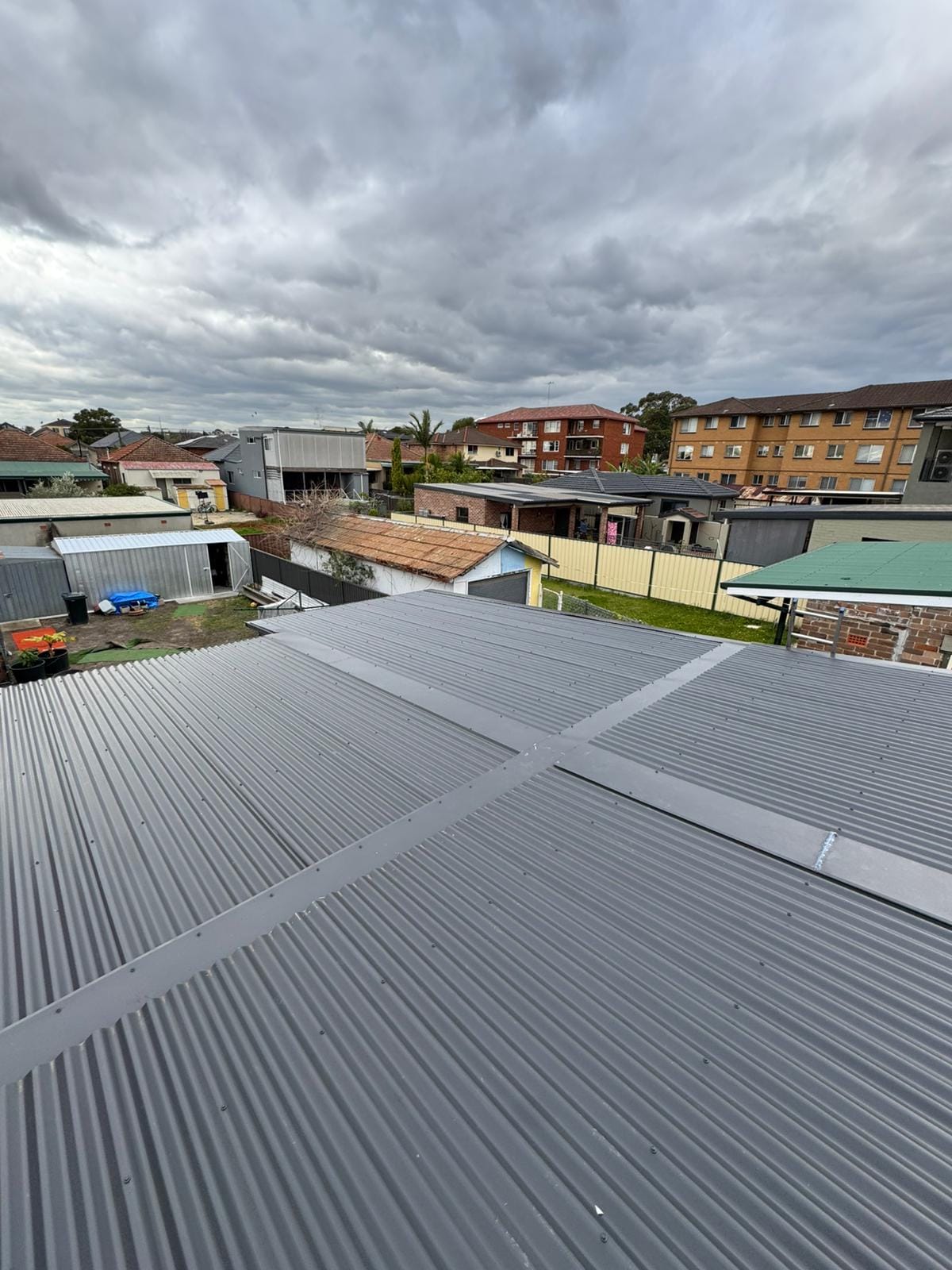
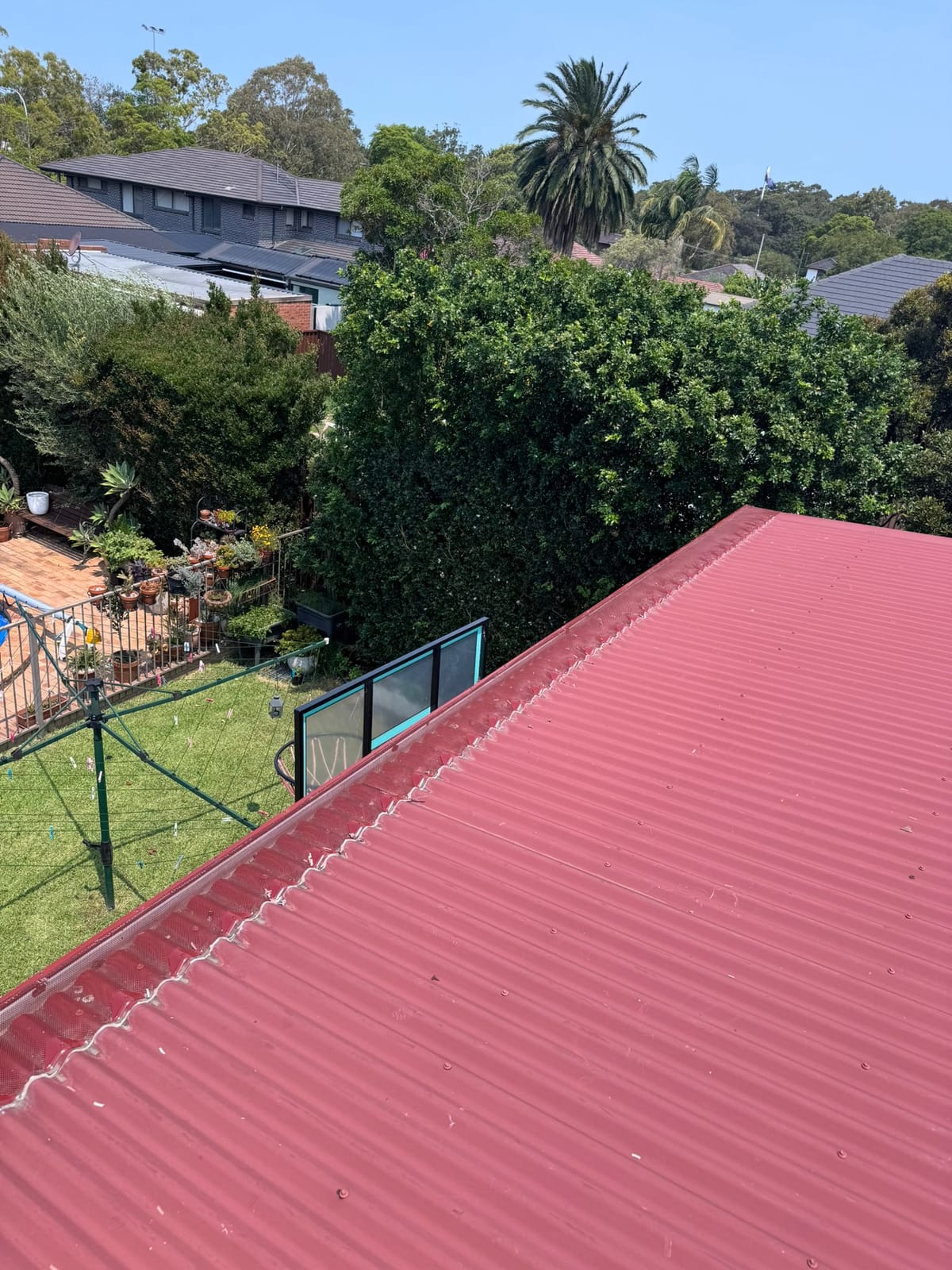
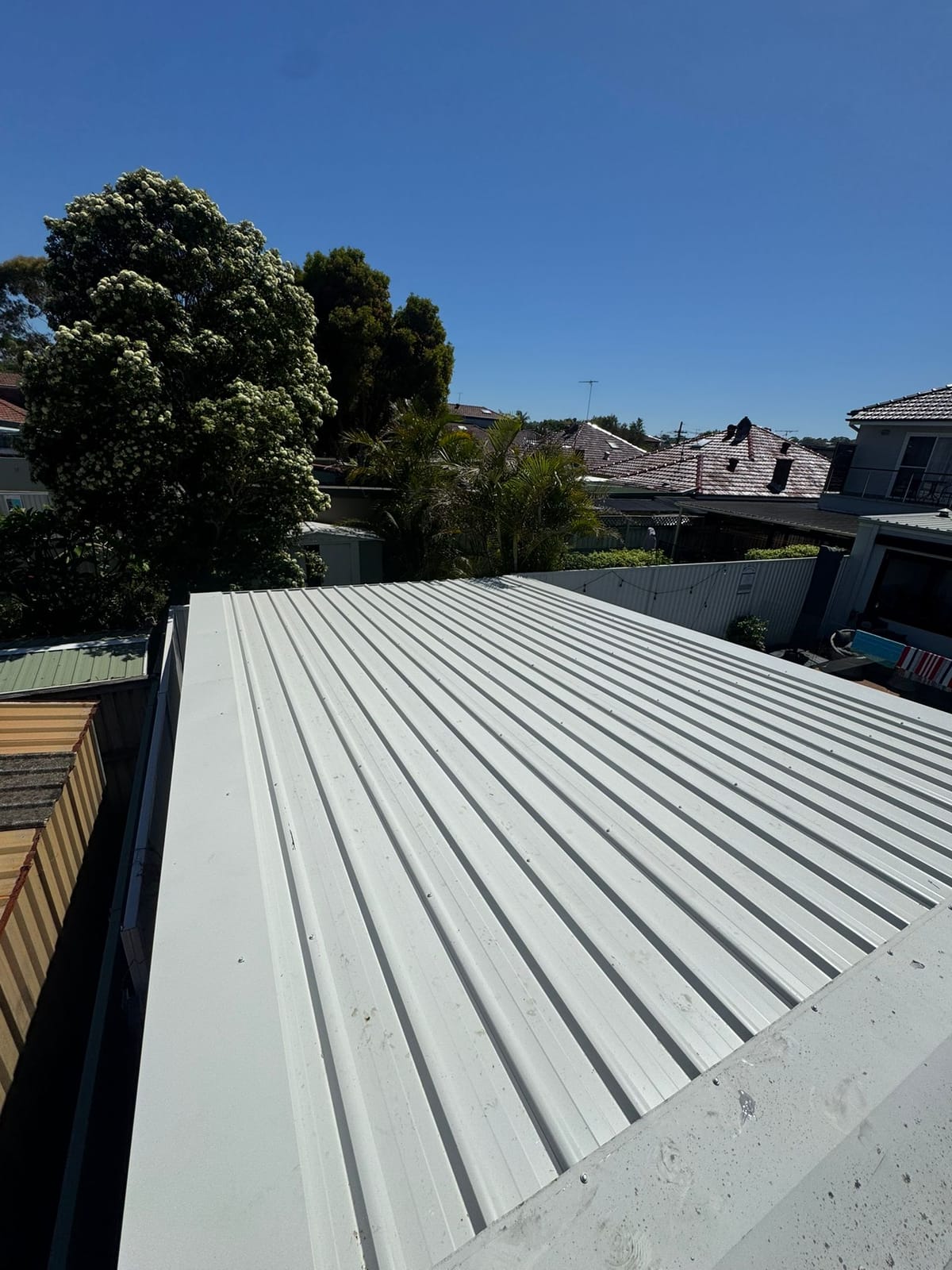
Everything general about a re-roof, from tile-to-Colorbond conversions to what a square metre costs, is on the roof replacement page. Here is what changes when the house is in Leichhardt, Burwood or Marrickville rather than in the suburbs the Sydney-wide figures assume.
Start with the council, not the colour chart
The Inner West has more heritage-listed houses and conservation areas than any other region we work in. Balmain, Haberfield and Strathfield are the well-known ones, but Burwood, Ashfield, Leichhardt, Newtown and parts of Marrickville and Concord all have listed streets. A replacement that changes the material or colour visible from the street on a listed house, or in a conservation area, usually needs a development application or a heritage exemption before a single tile comes off.
What that means in practice:
| Situation | What usually applies |
|---|---|
| Like-for-like (terracotta to terracotta, iron to matching iron) | Generally exempt or a simple exemption |
| Terracotta to Colorbond on a listed or conservation-area house | Development application, often refused on street-facing roofs |
| Slate to anything else on a listed house | Development application, expect a heritage assessment |
| Colorbond to Colorbond in a different colour, listed house | Exemption or DA depending on council |
| Non-listed post-war house in Five Dock or Concord | No approval needed |
We tell you which line you are on at the quote. The councils here do check.
Terraces and semis: the parapet and party-wall problem
Replacing a roof on a freestanding house is a clean job: strip, re-batten, sark, re-cover. On a terrace, the roof is bounded by parapet walls at the front and party walls at the sides, and the new roof has to be flashed into all of them. That means new lead or Colorbond flashings chased into old brickwork that is sometimes soft, new box gutters along the party wall with compliant overflows to AS/NZS 3500.3, and often a new secret gutter behind the front parapet. On many terraces the flashings and gutters are a third of the job.
If the box gutter is shared, the replacement is the right moment to do it once across both houses. We raise this early because it changes the plan and the price for both owners.
Warehouse conversions at Marrickville
The converted industrial buildings around Marrickville and Sydenham have long, low-pitch metal roofs with internal box gutters, skylights and roof-mounted services. Replacing these is closer to commercial re-sheeting than house work: Klip-Lok or Trimdek rather than Custom Orb, purlin checks, and strata approvals. Many were originally sheeted in asbestos cement; any pre-1990 roof is assumed to contain it until tested, and removal over 10 square metres is done by a licensed asbestos removalist at an extra cost from $60 per square metre.
Slate on the grand Federation homes
At Burwood and Strathfield, the question is often whether a slate roof needs replacing at all. Slate itself lasts well over a century; the fixings, battens and lead work do not. A full relay of the existing slate on new battens with sarking, replacing the broken slates from salvaged stock, is usually the better outcome and keeps the house within its heritage rules. Where the slate is beyond saving, replacement slate is a specialist supply and we quote it after inspection rather than from the per-square-metre table.
Access changes the price more than anywhere else in Sydney
A re-roof generates a lot of waste. On a terrace with no side access and no street parking for a tipper, that waste goes out through the house or over the parapet into a bin on a council permit, and new material comes in the same way. We price this line by line. On a two-storey Newtown terrace with a rear lane, expect scaffold or an EWP as a separate item; on a Five Dock post-war house with a driveway, expect nothing extra. Read more about access in the region on our Inner West page.
Salt at Balmain and Drummoyne
For metal replacements near the harbour or the river we specify Colorbond Ultra and marine-grade fixings. It adds from 20 percent to the sheet cost.
Cost, honestly
A tile-to-Colorbond conversion in the Inner West starts from $14,400 for a small home with about 120 m² of roof. Terraces and semis are around that size, which keeps the roof area down, but the flashing and box gutter work pushes the price back up. Federation homes with complex roofs and slate are quoted individually. We are 15 to 25 minutes from Gladesville; the quote is free, on site and written, and covers the approval path as well as the roof. Request one and tell us the suburb and whether the house is listed.