Three kinds of replacement, none of them typical
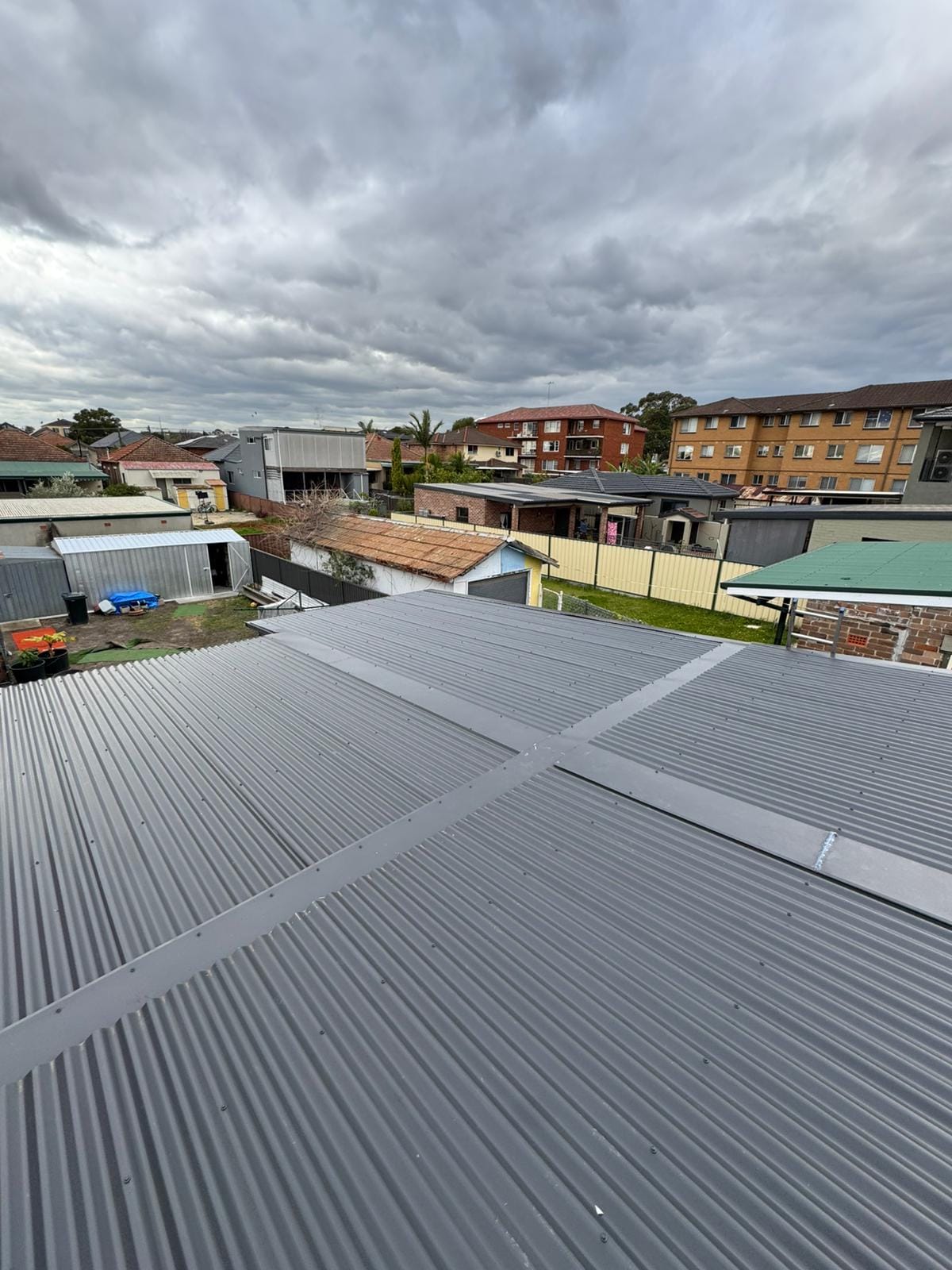
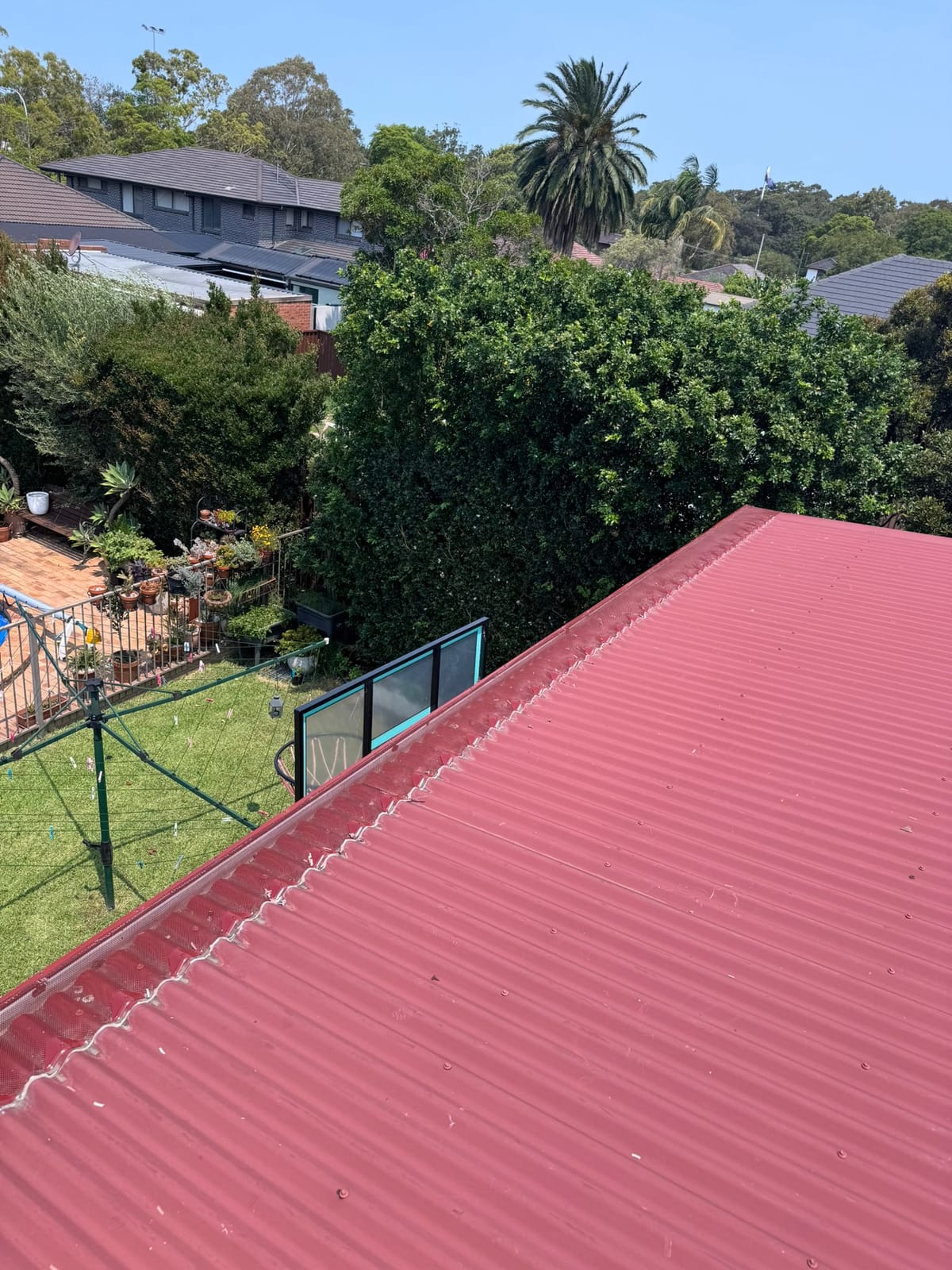
The roof replacement page describes the standard Sydney job: strip a tired tile roof, new battens and sarking, Colorbond on top. In the Eastern Suburbs we do that on the post-war homes at Maroubra and Kingsford, but it is not the main event. The replacements we quote most often in the east fall into three groups, and the Eastern Suburbs hub explains why the housing stock produces them.
Apartment blocks: metal decks and membranes
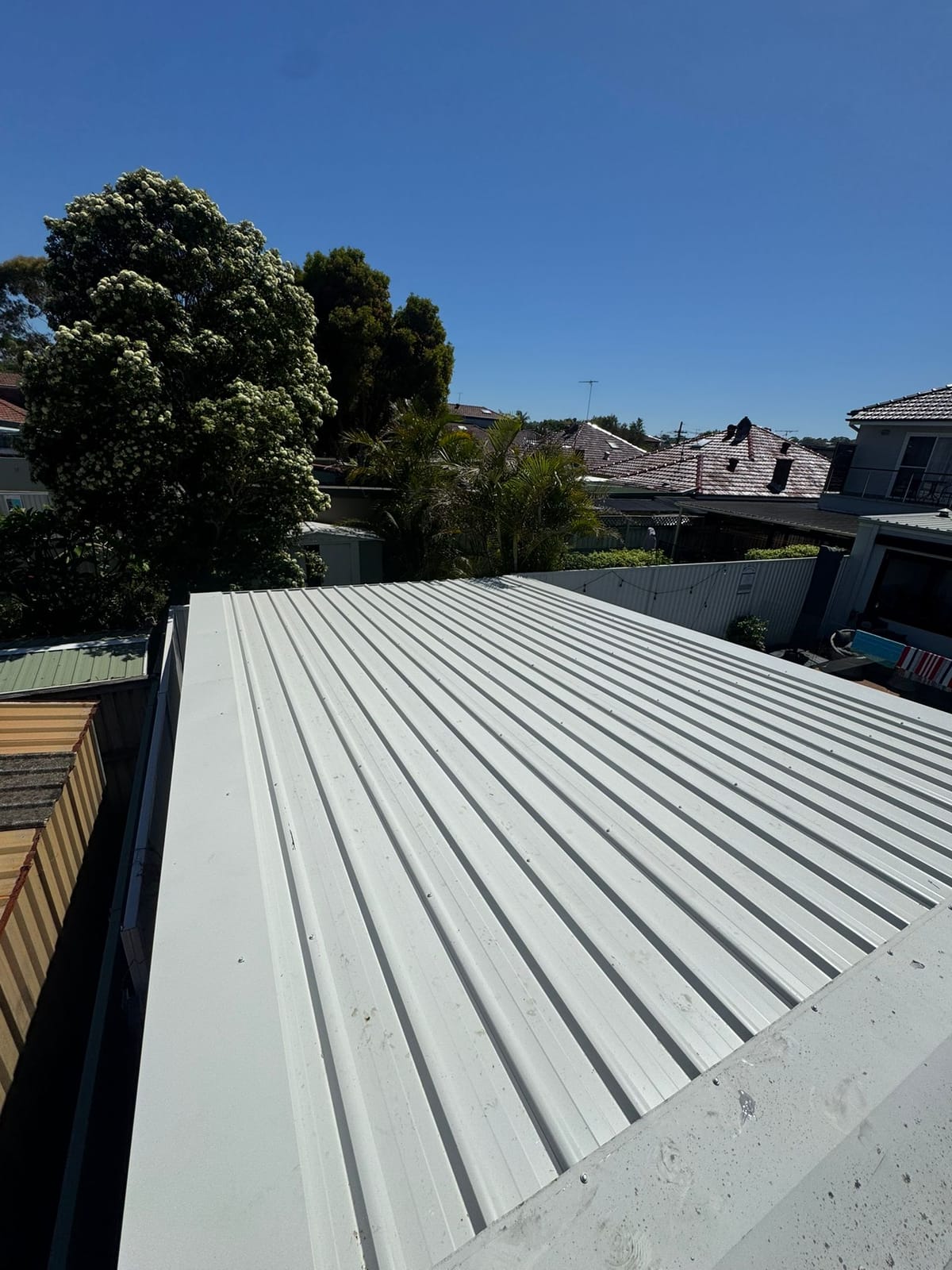
Art Deco and 1960s blocks in Bondi, Randwick and Coogee have flat or low-pitched roofs of two types. Some are a metal deck, often the original galvanised sheeting, now rusted through at the laps and fixings. Others are a concrete slab under a membrane that has reached the end of its life. Replacing the first means new Colorbond Ultra in a low-pitch profile such as Klip-Lok or Trimdek, new box gutters sized to AS/NZS 3500.3 with proper overflows, and an anti-condensation blanket. Replacing the second is a full membrane strip and re-lay with new upstands chased into the parapets. Both are capital works for the owners corporation, so we write the scope so a committee can compare quotes like for like.
Terraces: re-slating and re-sheeting behind the parapet
On a Paddington or Waverley terrace the roof behind the parapet may be slate, terracotta or corrugated iron. Slate that has delaminated across the whole pitch gets re-slated, on copper nails, with the lead and copper details renewed. Corrugated iron that is invisible from the street can often be replaced with Colorbond, but the box gutter along the party wall and the parapet flashings are rebuilt at the same time, because a new roof draining into the old gutter is a wasted spend.
Walk-ups: asbestos and 1960s pitched roofs
The red-brick walk-ups at Randwick and Kensington are pre-1990 and a fair number carry asbestos cement roofing or eaves. Removal over 10 square metres must be done by a licensed asbestos removalist under SafeWork NSW rules, with air monitoring where required. That adds from $60 per square metre before the new roof goes on. The tile roofs of the same era are the closest thing the east has to a conventional tile-to-Colorbond conversion.
Council and heritage
Woollahra, Waverley, Randwick and Bayside councils all apply heritage controls somewhere in their area, and Paddington is almost entirely a conservation area. Like-for-like replacement of a roof with the same material is usually exempt. Changing material or profile on anything visible from the street is not, and slate to Colorbond on a Paddington front pitch will not be approved. Where the new roof is behind a parapet and cannot be seen, the answer is often different, and we will tell you before the quote which case applies.
Access, cranes and parking
A terrace row with no side access means materials come over the roof or through the house, and a full roof replacement generally needs a crane lift from the street with a council road-occupancy permit. Bondi Road, Oxford Street and Coogee Bay Road do not tolerate a skip and a tipper for a week, so waste goes out in scheduled loads rather than sitting on the footpath. We price these items separately on the quote so you can see them.
What it costs in the east
A new Colorbond roof over an existing structure starts from $120 per square metre supplied and installed, and Colorbond Ultra, which is the correct specification within a kilometre or two of the surf, adds from 20 percent. A whole-house tile-to-Colorbond conversion on a small Maroubra home with about 120 m² of roof is from $14,400. Re-tiling in new concrete or terracotta is from $150 per square metre. Crane, scaffold and permits are the extras that most often move an Eastern Suburbs job above the Sydney average.
Roof replacement over $20,000 requires Home Building Compensation cover, and you can check any roofing contractor's licence at verify.licence.nsw.gov.au before you sign. The quote is free, written and done on site. Request one here and we will include the access plan, not just the roof.