Restoring tile roofs on the northern ridge
The northern district has one of the biggest concentrations of restoration-age tile roofs in Sydney. Carlingford, Thornleigh, Pennant Hills and the Hornsby estates were built out under concrete tile between the late 1950s and the mid 1980s, and a roof from that era is now 40 to 65 years old. Our roof restoration page explains the process from pressure clean to final coat; this page is about what that process runs into in Hornsby, Epping and the suburbs between.
Why these roofs need it now
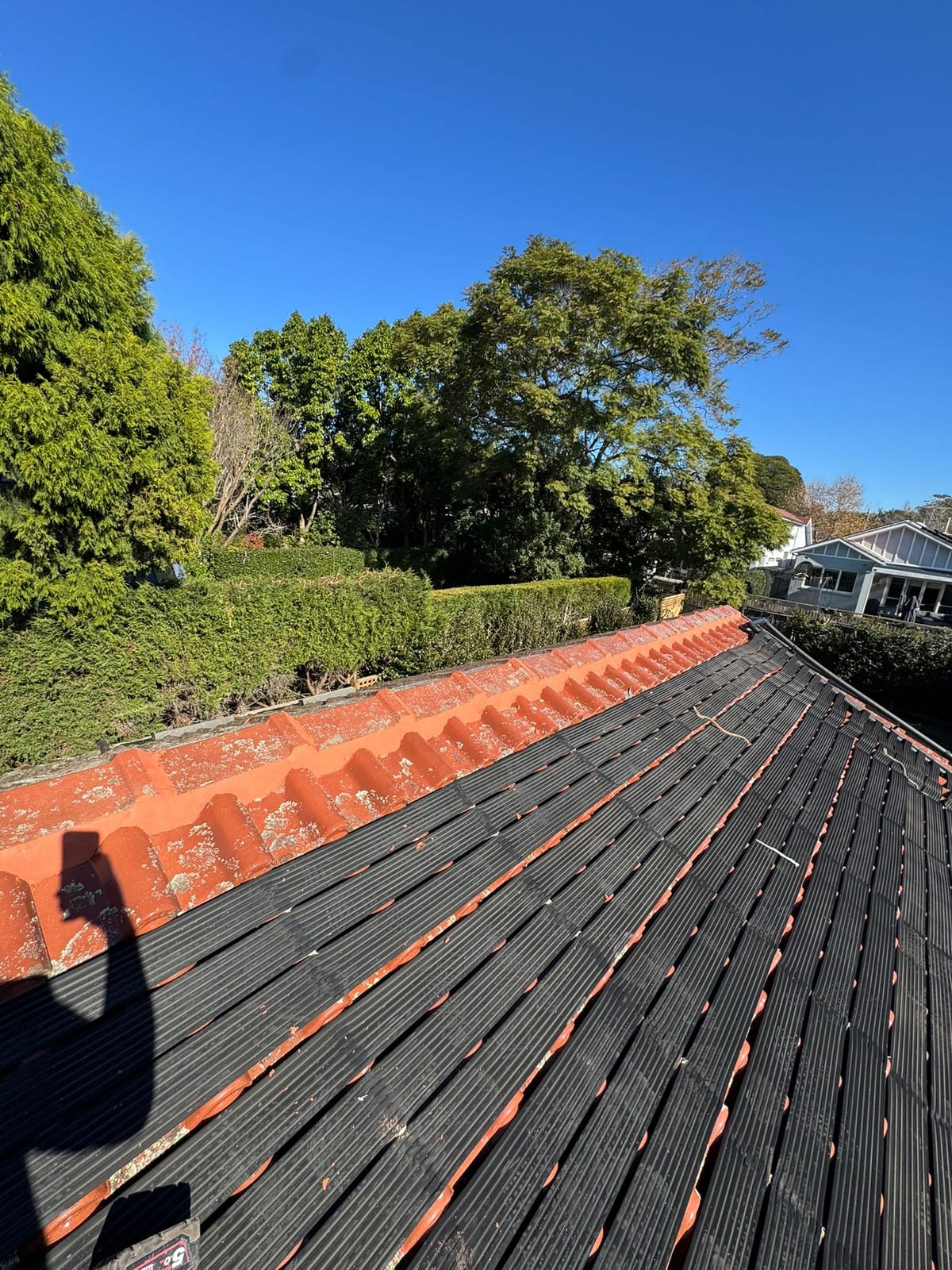
A concrete tile does not wear out at 50 years, but it does change. The surface goes porous, so it soaks up water and grows moss and lichen, which is heavy and holds moisture against the tile through winter. The colour fades to a patchy grey. Underneath, the mortar bedding on the ridges has cracked and the pointing has gone. On the bush blocks, decades of gum litter have left the valleys rusted and the gutters holding silt.
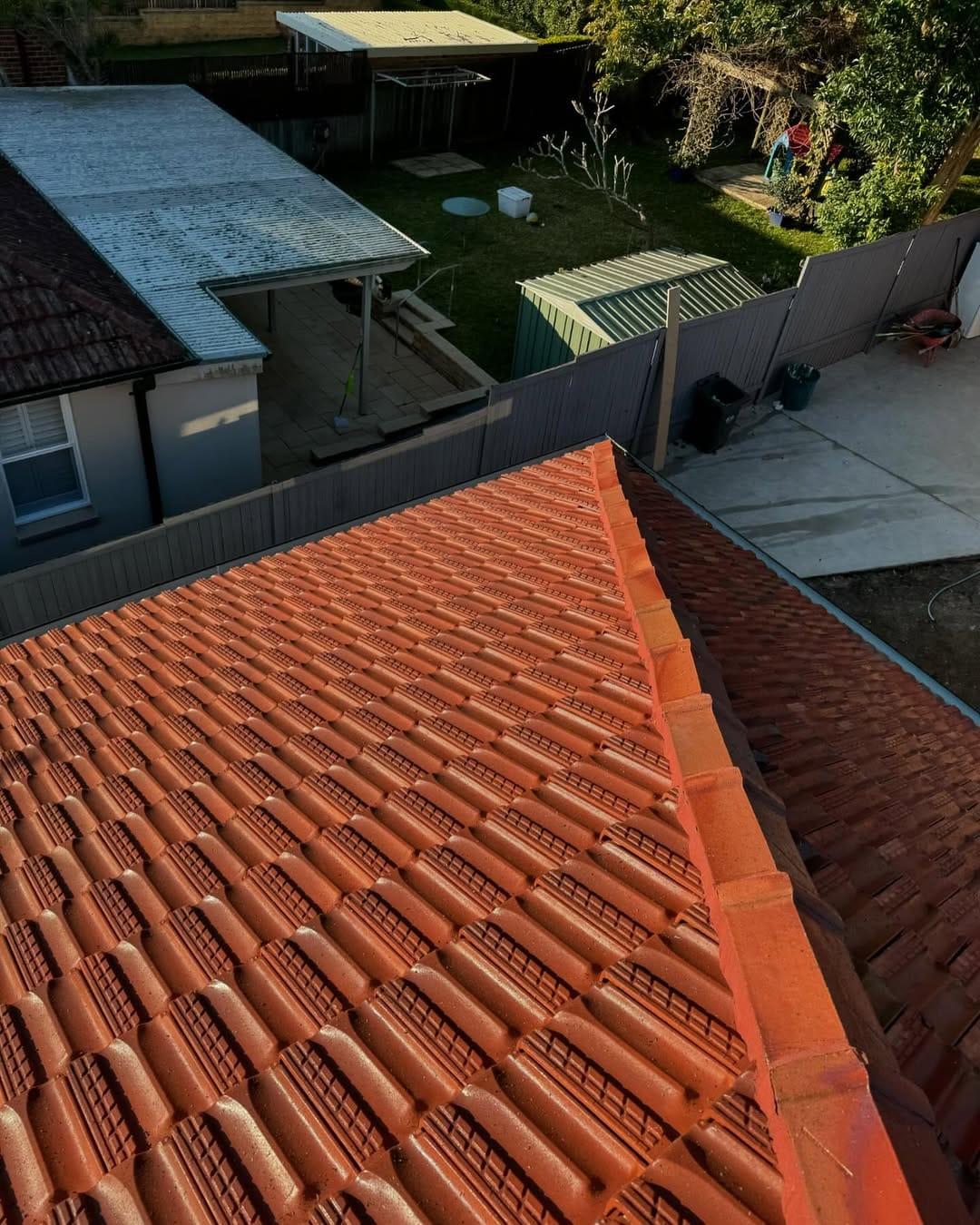
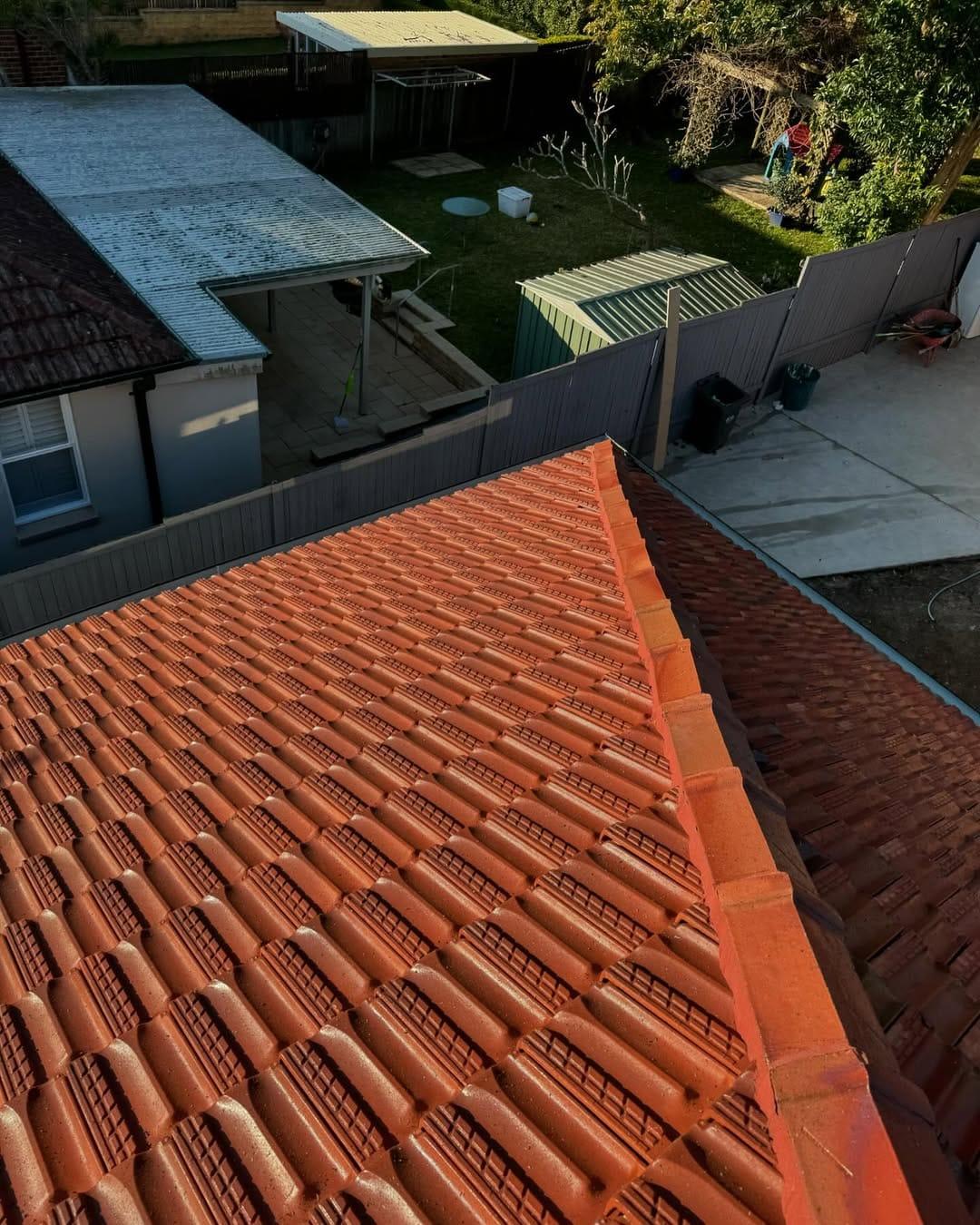
Restoration deals with all of it in one go: clean the roof back to bare tile, replace the broken ones, re-bed and re-point every ridge and hip, replace rusted valleys, then prime and coat. On an Epping or Hornsby home the ridge and valley work is often half the job by time, because there is more of it wrong than on a younger roof in the Hills.
What is different about restoring here
Tree cover and the clean
The high-pressure clean is harder under a canopy. Moss and lichen on the shaded southern side of a Beecroft or Pennant Hills roof can be centimetres thick and takes a slow pass to lift without damaging the tile surface. We clean the gutters and valleys the same day, because a freshly coated roof draining into a blocked gutter is a waste of a good coating.
Coating choice under a canopy
A roof under mature gums gets hit with tannin, sap, leaf acid and constant shade. We specify a full membrane system, Dulux AcraTex or an equivalent premium coating, with primer and two colour coats, rather than a cheaper single-coat product, because the cheaper product is what peels in these conditions. Manufacturer warranties on those systems run up to 10 years; ours on the workmanship is 2 years.
Colour in a heritage area
Beecroft and Cheltenham sit in a heritage conservation area under Hornsby Shire Council. Restoring a roof in its existing colour is maintenance and does not need approval. Changing to a noticeably different colour on a contributory house may, and we check before you choose from the chart. Elsewhere in the district colour is your call; the pale and mid greys reflect more heat than the traditional terracotta reds and browns, which matters on a west-facing Thornleigh roof in January.
Access on the steep side
Thornleigh and western Hornsby blocks drop away from the street, and restoration means several days of moving equipment and hoses around a roof that may be three storeys at the rear. We set up scaffold or an EWP as part of the job and price it in the quote rather than adding it later.
Restoration or replacement?
This is the question we get asked most in Carlingford, where some post-war roofs are simply too far gone. Restoration is the right answer when the tiles are structurally sound, the battens are not sagging and the roof is not leaking in multiple places. It is the wrong answer when the tiles are so porous they crumble at the edges, when the roof has already been coated once and is peeling, or when there is no sarking and the owner wants a warmer, quieter house. In those cases we quote a tile-to-Colorbond replacement alongside the restoration so you can compare the two on the same page.
What it costs in the district
| Job | Starting price (2026, inc. GST) |
|---|---|
| Full tile restoration, 3-bed single storey (180–220 m²) | From $4,500 |
| Ridge re-bed and re-point only | From $45 per lm; from $900 whole roof at about 20 lm |
| Roof painting only, on a small sound roof | From $2,400 |
| Valley iron replacement during restoration | From $900 |
Hornsby and Beecroft jobs tend to land above the starting price, because of the ridge length on hipped roofs, the tree cover and the access. Every quote is free, written and done on site after we have walked the roof. You can read more about the district on our Hornsby and northern district page, or ask for a restoration quote and we will usually be in touch within 24 to 48 hours.