Finding roof leaks in Hornsby and Epping
The stain on the ceiling is rarely under the leak. On a pitched tile roof, water runs down the sarking, along a batten or down a rafter for metres before it drips, so the wet patch in the bedroom can start at a valley on the other side of the house. Our roof leak detection and repair page explains how we trace a leak with flood testing, thermal imaging and a look inside the roof cavity. This page covers where leaks actually come from in the northern district, which is different from the terraces of the Inner West or the salt-damaged metal of the coast.
Where the water gets in
Valleys under trees
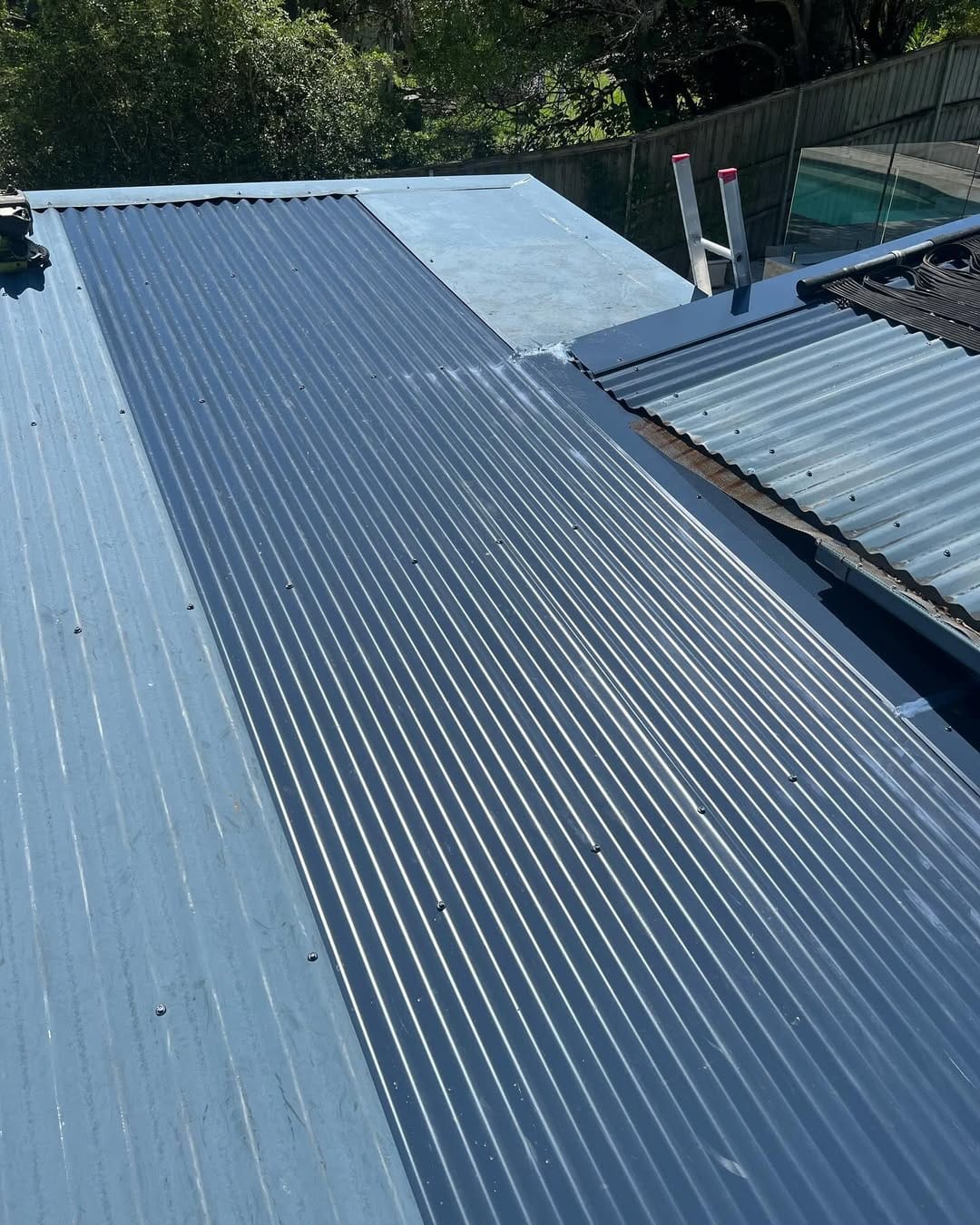
The most common leak source in Hornsby, Beecroft and Pennant Hills is a valley iron rusted through under years of gum litter. The valley is where two roof planes meet, and it is the deepest, shadiest, wettest channel on the roof. Leaf mulch sits in it, holds water, and eats the galvanised iron from underneath. From above the valley looks fine; from inside the roof cavity you can see daylight. Fixing it means lifting the tiles either side and replacing the iron.
Ridge capping on old concrete tile
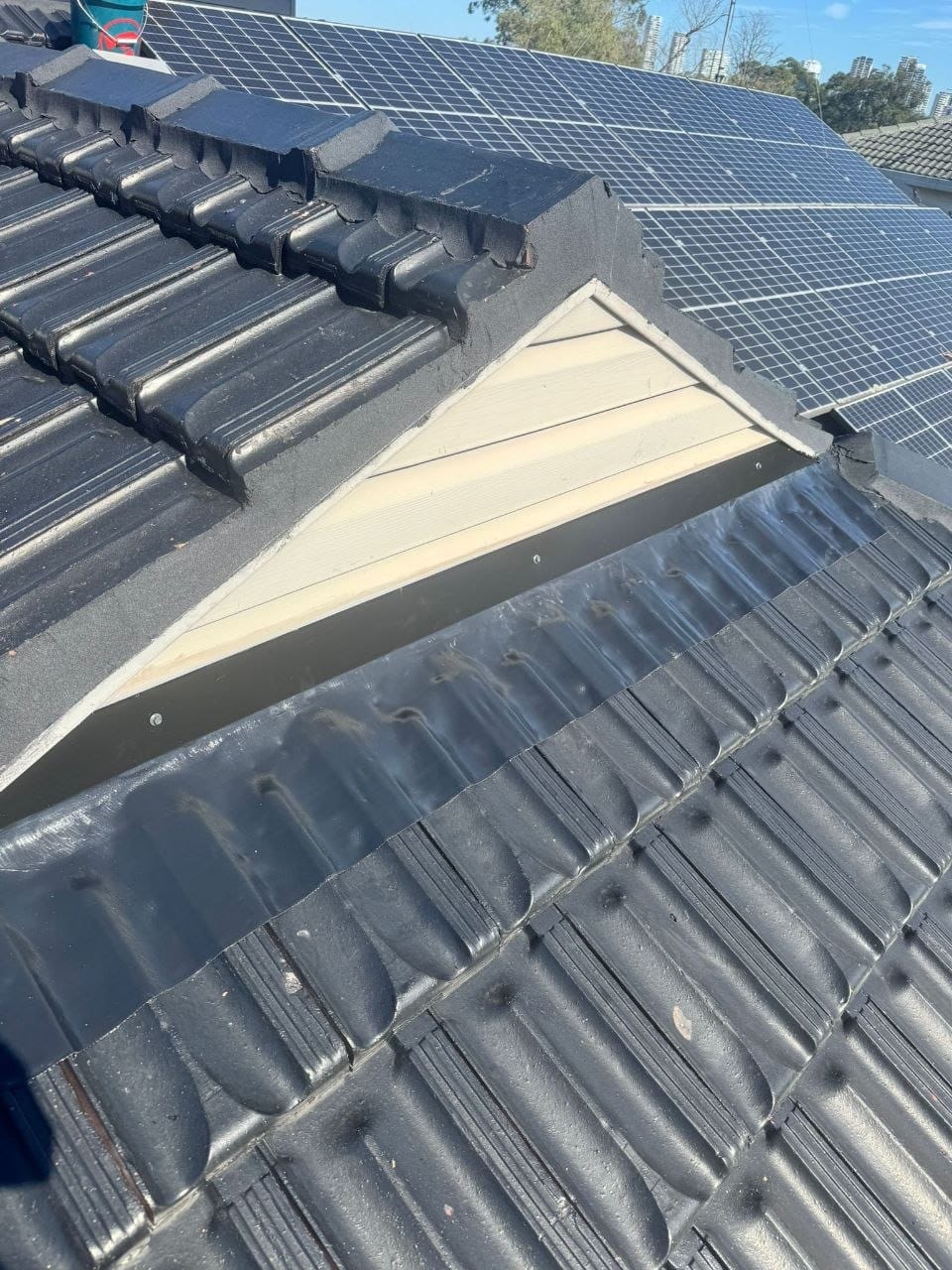
The 1960s to 80s concrete tile roofs across the district have ridge bedding that has cracked and pointing that has fallen away. Wind-driven rain gets under a lifted cap, and on a hipped roof the hip lines run right down to the corners of the house, which is why the leak shows up in the corner of a bedroom. This is a re-bed and re-point, not a patch.
Blocked gutters and box gutters
Overflowing eaves gutters back up behind the fascia and into the eaves lining; you see it as a stain along the outside edge of a ceiling or a sagging eave. On the Epping apartment blocks, a blocked box gutter sump can push water over the flashing and into the top-floor units in a single storm. Both are gutter problems first and roof problems second, and the cure starts with a clean.
Flashings and skylights
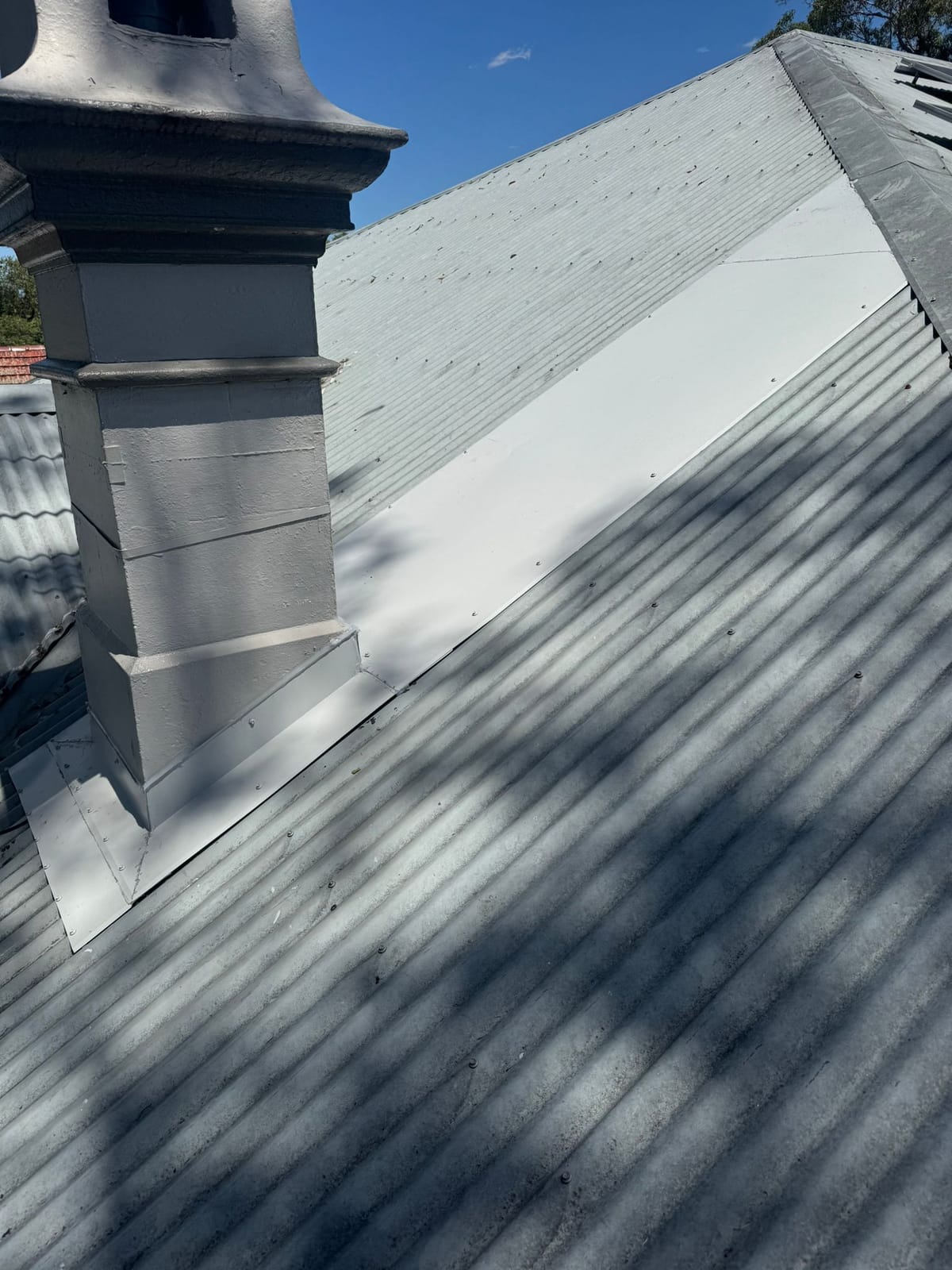
Chimneys, skylights, whirlybirds and the junction where a rear extension meets the original roof are all flashing points, and on the district's older homes the original lead or mortar flashing has cracked or pulled away. Branch strikes from the big trees finish the job. This is the leak that only appears in a southerly, when the rain is driven sideways at the upwind face.
Condensation, not a leak
A fair number of winter call-outs in the district turn out not to be leaks at all. Unsarked tile roofs over well-insulated ceilings, particularly on the shaded south side of Beecroft and Thornleigh blocks, sweat on cold clear nights and drip. We check with a moisture meter and thermal camera before we replace anything. A whirlybird or ridge vent is the fix, not a new roof.
What we do on the day
We start with your description and the stain, then get on the roof and into the cavity. On a hard leak we flood test, running water over each suspect area in turn while someone watches inside. Thermal imaging picks up wet insulation that has not shown through the plaster yet. We photograph everything and give you a written finding before we quote the fix, so you know what you are paying for and why.
Cost in the district
Finding and fixing a straightforward leak in Hornsby or Epping starts from $350, which covers most single-entry valley, ridge and flashing leaks. Complex leaks with multiple entry points, a box gutter, or a rear extension junction are from $1,200. Steep Thornleigh blocks and two-storey homes add for access. If water is actively coming through the ceiling during a storm, we attend the same day where availability permits and do a make-safe tarp first; the diagnosis and permanent repair follow when the roof is dry enough to work on safely.
Insurance
Storm and hail leaks are usually claimable; a 50-year-old valley that has rusted through is wear and tear and usually is not. We write the report either way, in the format the insurer wants, and separate the two clearly so the claim is not knocked back for including maintenance items. The report is generally free when we do the repair.
See everything we do in Hornsby and the northern district, or book a leak inspection and we will usually be in touch within 24 to 48 hours.