Re-roofing in Hornsby, Epping and Carlingford
Some roofs in this district should not be restored. The post-war concrete tile on Carlingford's estates, the older Hornsby brick veneers and a fair number of Epping houses changing hands for renovation have reached the point where the tiles are porous, the battens are tired and there is no sarking under any of it. Our roof replacement page covers the process, profiles and what is included on any Sydney home. What follows is specific to the blocks north of the M2.
Why replacement comes up so often here
Three reasons. The first is age: a 1965 concrete tile roof is 60 years old, and while the tiles may have life left, the battens, sarking (if any) and fixings often do not. The second is renovation: Epping and Carlingford have a steady turnover of original houses to owners planning a second storey or a rear extension, and tying a new roof into a 60-year-old one rarely makes sense. The third is bushfire: on the bush-edge blocks at Hornsby, Thornleigh and Pennant Hills, a new Colorbond roof with sealed ridges and ember guards is a large step up in compliance under AS 3959 compared with a tile roof that has a gap under every cap.
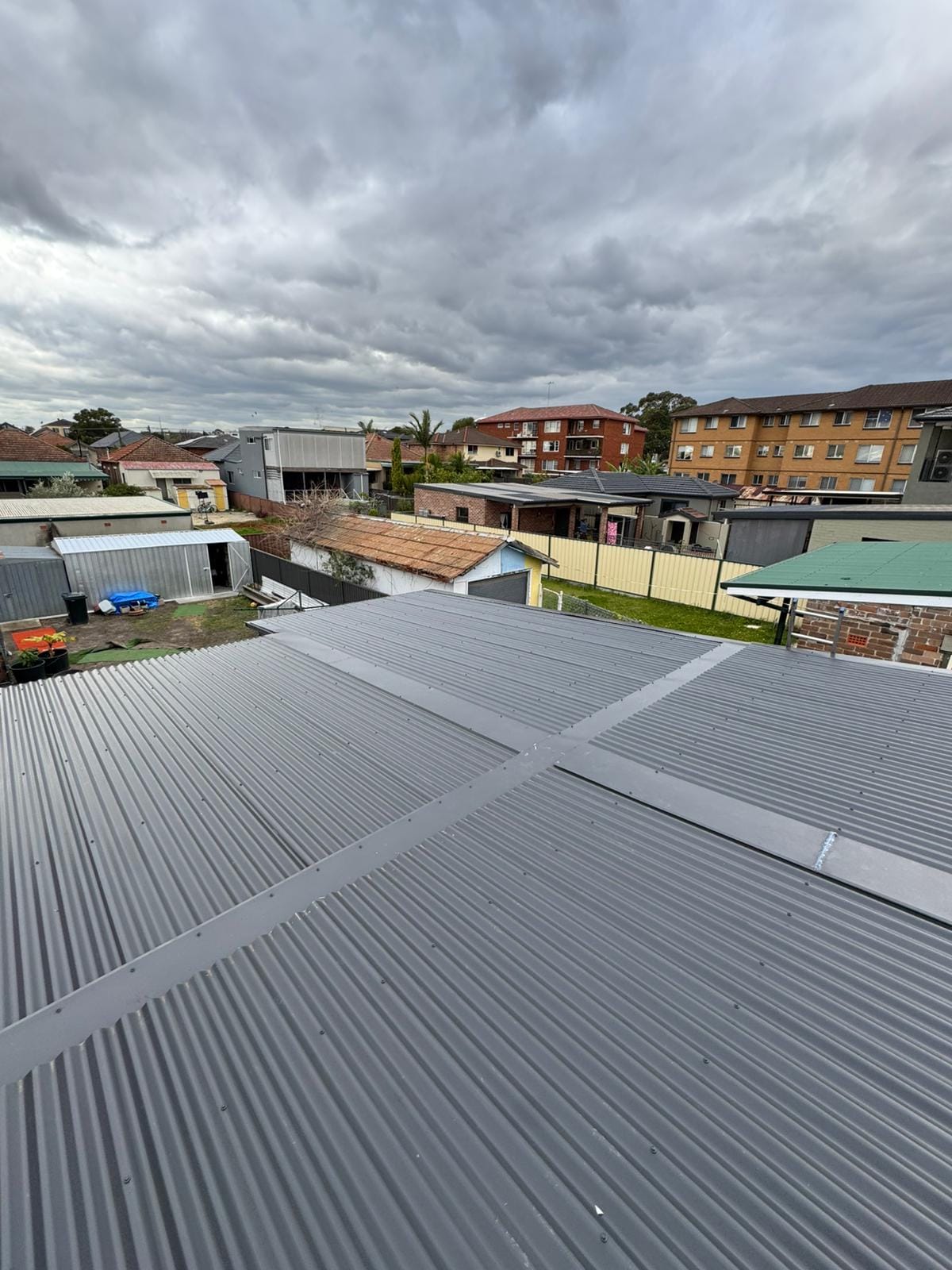
Tile to Colorbond on a northern district block
What changes
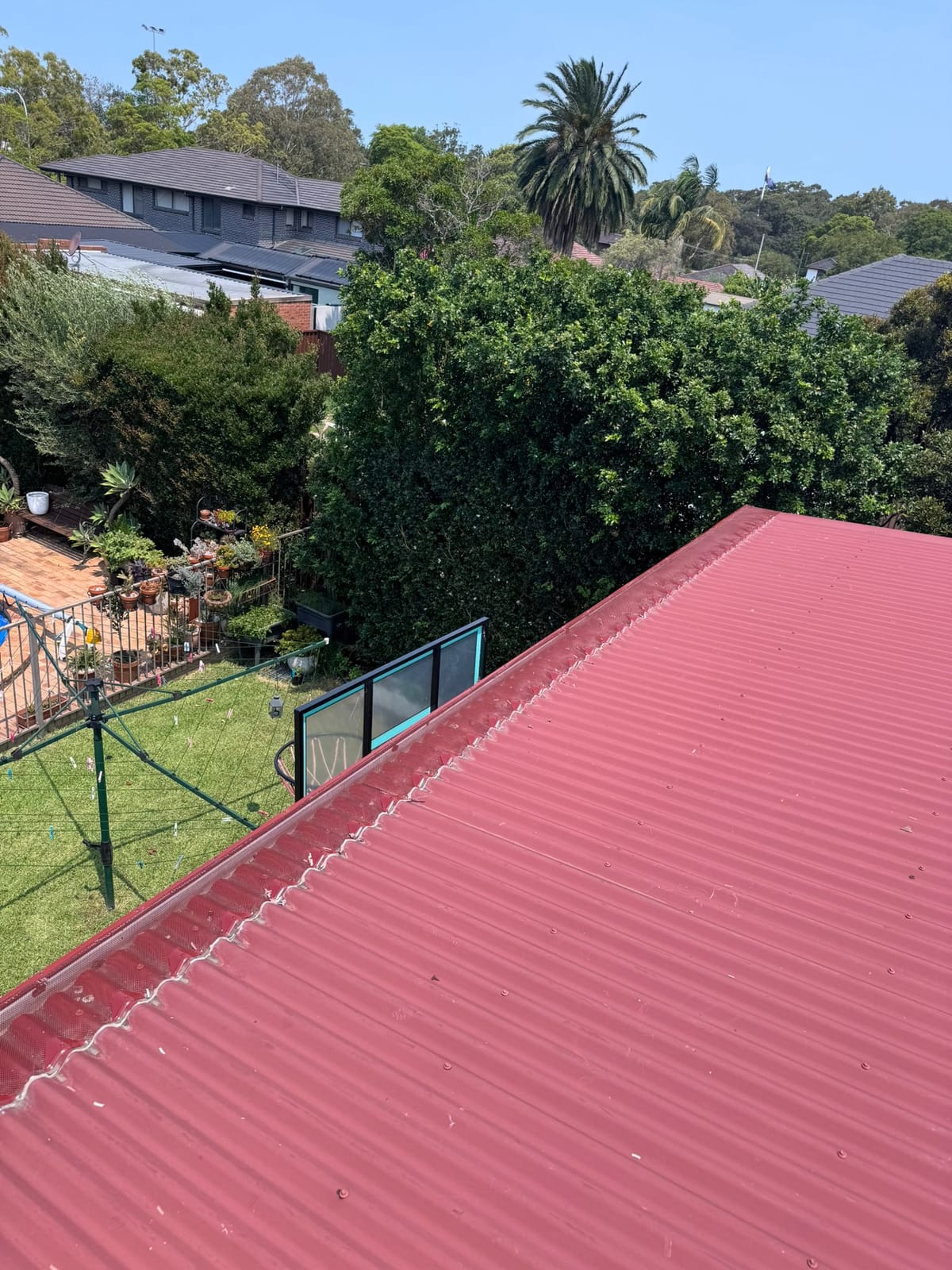
A concrete tile roof weighs around 50 kg per square metre; Colorbond steel sheeting is under 5. Taking that load off a 60-year-old frame is a structural improvement in itself. We strip the tiles, remove and dispose of the old battens, fit new sarking to AS 4200.1 and an anti-condensation blanket, install new steel battens, then lay the sheeting. On the ember-exposed blocks we seal the ridge and eave gaps and fit ember guards to the gutters as part of the job, which is a big part of why replacement is popular along the bushland edge.
Profile and grade
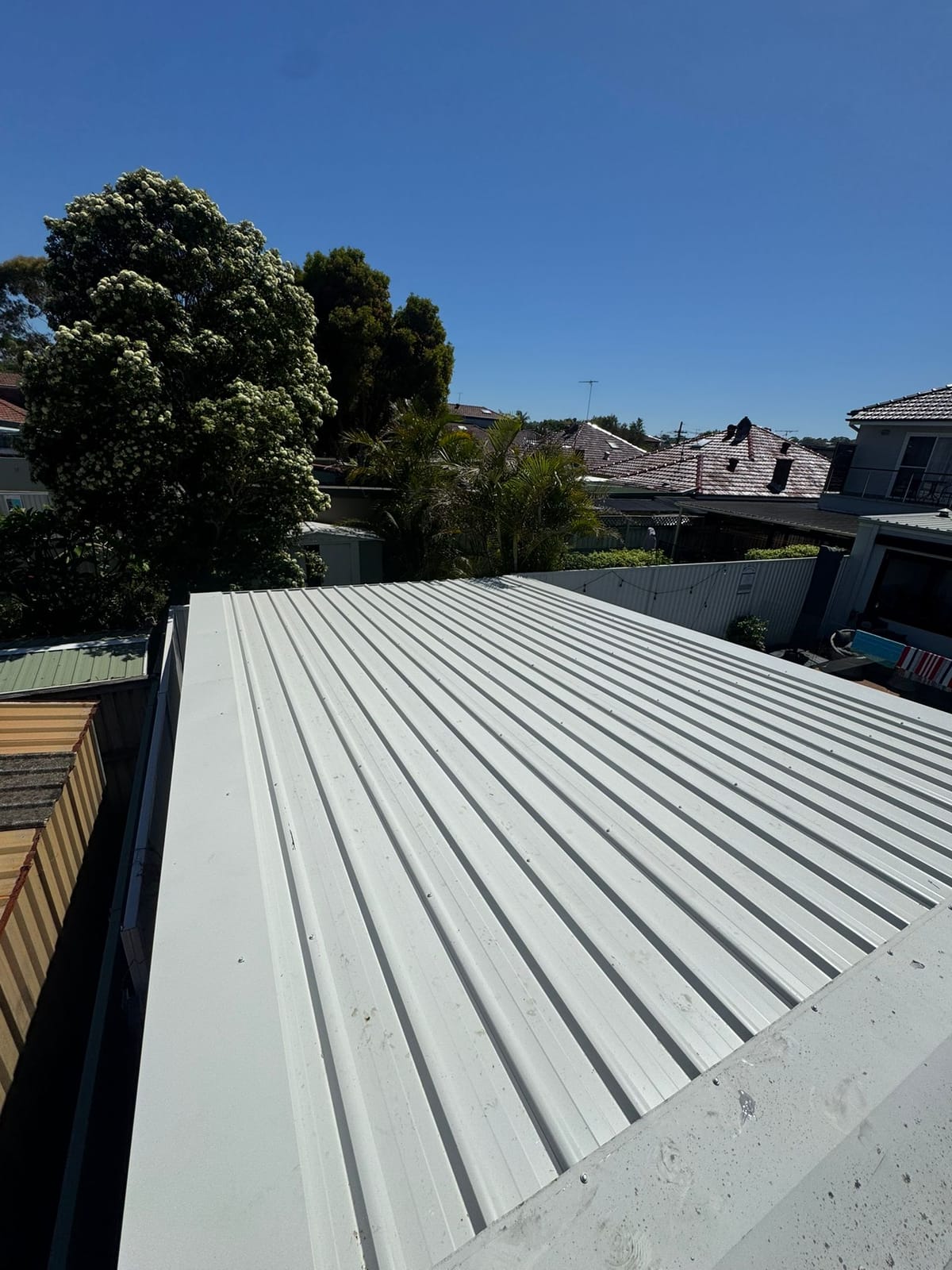
Custom Orb and Trimdek are the two profiles we lay most in this district. Standard Colorbond is the right spec here; you are 25 kilometres from the coast, so the marine-grade Colorbond Ultra that the Northern Beaches needs is unnecessary money. BlueScope warranties on standard Colorbond run up to 36 years depending on the product and environment.
Access and waste
A big lot helps: there is room for a skip and a scaffold, and the tipper can usually reverse onto the driveway. The catch is the ground. On Thornleigh's western slopes and the Hornsby blocks that fall to the valley, the back of the house can be three storeys off the ground, and the old tiles have to come down that side too. We plan the strip so tiles come off in the safe direction, set scaffold on the low side and price it in from the start.
Heritage and council
Beecroft and Cheltenham are a heritage conservation area under Hornsby Shire Council, and swapping terracotta for Colorbond on a contributory house is exactly the kind of change that needs council approval or a heritage exemption. It is not impossible; sympathetic colours and profiles can get through. But it is a process, and we tell you that before you get attached to a Colorbond sample. Elsewhere in the district a like-for-like replacement is exempt development in most cases. Epping and Carlingford come under City of Parramatta for any DA.
Asbestos on pre-1990 homes
Some of the district's older homes have asbestos cement in the eaves, and a smaller number have corrugated asbestos roofing on garages, carports and rear additions. Anything pre-1990 is treated as suspect until tested. Removal over 10 m² is done by a licensed asbestos removalist under SafeWork NSW rules and adds from $60 per square metre. We organise it and it appears as its own line in the quote.
Cost in Hornsby and Epping
A tile-to-Colorbond conversion starts from $120 per square metre supplied and installed, which is from $14,400 on a small home with about 120 m² of roof. The larger four-bedroom homes in Hornsby and the steep Thornleigh blocks cost more than that: more roof, more ridges and hips, and scaffold on the low side. A re-tile with new concrete or terracotta tiles, if you want to keep the look, is from $150 per square metre.
Every replacement quote is free, written and itemised, and includes a restoration comparison if the roof is a borderline case. Read more about how we work in Hornsby and the northern district, or request a quote and we will usually be in touch within 24 to 48 hours.