When restoration stops being the answer
Most 1970s to 90s tile roofs in the west can be restored. This page is about the ones that cannot. Our roof replacement service covers full re-roofing and tile-to-Colorbond conversion across Sydney; here is what changes in Western Sydney and Parramatta.
The signs out here are consistent. Concrete tiles from some early runs are delaminating, with the surface layer lifting and shedding so that a pressure clean takes the face off. Battens under them have been wet at the valleys for years and gone soft. Sarking was never installed, so every hairline crack drips into the ceiling. And on pre-1990 homes across Blacktown, Merrylands and Auburn, the eaves lining is often asbestos cement, which has to come out under a licensed removalist once you are touching it.
Tile to Colorbond in the heat
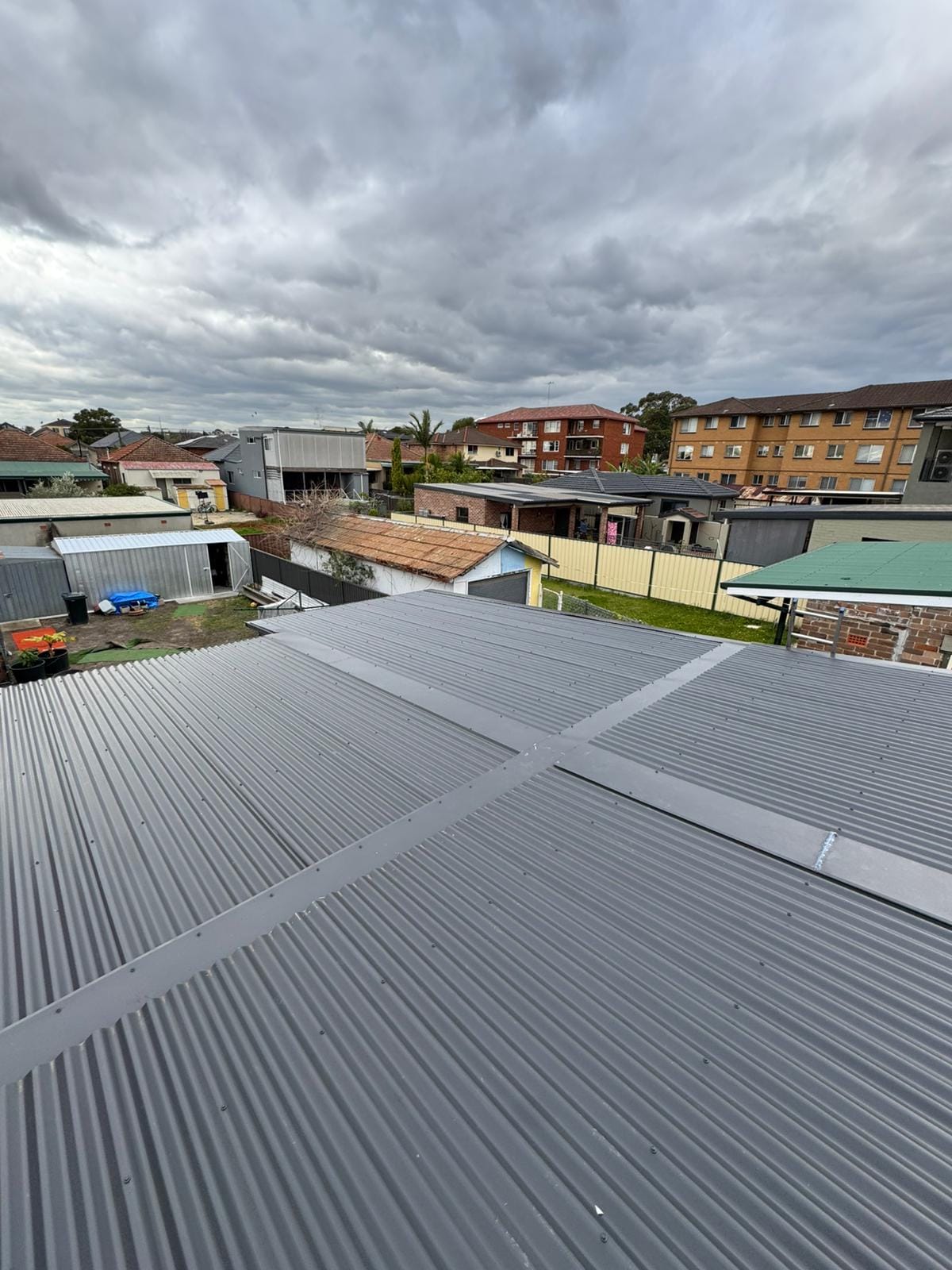
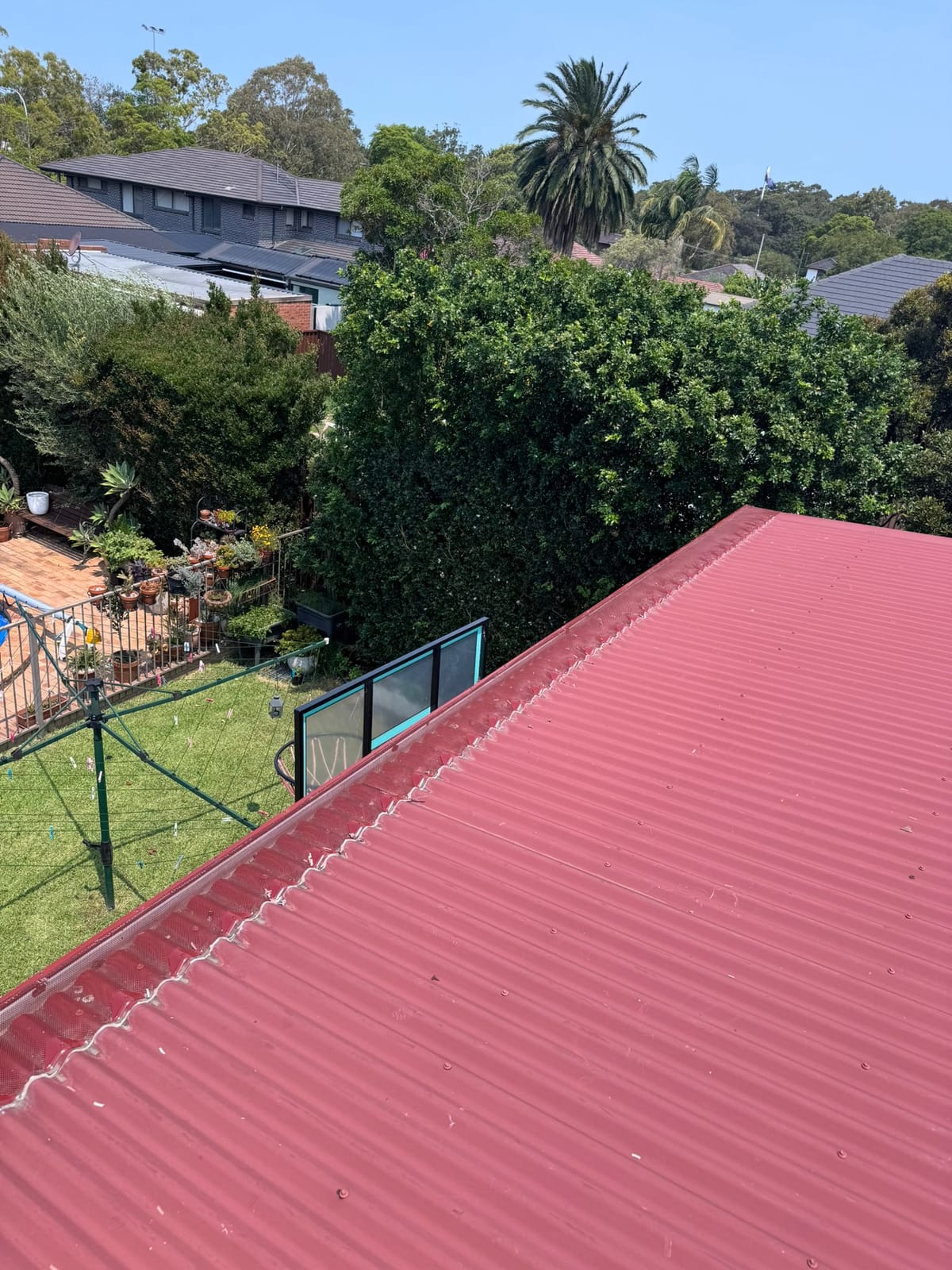
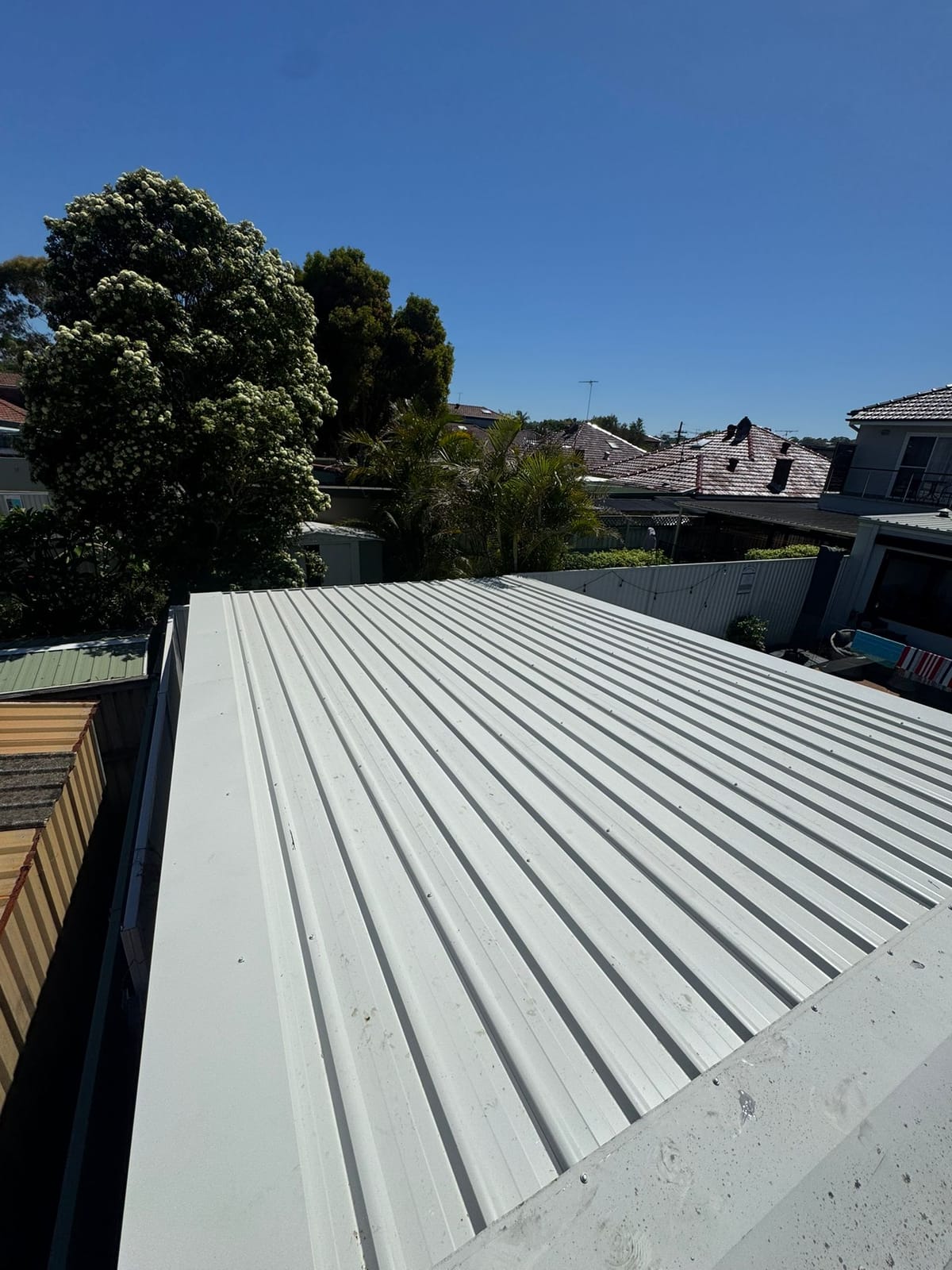
The biggest reason western Sydney homeowners replace rather than restore is temperature. A concrete tile roof weighs around 50 kg per square metre and stores heat all day; at Penrith it is still radiating into the ceiling at 10pm. A Colorbond roof in a light colour, over new sarking and an insulation blanket, is a fraction of the weight, sheds heat as soon as the sun is off it, and reflects a large share of the solar load to begin with.
Where you are already at the point of new battens and sarking, the cost gap between re-tiling and going to Colorbond narrows. Re-tiling with new concrete or terracotta starts from $150 per m². New Colorbond sheeting over the existing structure starts from $120 per m² supply and install, and a full tile-to-Colorbond conversion starts from $14,400 on a small home with about 120 m² of roof. The replacement cost guide and our tile versus Colorbond comparison go through the numbers.
Two practical points for the west. Colorbond Ultra is a coastal specification and you do not need it here; standard Colorbond carries the BlueScope warranty of up to 36 years in this environment. And choose the profile for the pitch. Custom Orb needs a reasonable pitch to drain, Trimdek can go lower, and many 1970s estate roofs with low hips suit Trimdek better.
Hail write-offs
After a large hail event, some roofs are scoped for replacement rather than repair: enough cracked tiles across every slope that patching is uneconomic, or a metal roof dented badly enough that the coating has failed. If your insurer has written the roof off, the settlement is for like-for-like. You can put it toward a Colorbond conversion and pay the difference, and it is often the best-value roof you will ever buy, because the removal and disposal, the most labour-heavy part, is already covered. We write the scope so the insurer's line items and ours match.
Asbestos in pre-1990 stock
Any home in the west built before 1990 may have asbestos cement in the eaves, the gable ends or, on some older fibro houses around Auburn and Granville, in the roof sheeting itself. Removal over 10 m² is licensed removalist work under SafeWork NSW, with air monitoring and disposal, and adds from $60 per m². We coordinate the removalist as part of the job and give you the clearance certificate before the new roof goes on.
Council
Like-for-like replacement needs no approval. Changing from tile to metal is usually complying development in the Blacktown, Cumberland and Penrith council areas, but City of Parramatta has heritage conservation areas around Harris Park and North Parramatta where a change of material needs council sign-off. We check before we quote. Any replacement is well over the $20,000 threshold for Home Building Compensation cover, so ask to see the licence and HBC certificate; you can verify a licence at verify.licence.nsw.gov.au.
Timing and what to expect
An average single-storey conversion takes three to five working days once materials are on site. We strip and re-sheet one slope at a time so the house is never open overnight, which matters in storm season. Quotes are free, written and done on site after we have checked the battens and the eaves. Call 0404 839 843 or book a free quote.