Finding the true source of a leak is most of the job, and how we do it, with flood testing, thermal imaging and cavity inspection, is on the main roof leak detection and repair page. This page covers where leaks come from in the Hills District specifically, because the housing here fails in predictable ways and knowing them shortens the search.
Where Hills roofs leak, by era
1980s and 90s concrete tile
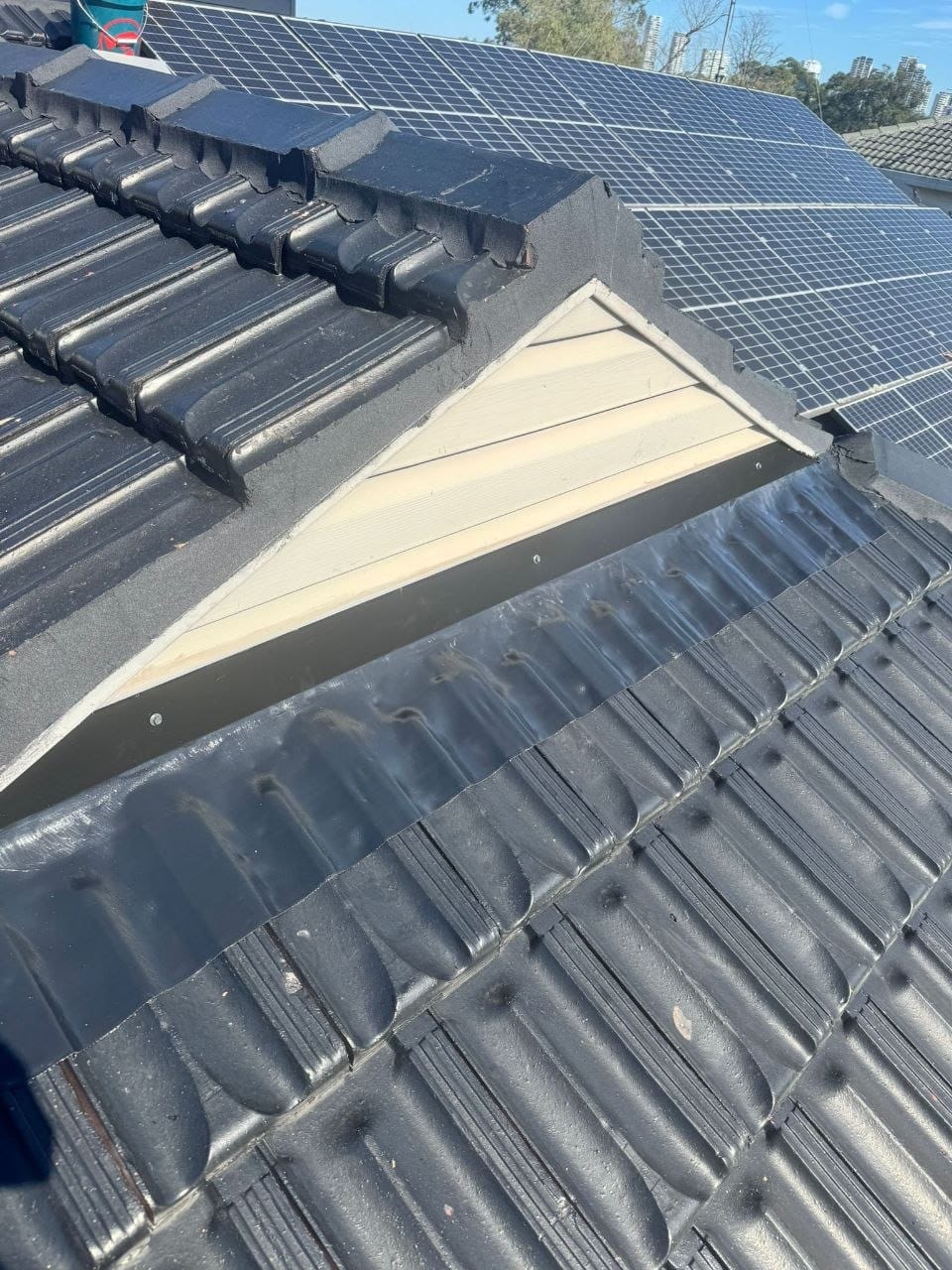
On the older roofs of Baulkham Hills, Castle Hill and Winston Hills the leak is almost always one of three things. Rusted-through valley irons under years of leaf litter are the most common, and they show as a stain on the ceiling directly below where two roof planes meet. Failed ridge pointing lets wind-driven rain under the caps, which then tracks down the sarking or, on the many roofs that were never sarked, straight onto the ceiling. And cracked tiles from someone walking the roof to fit an aerial or solar panels let water in at a single spot that can be metres from the stain.
1990s and 2000s two-storey project homes
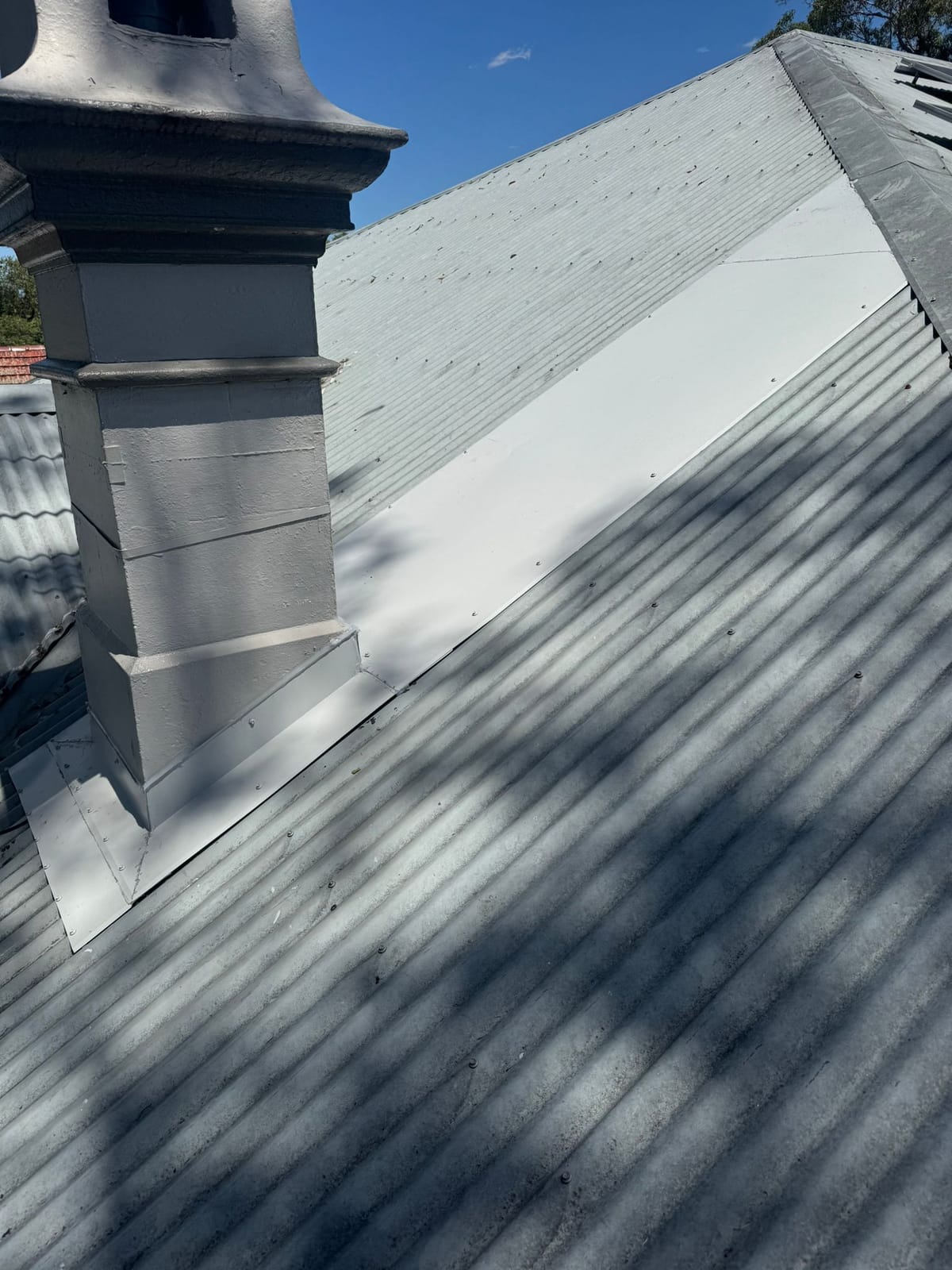
Kellyville, Bella Vista and Glenhaven homes have a lot of two-storey wall junctions where an upper wall meets a lower roof. The apron and step flashings at these junctions are where they leak, especially where the original flashing was surface-sealed to the brick rather than chased into a mortar joint. The other regular is the skylight or roof window that was flashed with a generic kit rather than the manufacturer's.
Post-2010 estates
At Rouse Hill, North Kellyville and Box Hill the leaks are builder defects: box gutters on the flat-roof facade sections with undersized sumps and no overflow, so a storm backs water up under the roof and through the ceiling; ridge capping that cracked in its first summer; and downpipes discharging into a blocked or unconnected stormwater line. If the home is inside the NSW Home Building Act statutory warranty period, we document the fault with photos for the builder claim as well as fixing it.
Finding a leak on a big two-storey roof
The stain is rarely under the leak. On a 300 m² roof with a 30-degree pitch, water that enters at a cracked tile near the ridge can run five or six metres down the sarking before it drops onto the ceiling. And on a two-storey home, the ceiling under the roof is an upstairs ceiling with a shallow, hot roof cavity that is hard to get into, so cavity inspection is slower than in a single-storey home.
That is why we flood test rather than guess. We wet the roof section by section from the bottom up with a hose while someone watches inside, and we use thermal imaging to trace the wet path through the plaster. It usually takes an hour or two on a Hills roof and it means the repair goes where the water is actually getting in. A guide to finding a roof leak explains what you can check yourself first, and its ceiling stain section helps you tell a leak from condensation, which is common in the shallow cavities of two-storey Hills homes on cold mornings.
Storm leaks from the west
Hills storms hit the west and south-west faces of a roof hard, and a roof that has been fine for years will leak in the first big westerly storm once the ridge pointing has cracked. If water is coming in during the storm, call us for a make-safe, the same day where availability permits. We tarp the section that is letting water in and come back to trace and repair it properly once the weather clears.
What it costs
| Leak | Typical cost (2026, inc. GST) |
|---|---|
| Single entry point: a cracked tile, a short flashing, a ridge section | From $350 including detection |
| Complex: box gutter, multiple entry points, two-storey wall junctions | From $1,200 |
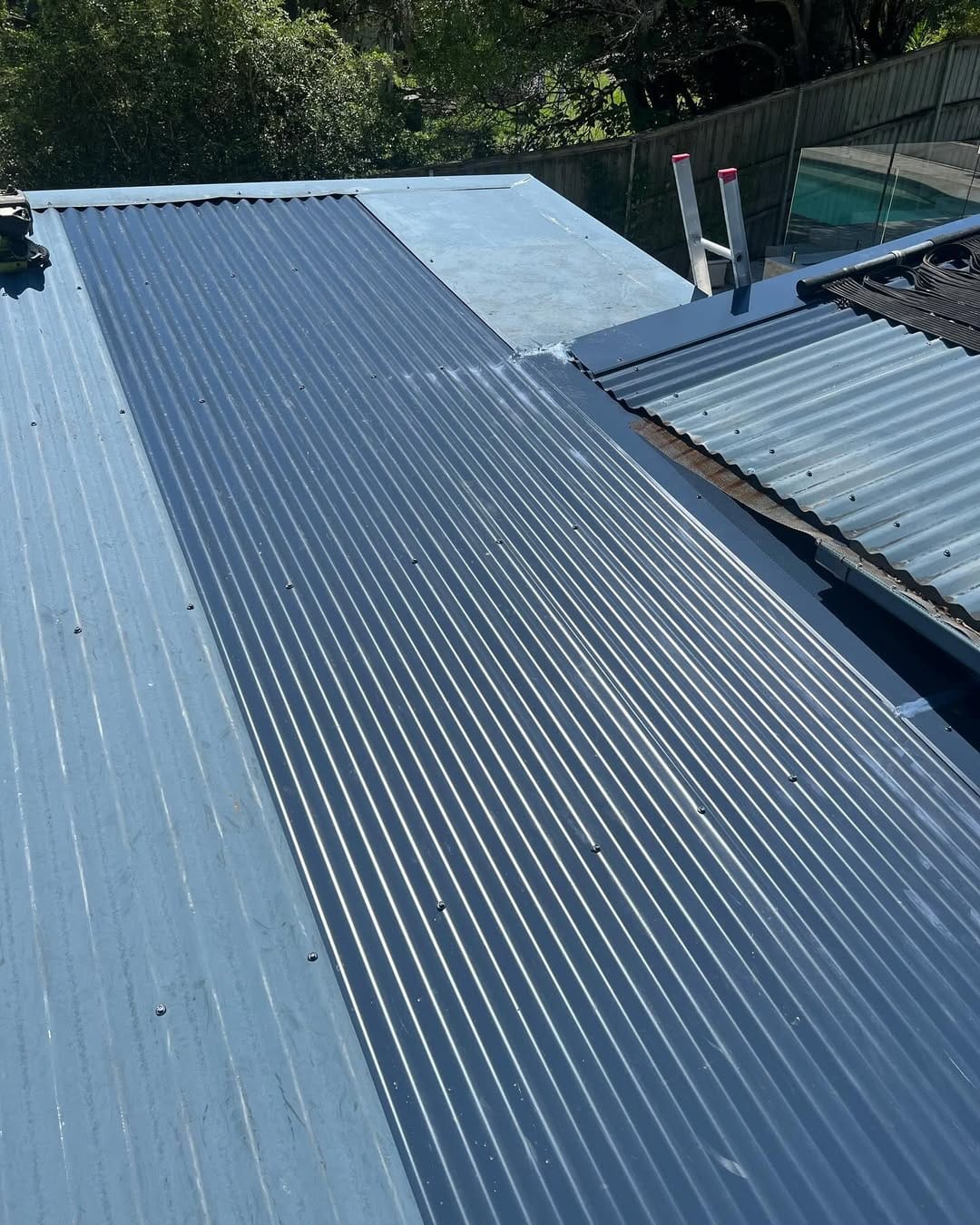
| Valley iron replacement, one valley | From $900 depending on length and scaffold |
Two-storey access adds scaffold or edge protection on longer jobs and we itemise it. The quote is free and follows the inspection in writing within 24 to 48 hours. We are 25 to 35 minutes from the Hills via the M2. Request a leak inspection and tell us where the stain is and when it appears; that alone narrows the search.