Every leak we chase in the Sutherland Shire and St George uses the same method as our Sydney-wide roof leak detection and repair service: find the entry point with flood testing and cavity inspection, fix that, then deal with the ceiling. What differs here is where the water gets in. This page is about those three, and about what we can and cannot honestly offer when the leak is happening right now and we are 45 to 60 minutes away. The wider area is covered on the Sutherland Shire and St George page.
Where Shire roofs leak
Cronulla and the beachfront: rusted valleys and gutters
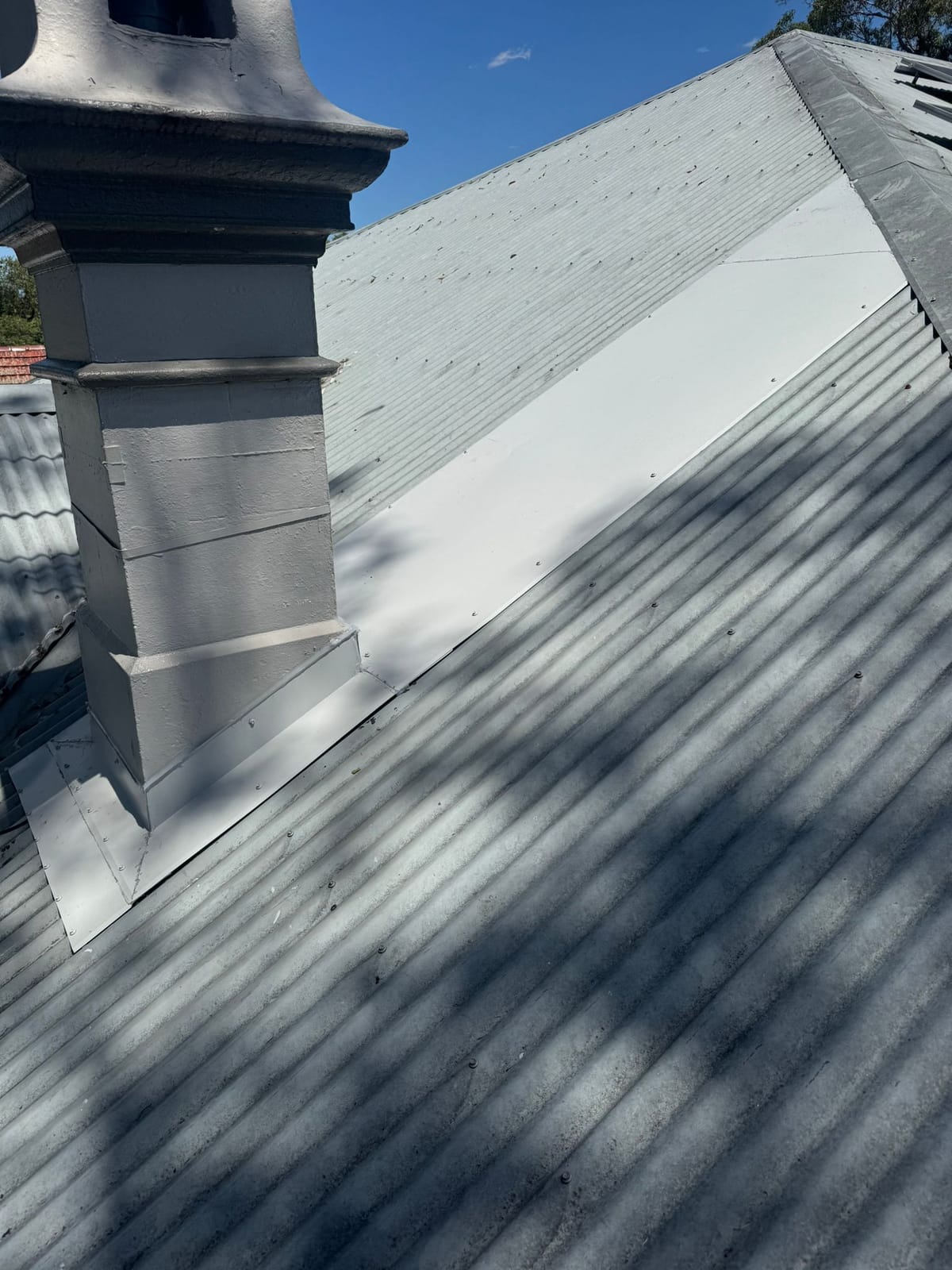
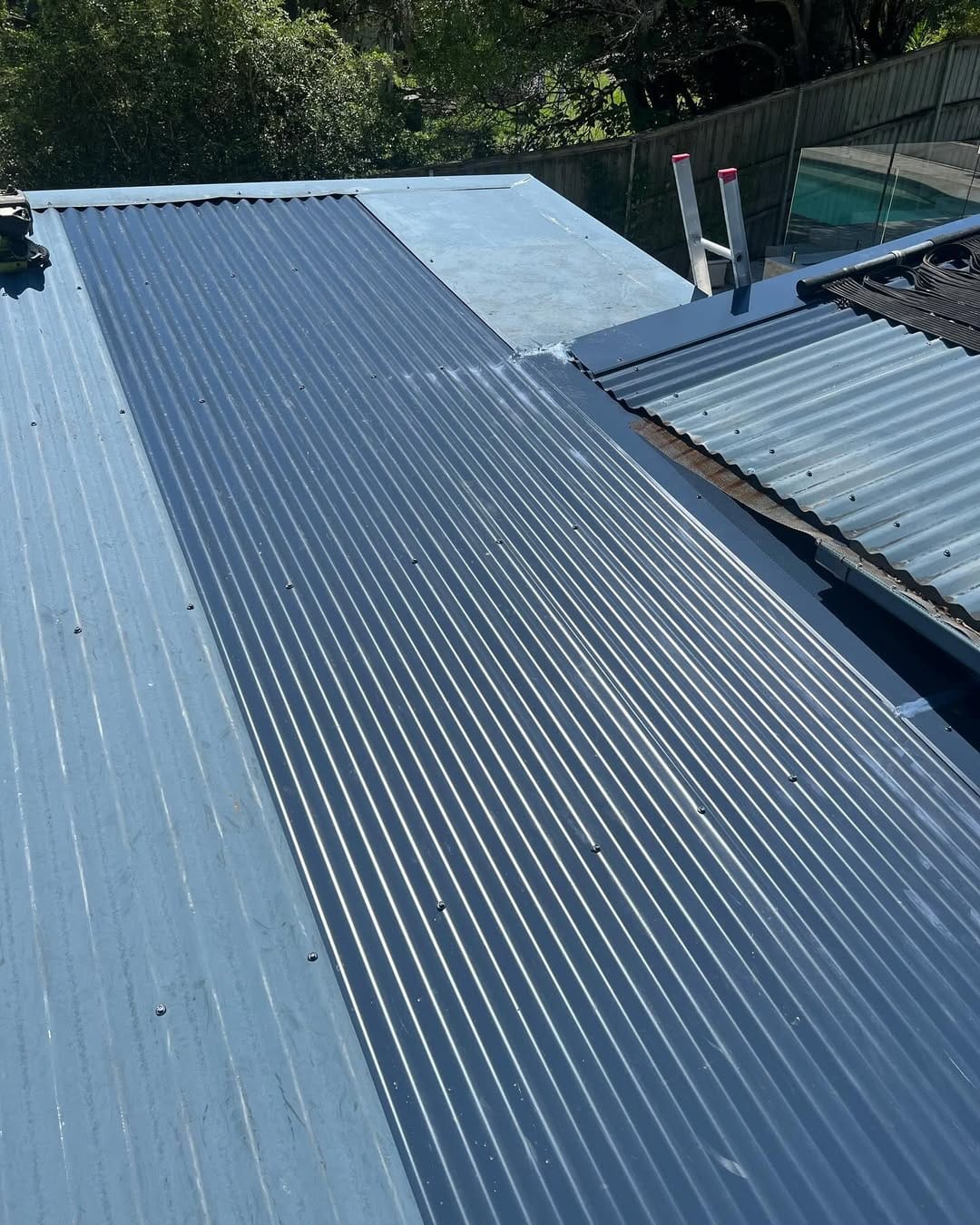
On a tile roof near the surf, the leak is almost always in the metal. Valley irons rust through along the bottom fold, so water running down the valley drops straight through onto the sarking, or onto the ceiling if the sarking has gone. Gutters perforate at the back edge and run water down the fascia and into the eaves. On metal roofs, screw holes open up as the washers perish and the fastener heads corrode.
The fix is replacement in marine-grade material, not sealant. Silicone on a rusted valley at Cronulla lasts one winter.
Miranda, Sutherland and the tile belt: ridges and cracked tiles
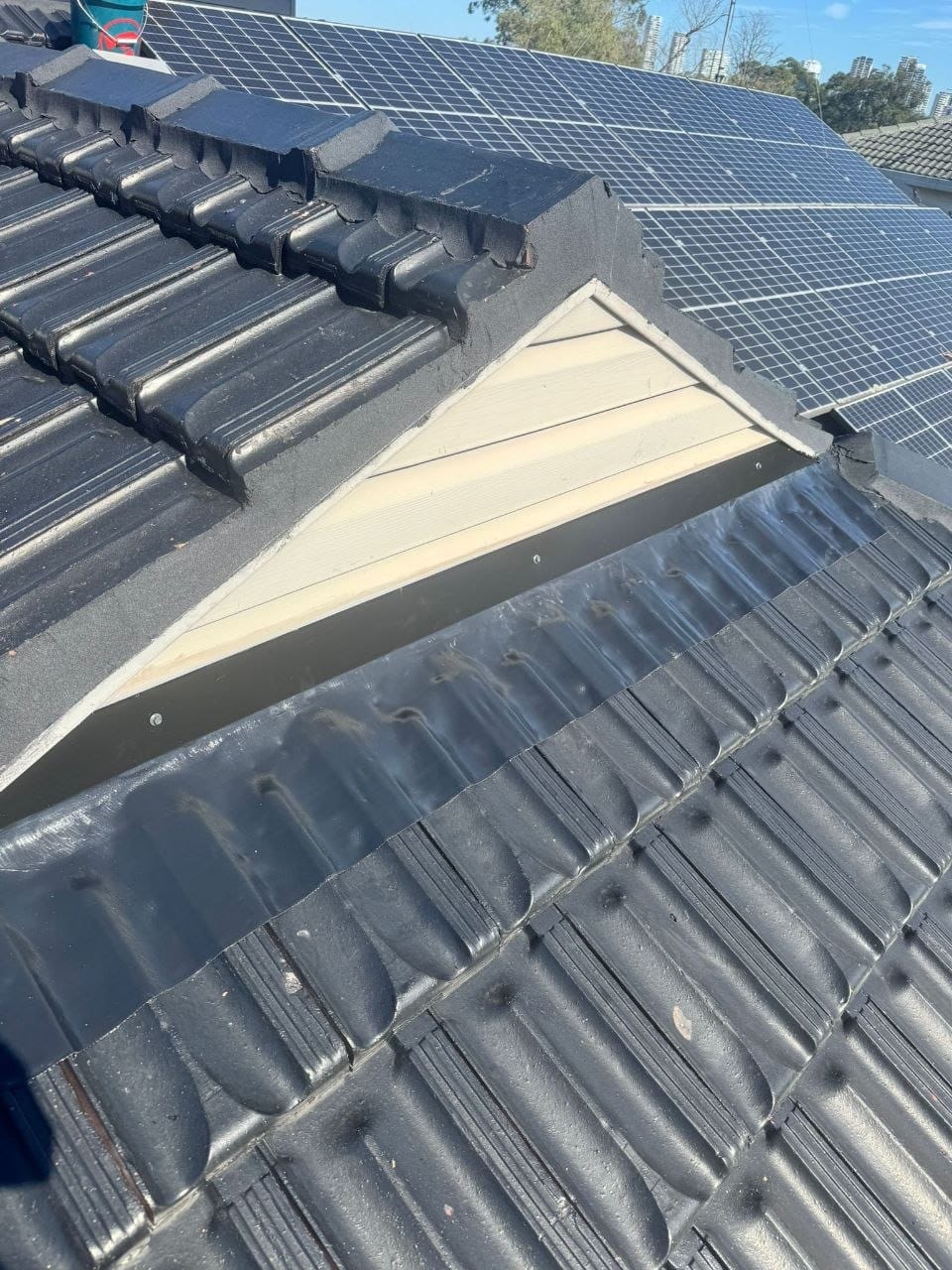
Inland, the 1960s to 80s tile roofs leak at the ridge line. Mortar bedding has failed, pointing has cracked, and wind-driven rain gets under the caps and runs down the inside of the tiles. Sarking on these roofs, where it was fitted at all, has often perished, so there is nothing catching the water on its way to the plaster.
Hurstville and Kogarah: box gutter overflow
In the newer duplexes and strata around Hurstville the roof itself is usually fine. The leak is the box gutter. A sump too small for the catchment, no overflow, or a downpipe half blocked with builder's rubbish, and a heavy southerly fills the gutter faster than it can drain. Water backs up over the internal edge and into the top-floor ceiling. This is not a roof leak in the normal sense and patching the ceiling does nothing; the gutter has to be rebuilt to AS/NZS 3500.3.
Finding the source on a 50-year-old tile roof
Old tile roofs are the hardest leaks to trace, because water travels. A stain over the hallway can start at a ridge cap six metres away. Our process on a Shire tile roof:
- Look at the stain and the roof cavity first, tracing water marks on the timber back uphill
- Check whether it is condensation rather than a leak. Uninsulated 1970s tile roofs in the Shire sweat on cold clear nights, and the drip pattern looks the same from below
- Flood test the suspect area from the top down, one element at a time: ridge, then valley, then tile field
- Repair the entry point, and only then talk about the ceiling
Leak detection and repair on a straightforward roof is from $350. Complex leaks with several entry points, or a box gutter that has to be rebuilt, start from $1,200.
Emergency leaks: what we can honestly do from Gladesville
We attend emergency leaks in the Shire the same day where availability permits. But we will tell you the truth on the phone: from Gladesville it is 45 to 60 minutes to Cronulla or Sutherland with clear roads, and in a storm a roofer who lives in the Shire may have a tarp on your roof sooner than we can. If we have a crew available, we come. For a storm emergency, the NSW SES is on 132 500.
For a leak that is not urgent, distance is irrelevant. We book the detection visit into the next run south and the repair usually follows on the same trip. For an emergency make-safe, a $150 same-day emergency call-out fee applies, plus the make-safe works: from $200 for small to medium works and from $250 for larger make-safes or where several areas need attention.
Leak repair prices in the Shire
| Job | Starting price (inc. GST) |
|---|---|
| Leak detection and repair, single entry point | From $350 |
| Complex leak, multiple entry points or box gutter | From $1,200 |
| Marine-grade valley replacement | From $900 |
| Emergency make-safe (tarp) | $150 same-day call-out fee plus make-safe works: from $200 small to medium, from $250 larger or several areas |
If the leak is running now, put a bucket under it, move anything valuable, and switch off the light circuit in that room if water is anywhere near a fitting. Then ask for a leak repair or call, and tell us the suburb so we can be straight about timing. Our guide to finding a roof leak covers what to check yourself before we arrive.