
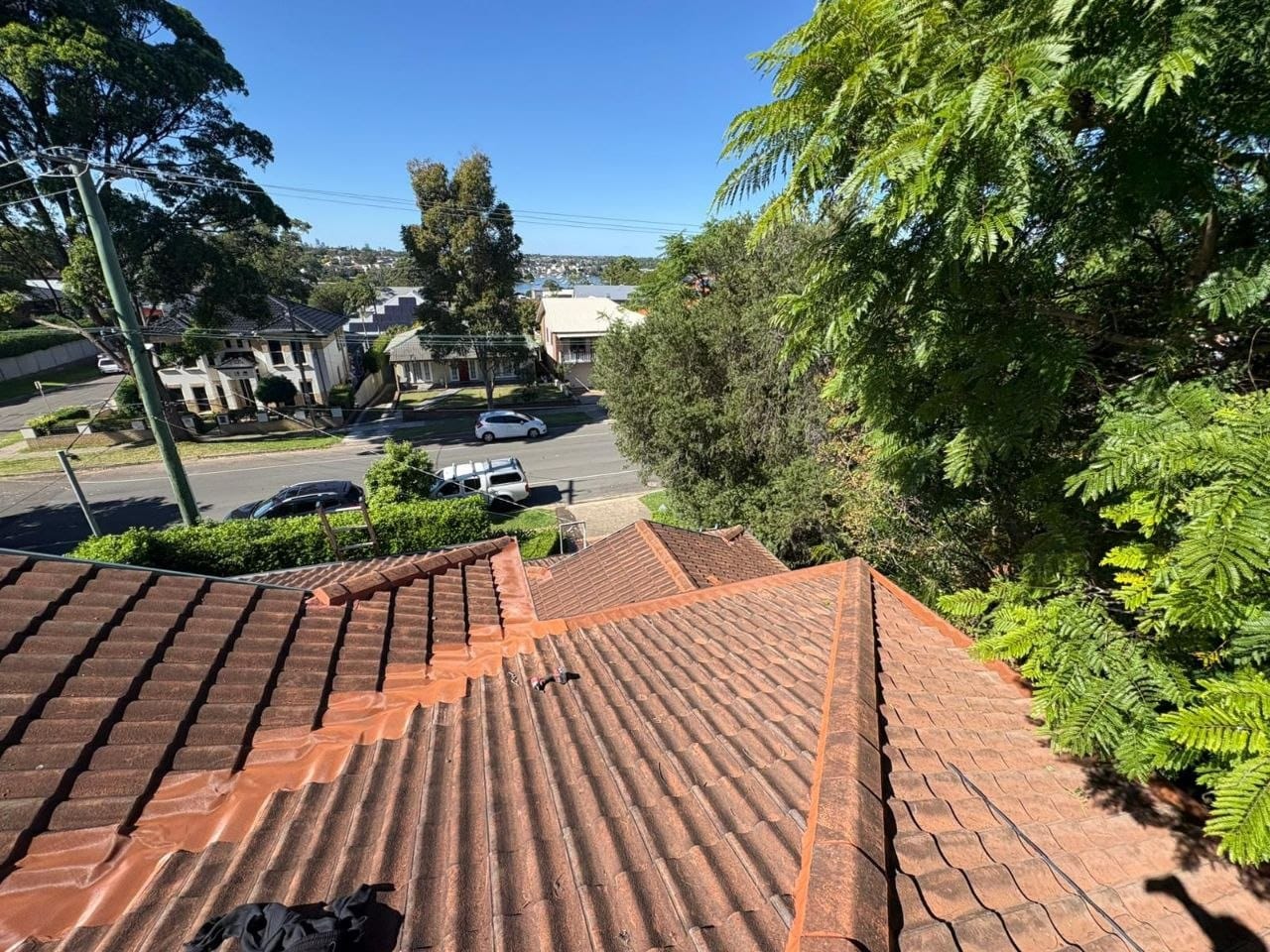
Why inspect a roof that is not leaking
Most roof faults are cheap for about two years and expensive after that. A slipped tile costs a call out. The same tile left for three winters means wet sarking, a rotted batten, a stained ceiling and a moderate repair. The whole point of an inspection is to find the first version.
What a roof inspection involves
We go up. That is the difference between a roof inspection and a building report that looks at the roof from the manhole and the driveway.
On the roof we check every element in a fixed order so nothing gets skipped: ridge and hip capping and its bedding, tiles or sheets by elevation, valleys, flashings at every penetration, gutters and downpipes, and anything bolted to the roof such as solar panels, whirlybirds, skylights and aerials. On a tile roof we walk the tiles at the nose where they are supported. On metal we walk the screw lines over purlins.
Inside the roof cavity we look for the things the outside does not show: daylight through the sarking, water marks on rafters, sagging or torn sarking, wet or compressed insulation, mould, rodent or possum activity, and how the bathroom exhaust fan is ducted.
Drone inspection
Slate, terracotta shingles, fragile old concrete tiles, steep pitches and some two storey roofs cannot be walked safely without scaffold. For those we fly a drone and photograph every elevation at close range, then still get into the cavity from inside. A drone cannot press on a tile to see if the bedding is loose, so we say which method we used in the report.
The roof condition report
You get a written roof condition report within 24 to 48 hours. It is a photo report, not a tick sheet. Every fault has a photo, a note of where it is (north elevation, third course from the ridge), what it is doing, and one of three ratings: fix now, fix within 12 months, or monitor. Each fix carries a starting price so you can budget, and the report ends with an honest view of how many years the roof has left before it needs restoration or replacement.
If the report finds nothing, it says so. We do not invent work to justify the fee.
Pre-purchase roof inspections
A standard NSW building and pest report is not a roof inspection. It is written to AS 4349.1, which limits the inspector to safe and reasonable access, so the roof section comes from the ground, a ladder at the gutter line and the manhole. Buyers regularly settle on a house with a roof that needs $8,000 of work nobody mentioned.
What a building inspector's report usually misses
- Cracked or missing bedding and pointing under the ridge and hip caps
- Valley irons rusting from the underside
- Flashings held together with silicone from an earlier quick fix
- Concrete tiles that have lost their surface and gone porous
- A discontinued tile profile, which turns ten broken tiles into a re-roof once no match exists
- Rust around screw heads and sheet laps on a metal roof
The usual wording is that the roof "shows wear consistent with age" and should be assessed by a roofing contractor. That line can sit in front of anything from a $900 ridge re-point to a full replacement.
What we check
- Every slope from on the roof where it is safe, or by drone where it is not: slipped, cracked and mismatched tiles, surface wear, moss and lichen
- Ridge and hip bedding, pressed by hand, and any caps sitting high or crooked
- Every valley, and every wall, chimney and pipe flashing
- Gutters, downpipes, fascia and eaves lining for rust and staining
- The ridge line and each roof plane for sag, which is a framing question for a builder or engineer
- The roof cavity: daylight, whether there is sarking and its condition, damp or stained timber, wet insulation, and ceilings below with one freshly painted patch
- Overhanging trees and access, because scaffold on a two storey or steep block adds to every future quote
What the report includes
Photos of every slope, ridge, valley, flashing and gutter, a fault list ranked by urgency, and a written starting price against each item. It is written so you can hand it to your conveyancer or negotiate with it: a priced fault list is a number, "the roof shows wear" is not. If the roof is clean, the report says so and becomes the first page of your maintenance file.
A pre-purchase roof inspection is from $350, and the report follows within a day or two. NSW private treaty sales carry a five business day cooling-off period, which is enough time but tight, and an auction has none, so book before you bid and tell us the exchange or auction date.
Insurance evidence
NSW insurers decline storm claims for wear and tear and lack of maintenance more than any other reason. Their assessor turns up after the storm and has to guess whether that cracked ridge capping was cracked last week or five years ago.
A dated photo report from before the storm removes the guesswork. It is the best insurance evidence a homeowner can hold, and it costs less than most excesses. We recommend one every two years on a roof over 20 years old, and one before storm season on anything with a known weak point. How claims actually run is on our storm damage and insurance page.
Strata and commercial
A strata scheme in NSW has to keep a 10 year capital works fund plan, and the roof is usually the largest single item in it. We inspect the whole roof, including box gutters, membranes, plant penetrations and safety anchors, and write the report as an asset condition report the committee can put straight into the strata capital works fund forecast: what needs doing this year, what can be scheduled, and what the roof will need at year five and year ten.
For larger buildings and industrial roofs, see commercial roofing. Scheduled maintenance contracts with after-hours access are handled there.
Maintenance plans
A preventative maintenance schedule is not complicated. For most Sydney homes it looks like this:
| When | What | Why |
|---|---|---|
| Autumn, every year | Annual gutter clean, valley clear, downpipe flush | Before the winter rain and after the leaf drop |
| Autumn, every year | Walk-over or drone check of ridges, flashings and penetrations | Catches the cheap version of every fault |
| Spring, heavy canopy only | Second gutter clean | Gordon, Beecroft, Lane Cove and similar need it |
| Every 2 years | Full photo condition report | Insurance evidence and budgeting |
| Every 10 to 15 years | Ridge re-bed and re-point, coating renewal | Before the bedding fails, not after |
We can set that up as a standing arrangement and ring you when it is due. The gutter work is done by our gutter cleaning crew, and the printable version of the schedule is at our seasonal roof maintenance checklist.
What it costs
A roof inspection with photo report is from $250 for most homes, and from $350 for a pre-purchase inspection with faster turnaround and a report written for negotiation. Strata and commercial are quoted on the roof area and access. If the inspection turns up work and we do it, the inspection fee comes off the repair invoice.
What an inspection cannot do
It will not always find an active leak. Leaks that only appear in a southerly need flood testing or thermal imaging, which is a different job. It is not a structural engineer's report on the framing, and it is not an asbestos survey, although we will tell you if a pre-1990 roof or eave lining looks like asbestos cement and needs a licensed assessor.
Warranty
Any minor repair we do on the day, such as replacing a cracked tile or re-seating a ridge cap, carries our 2-year workmanship warranty. The report itself is our honest reading of the roof on the day we saw it, and we stand behind it when an insurer or a buyer asks questions.
Book an inspection or ask us to quote a maintenance plan. Quotes are free, written and on-site.