Bedding and pointing: two different things
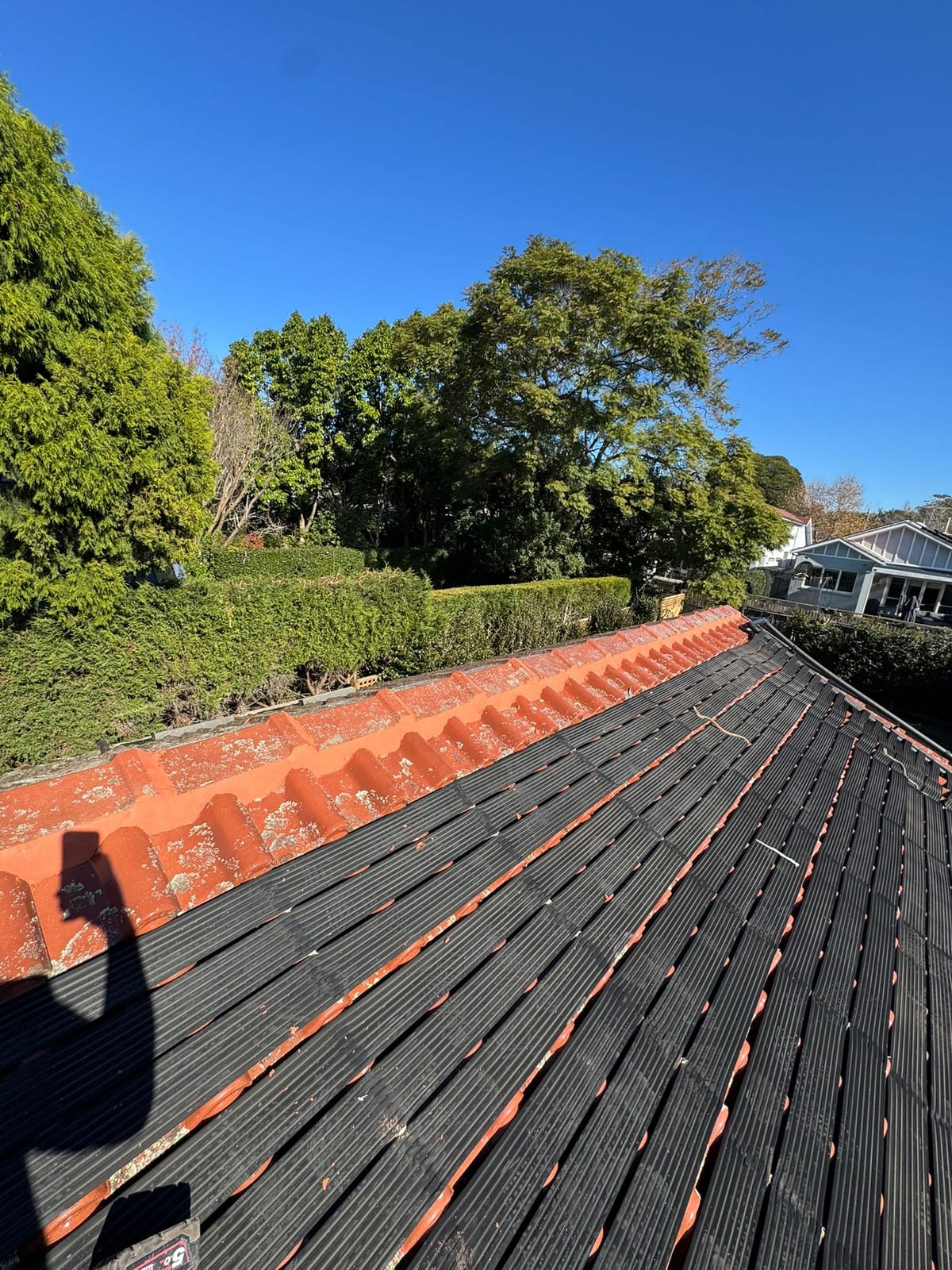
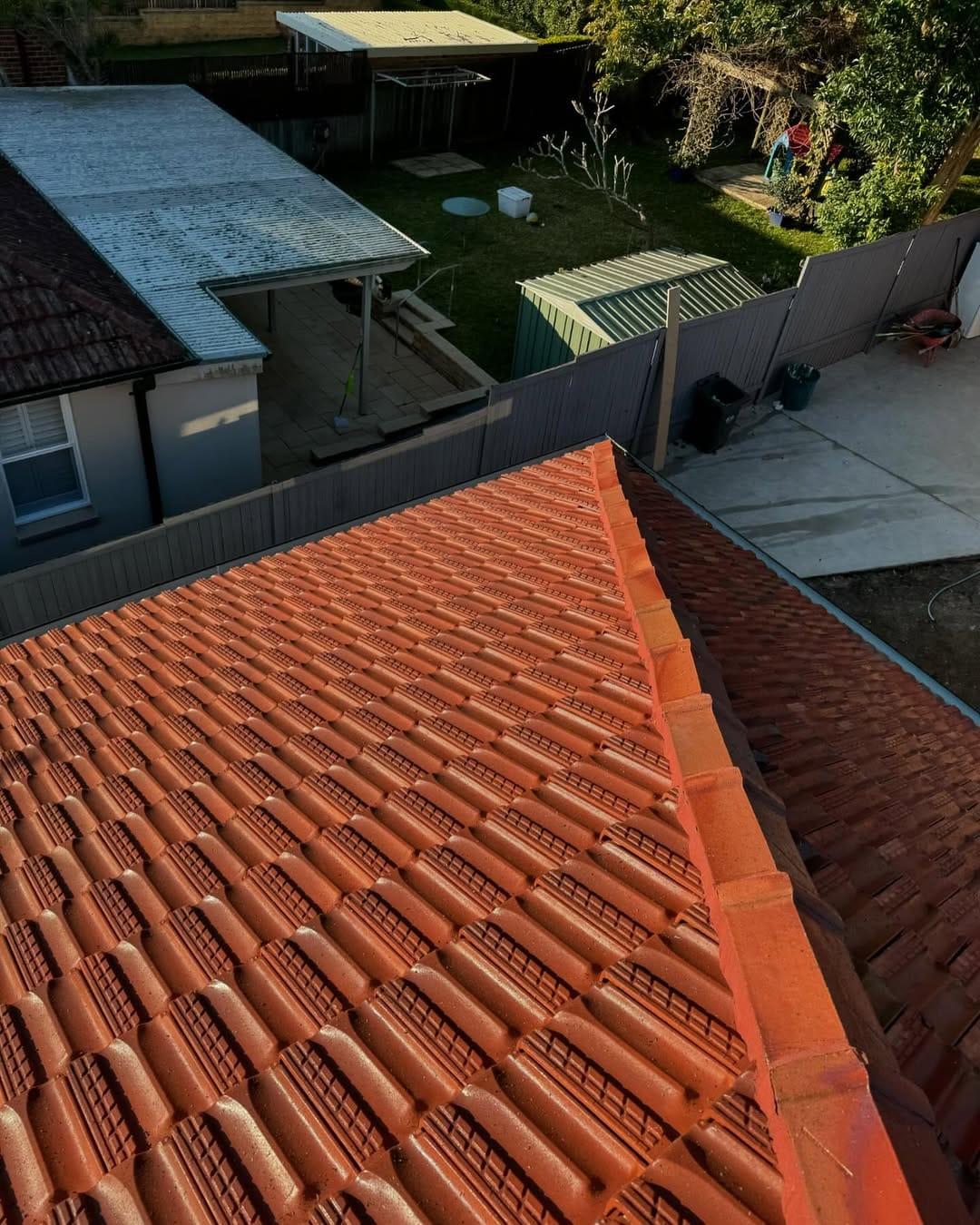
The ridge capping is the row of caps along the top of a tiled roof. Hip capping is the same thing running down the angled corners. The caps sit on a bed of sand and cement, the bedding mortar, which holds them at the right height and keeps them in line. Pointing is the layer applied over the outside edge of that bed. It seals the joint between cap and tile and, in its modern form, grips both.
The distinction matters because the two fail differently and are fixed differently. If your quotes disagree, it is usually because one roofer has priced pointing only and another has priced re-bedding as well.
Why old pointing cracks
Until the 1990s the pointing was mortar too, a thin skin of sand and cement coloured to match the tiles. Mortar is rigid. A roof is not. The frame moves as timber dries and swells, the tiles expand through a 40 degree summer afternoon and shrink overnight, and a southerly buster shakes the whole ridge. Rigid mortar on a moving joint develops hairline cracks, water gets in behind it, and the bedding underneath starts to break down.
Flexible pointing replaced it. It is a polymer compound that is trowelled on like mortar, cures to a tough rubbery finish and bonds the cap to the tile, so it moves with the roof and does not let go. AS 2050, the tile installation standard, recognises flexible pointing as a way of securing ridge caps. Any Sydney tile roof that still has its original mortar pointing is at or past the age where it needs attention.
Signs the ridge needs work
You can see most of these from the ground or from a ladder at the gutter. Do not walk the roof to check.
- Cracked pointing, or sections missing altogether, with grey or coloured crumbs in the gutters and on the path
- Loose ridge caps that have shifted out of line, or a cap that has slipped down a hip
- A gap you can see daylight through between cap and tile
- Blocked weep holes, with staining or moss in a line just below the ridge
- A ceiling stain near the middle of the house or along a hip line after wind-driven rain
Weep holes are the small gaps left in the pointing where each cap crosses the water channel of the tile below. They let any water that gets under the cap drain back out onto the roof. Old repairs and careless roof painting often fill them. Water then dams behind the pointing and finds its own way into the ceiling.
Why this is the most common cause of ridge leaks
The ridge is the highest and most exposed line on the house. It takes wind-driven rain from both sides, and the only thing between that rain and the roof space is the bedding and pointing. Once the pointing has cracked, water tracks under the caps. On a sarked roof it may run down the sarking to the gutter for years before anyone notices. Many older Sydney tile roofs have no sarking, and there it lands straight on the ceiling.
When we are called to a leak on a tiled roof and the stain is under the ridge or a hip, failed pointing is the first thing we check and the most common thing we find. If the stain is somewhere else, start with how to find a roof leak or our leak repair service. A loose cap is also a storm risk: it weighs several kilograms and sits at the top of the roof.
Re-bed, or re-point only
We decide cap by cap, by hand. Every run is pushed and lifted.
| Re-point only | Re-bed and re-point | |
|---|---|---|
| When it suits | Caps are firm and the bedding is intact; only the pointing has cracked | Caps move, or the bedding is cracked through or crumbling |
| What is done | Loose old pointing is removed, the joint cleaned, flexible pointing applied | Caps lifted, old bedding broken out, new bed laid, caps reset, then pointed |
| Where it goes wrong | Applied over failed bedding, it peels within a few years | Rarely, if the bed is given time to firm before pointing |
Most roofs need a mix: full re-bedding on the weather side and the hips, pointing only on the sheltered runs. A quote should say how many lineal metres of each. A blanket re-point at a low price over bedding that has already gone is the usual reason we are asked to redo ridge work.
How the work is done
- Caps that need it are lifted and stacked. Cracked caps are replaced.
- Old bedding is chipped out and the tile surface brushed clean.
- New bedding mortar is laid on both sides of the ridge, and the caps are set back to a string line so the ridge runs straight.
- Weep holes are formed at each water channel.
- Flexible pointing is trowelled over the bed and the cap joints, in a colour chosen to suit the tiles.
- Gable ends get the same treatment where they are bedded.
- Gutters are cleared of debris and broken tiles found along the way are replaced.
A whole ridge system on an average home takes one to two days. Pointing needs dry weather to skin and cure, so we do not start with rain forecast that day.
Terracotta tiles and concrete tiles
Concrete tiles cover most post-war homes in Ryde, the Hills and Western Sydney. The caps are sturdy and replacements for common profiles are easy to find. If the roof is going to be coated afterwards, the pointing colour matters less because the coating goes over it.
Terracotta tiles on Federation and interwar homes around Gladesville, the Inner West and the North Shore need more care. Old terracotta is brittle underfoot, the caps are often a profile no longer made, and a broken one may have to come from a salvage yard. Terracotta is not painted, so the pointing colour is the finished look and has to be matched properly. More on both materials is on our tile roofing page.
Where it fits in a restoration
Re-bedding and re-pointing is step three of a full roof restoration, after repairs and the pressure clean and before primer and coating. If the tiles are faded and porous as well, doing the ridges as part of a restoration costs less than doing the two jobs years apart. If the tiles are sound and only the ridge has failed, repointing on its own is the right job and we will quote it that way. Other faults we find while we are up there, such as a rusted valley or lifted flashing, are priced as roof repairs.
What it costs
Ridge work is priced by the lineal metre: from $45 per lm for a re-bed and re-point, which puts a whole roof with about 20 lineal metres of ridge from $900. Ridge length, roof pitch and how much of the bedding has failed move the figure. The roof repointing cost guide works through examples.
Warranty
Ridge work carries our 2-year workmanship warranty, in writing on the warranty page. Request a free on-site quote and we will test every run of capping, photograph what we find and give you a written price that separates re-bedding from pointing only.