Skip to content
Sam's Roofing Experts

Tiled Roofing & Roof Tiling in Sydney

Concrete and terracotta tile roofs across Sydney: matching and replacing broken tiles, re-bedding ridge capping, and full re-tiles on roofs that have run out of life. Licensed NSW roofers based in Gladesville, with free written quotes done on the roof, not from the driveway.

NSW licence 502874C2-year workmanship warrantySame-day emergency attendance, where available4.9 on Google

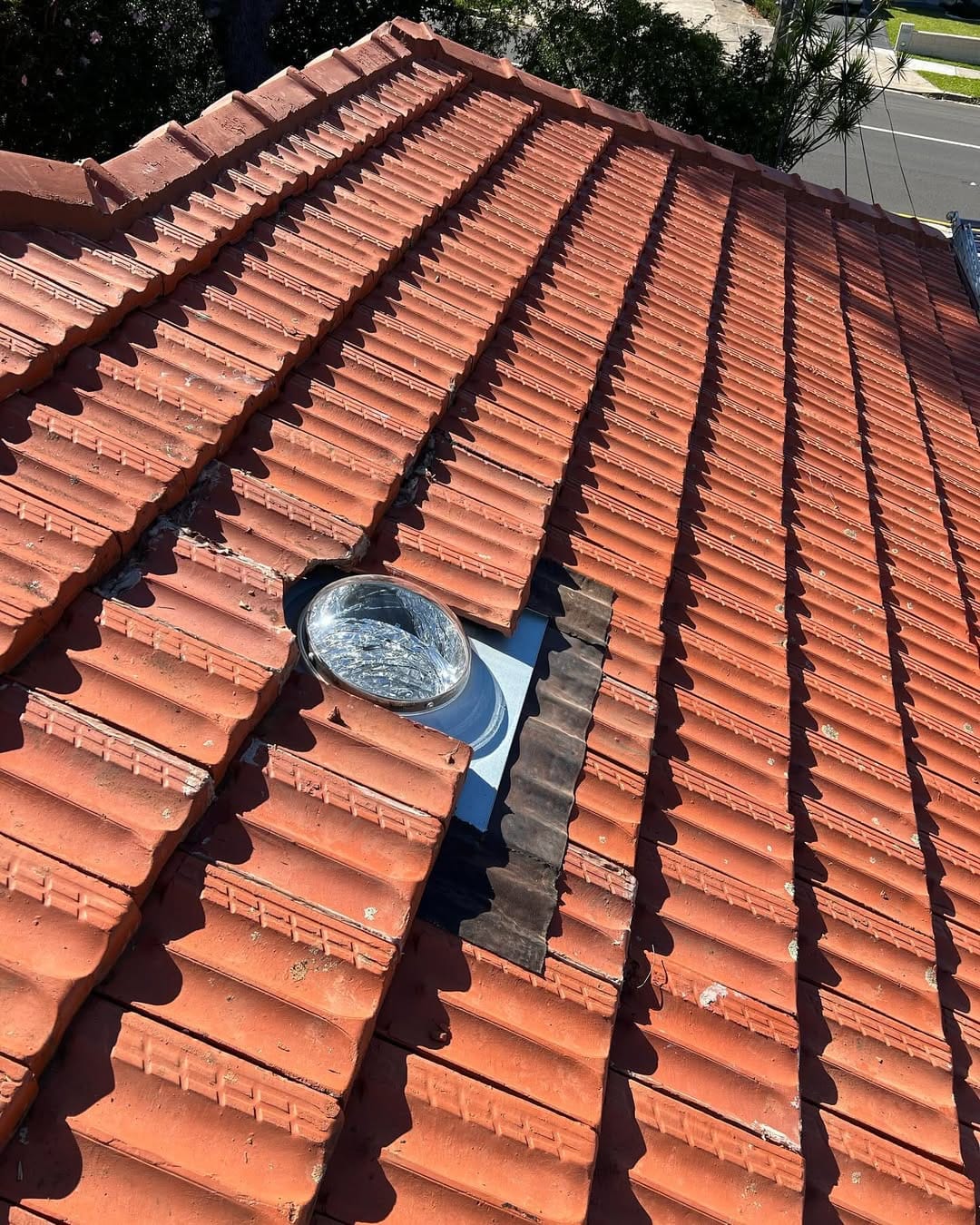
A tubular skylight fitted into a terracotta tile roof

What tile roofing costs in Sydney

These are 2026 Sydney starting prices including GST. Tile availability moves the small jobs; roof size, pitch and access move the big ones. A single-storey concrete tile home on a level block is priced at or near the starting price in each row. Every quote is free, written and done on the roof.

JobStarting price, inc. GST
Broken tile replacement, call-out including first tilesFrom $250
Ridge capping re-bed and re-pointFrom $45 per lm
Section re-bed, valley iron or flashing runsFrom $900
Tile roof restoration, 3-bed single storey (~180–220 m²)From $4,500
Full re-tile with new concrete or terracotta tilesFrom $150 per m²

The variables that move the price

  • Concrete or terracotta, and whether the profile is still in production
  • Number of storeys and whether scaffold is required
  • Roof pitch (steep roofs are slower and need fall protection)
  • Total ridge, hip and gable length
  • Condition of battens and sarking once tiles are lifted
  • Heritage or council constraints on tile type and colour

These are 2026 Sydney starting prices from our own quoting, not a promise for your roof. Every job is quoted free, on site and in writing after we have been on the roof. That is the number you can hold us to.

What goes wrong with a tiled roof

A tiled roof is a lot of small parts held in place by gravity, a few nails and the mortar on the ridges. The tiles usually outlast everything else. What fails first is the bedding under the ridge capping, then the pointing on top, then the sarking and battens once water has been getting in for a few seasons.

The faults we get called out for most:

  • Cracked or slipped tiles after someone has walked on the roof (antenna and solar installers, usually)
  • Ridge capping that rocks when you push it, or mortar crumbs turning up in the gutter
  • Concrete tiles gone porous, growing moss and lichen on the south-facing slope
  • Terracotta tiles from the 1920s to 1960s that are fretting (the glaze flaking off) or crazed
  • Valleys blocked with broken tile pieces and leaf litter
  • Daylight visible from inside the roof cavity

None of these on its own means you need a new roof. Most of them are a day's work.

Concrete tiles and terracotta tiles

Nearly every tile roof in Sydney is one of two things. Post-war brick-and-tile homes in Ryde, the Hills, Western Sydney and the Shire are almost all concrete tiles, most of them Monier or Boral profiles. Federation and interwar homes in the Inner West, on the North Shore and around Gladesville are more often terracotta, sometimes original.

Concrete tilesTerracotta tiles
Typical age in Sydney1960s onward1900s onward
ColourSurface colour that fades in 15 to 25 years; can be re-coatedFired in; does not fade, and paint will not hold on the glaze
WeightHeavier, roughly 50 kg per m² laidLighter, but more brittle with age
Common faultsPorosity, moss, colour loss, cracked interlocksFretting glaze, cracked tiles, broken nibs
Fix for a tired roofRestoration with a membrane coatingClean, re-point, replace failed tiles; no coating
Replacement supplyGood for current profiles, patchy for older onesSalvage yards for original profiles

Not sure which you have, or whether metal would suit the house better? Roof types and profiles explained walks through the options and tile vs Colorbond covers the switch honestly.

Tile matching on an older roof

This is what separates a roof tiler from a handyman. Monier and Boral have both changed, renamed and discontinued profiles over the decades. A 1970s Monier Elabana or a 1980s Boral Contour is no longer pressed in the same die, so a new tile off the shelf can be a few millimetres out at the interlock and will never sit flat or seal.

For discontinued roof tiles we do three things, in order:

  1. Identify the profile from the stamp on the underside and the shape of the interlock, not the colour.
  2. Source second-hand tiles of the same profile from Sydney salvage yards. We keep a stock of the common ones at the depot in Gladesville.
  3. If nothing matches, take sound tiles from a slope nobody sees (behind a parapet, under a solar array) for the visible repair, and put the closest new tile where it is hidden.

Colour is a separate problem: a new concrete tile next to 40-year-old faded ones stands out for a couple of summers. On a roof being restored and coated anyway, that does not matter. On a bare roof, ask for salvaged tiles on the street-facing slopes.

How we assess it

A tile roof inspection is done on the roof. We walk every slope on the tile noses where the batten carries the weight, lift tiles to check the sarking and battens, push-test every run of ridge capping, and photograph anything we want you to see. The photos come with the quote. On a two-storey home with a steep roof pitch we anchor a harness to the structure rather than guess from a ladder.

What the work involves

Broken tile replacement

Lift the tiles above the broken one, slide the damaged tile out, slide the replacement in, and make sure it is sitting on the batten and locked into its neighbours. On sarked roofs we check the sarking under the break for tears and tape them. Twenty tiles scattered across a roof is a half-day job.

Ridge capping re-bed and re-point

The old bedding is broken out and the caps lifted off. Fresh bedding mortar is laid, the caps set back level and straight, and the joint finished with a flexible pointing compound rather than rigid mortar, so it moves with the roof instead of cracking again. Hips and gable ends get the same treatment. It is the most common tile roof job in Sydney and covers a whole ridge system in one to two days; the wider list of fixes is on the roof repairs page.

Full re-tile

When the tiles have genuinely failed (porosity across whole slopes, widespread fretting, or a roof patched so often nothing sound is left) we strip to the rafters. Old tiles and battens go into a skip, new sarking goes on, new battens are set to the manufacturer's gauge for the profile and roof pitch, and the tiles are laid, cut and mechanically fixed at the perimeter and wherever the pitch and wind region call for it under AS 2050. Ridges are bedded and pointed as above; valleys and flashings are new. An average single-storey home takes four to six working days.

Roof pitch

Tiles rely on pitch to shed water. Most concrete and terracotta profiles need at least 15 degrees; below that, water tracks back under the interlock and the manufacturer will not warrant the roof. If an extension has a low-pitched roof tiled to match the house, that is very often the leak. The honest fix is usually a metal section at the low pitch, not more tiles, and we say so at the quote rather than after.

What it costs

Small jobs are priced as a call-out plus tiles, ridge work by the lineal metre, and a re-tile per square metre. A re-tile lands close to the cost of a tile-to-Colorbond replacement, so we quote both once a roof has reached that point. The table below gives the starting prices; the quote is free, written and done on site.

When tile work is not the right fix

  • A roof that is dirty and faded but structurally sound wants a restoration, not tile replacement.
  • A roof with sagging battens, rotten rafters or asbestos-cement sarking is a replacement conversation.
  • Heritage homes in Hunters Hill, Balmain, Paddington or Mosman: like-for-like terracotta repairs are usually fine, but changing tile type or colour usually needs council approval. We will flag it.

Warranty

All tile work carries our 2-year workmanship warranty, and new Monier and Boral tiles carry the manufacturer's product warranty on top. Salvaged tiles are sound when they go on but are second-hand, and the quote says so.

For a straight answer on what your tile roof needs, book a free on-site quote. We cover all of Sydney from Gladesville.
What is included, and what is not

Hold this against the other quotes you have. If a line below is missing from theirs, ask why.

Included as standard

  • On-roof inspection with photos of every fault we find
  • Profile identification and tile matching, including salvaged tiles for discontinued profiles
  • Replacement tiles slid in and locked to neighbours, sarking checked under each break
  • Ridge, hip and gable re-bed with fresh mortar and flexible pointing
  • New sarking and battens on a full re-tile, fixed to AS 2050
  • Valleys and flashings replaced on a full re-tile
  • Skip hire and removal of old tiles and battens
  • 2-year workmanship warranty in writing

Not included, or quoted separately

  • Scaffold or elevated work platform where the roof cannot be safely accessed from ladders (quoted separately)
  • Structural repairs to rafters or trusses found once the roof is stripped
  • Asbestos-cement sarking or eaves removal (licensed removalist, quoted separately)
  • Roof coating or painting after repairs (see roof restoration)
  • Council or heritage approvals, though we will tell you if one is needed
  • Gutter replacement, unless included in the quote

Guides that go with this service

Tile Roofing: our own jobs

Photographed on site by our roofers. No stock photos.

All recent work →
  • A tubular skylight fitted into a terracotta tile roof
    A tubular skylight fitted into a terracotta tile roof
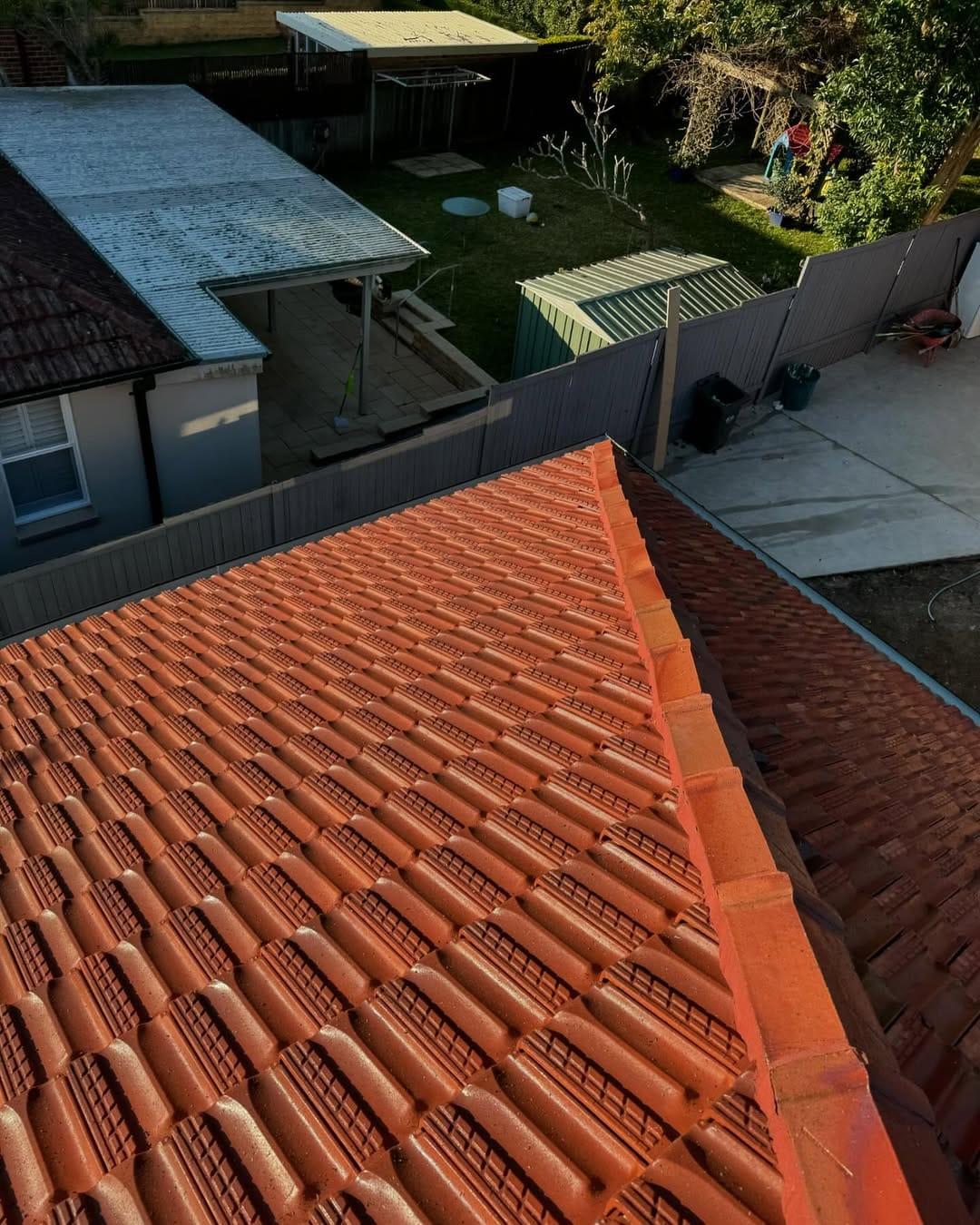
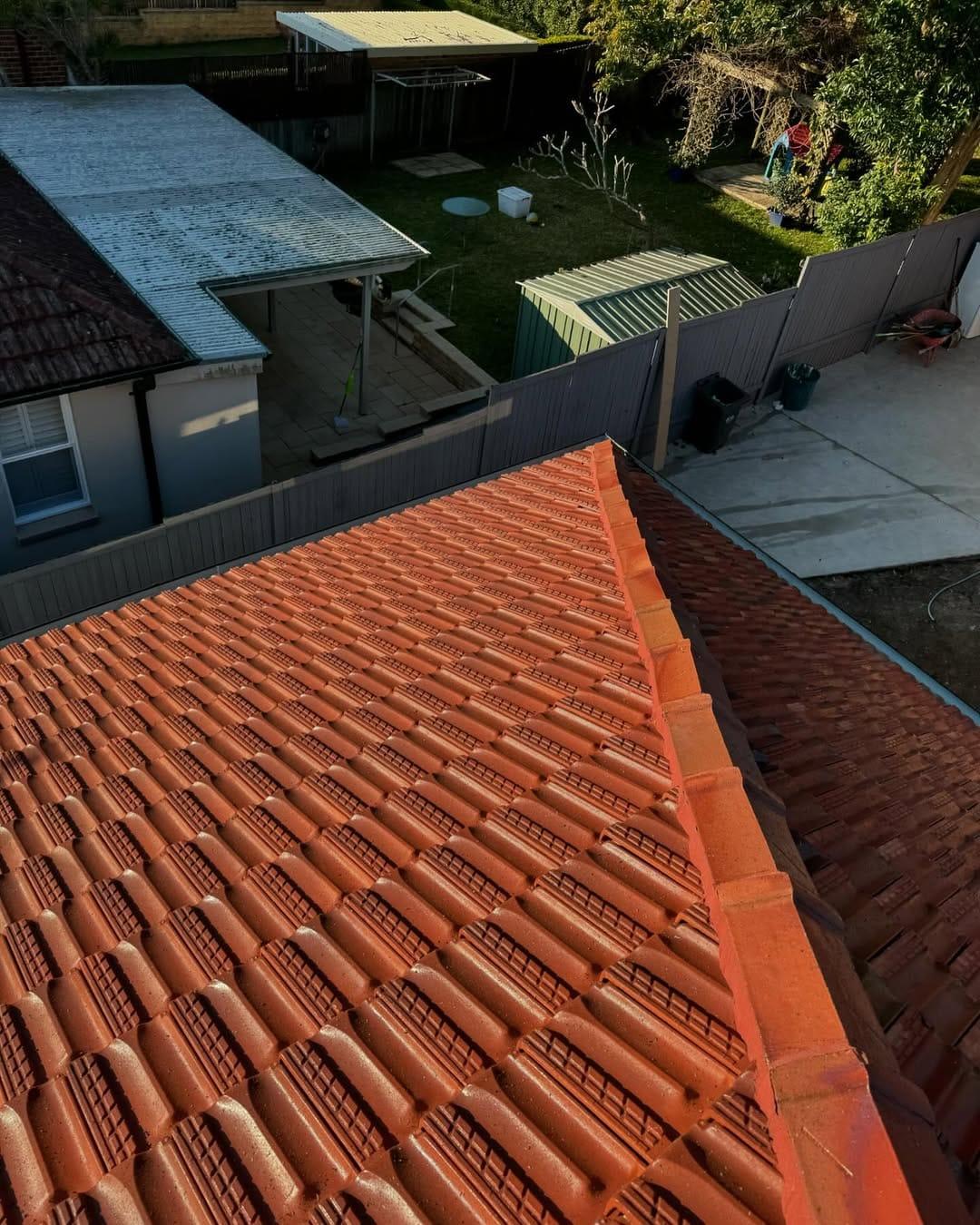
  • A terracotta tile roof seen from above after the tiles were reset and cleaned
    A terracotta tile roof seen from above after the tiles were reset and cleaned
  • Terracotta tiles and ridge capping on a suburban roof
    Terracotta tiles and ridge capping on a suburban roof
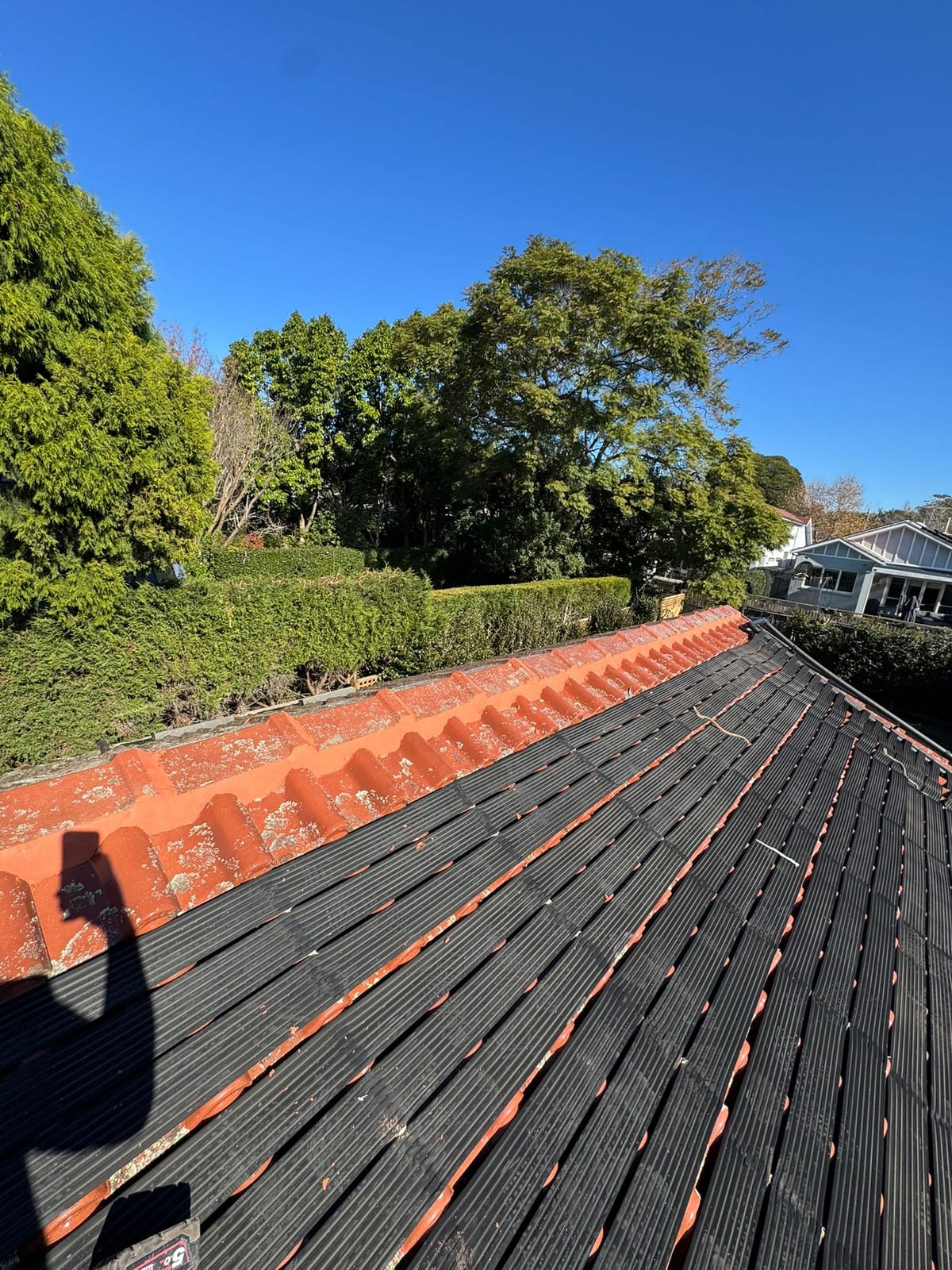
  • Freshly bedded and pointed ridge capping on a tiled roof with the garden below
    Freshly bedded and pointed ridge capping on a tiled roof with the garden below

Tile Roofing: questions we get asked

Can you match my 1970s Monier tiles?

Usually, but not always with a new tile. Many 1970s and 80s Monier and Boral profiles are discontinued, so we identify the profile from the underside stamp and interlock, then source the same profile from Sydney salvage yards or our own stock. If nothing matches, we move sound tiles from a hidden slope to the visible repair and put the nearest new tile out of sight. We will tell you at the quote which of those applies to your roof.

If a lot of tiles are cracked, do I need a new roof?

Not necessarily. Cracked tiles from foot traffic are replaced individually and the roof is fine afterwards. What tips a roof into re-tile territory is porosity or fretting across whole slopes, where the tile body itself has failed and every replacement just moves the problem along. We check by lifting tiles and looking at the underside; a porous concrete tile is damp on the underside days after rain. We will show you the photos and quote both options.

Can terracotta tiles be painted or coated?

We do not recommend it. The fired glaze on terracotta does not give a coating anything to grip, so paint tends to peel within a few years and looks worse than the original. Terracotta is cleaned, re-pointed and has failed tiles replaced, and that is the restoration. Concrete tiles are different: the surface is porous, takes a primer sealer well and can be coated in any colour as part of a roof restoration.

How long does a full re-tile take, and can we stay in the house?

An average single-storey home takes four to six working days. We strip and re-sark one slope at a time so the house is never open overnight, and you can stay in it throughout. Expect noise, a skip in the driveway, and a delivery of tiles on pallets that needs a clear spot near the house. Wet weather pauses stripping, so in a wet week the job may stretch, but the roof is never left exposed.

Can I switch from terracotta to concrete tiles, or the other way?

Yes, but weight matters. Concrete tiles are noticeably heavier than terracotta, so going from terracotta to concrete on an older frame may need a structural check first. Going the other way is usually fine. Either change alters the look of the house, which in a heritage conservation area such as Hunters Hill, Balmain or Mosman generally needs council approval or a heritage exemption. We will flag that at the quote so you are not caught out.

Do I need council approval to re-tile my roof?

Like-for-like replacement of an existing tile roof is generally exempt development in NSW and does not need approval. Approval becomes a question when you change the roof material or colour, alter the pitch or height, or the house is heritage listed or in a conservation area. Councils in Hunters Hill, Inner West, Woollahra, Mosman and Hornsby all have conservation areas where the roof is part of the streetscape. Ask us and we will point you at the right council page.

Get a free tile roofing quote

We come out, get on the roof, photograph what we find and put every line in writing. No obligation and no sales call afterwards.

Call 0404 839 843Request a quote