Which job are you actually being quoted for
Three different jobs get sold under the name Colorbond roof replacement, and the quotes on your table may not all be for the same one.
- A tile to Colorbond conversion. The tiles, ridge caps and tile battens come off and a metal roof is built on the existing rafters. This is most of what we do.
- Re-sheeting an existing metal roof. The old sheets come off, the frame and battens stay, and new sheets, screws and flashings go on.
- A patch. A few sheets or one rusted valley replaced. That is a repair, and it is covered on the metal roofing page.
This page is about the first two. For re-tiling and the broader decision about whether the roof needs replacing at all, see roof replacement.
What changes when tiles become steel
A conversion is a small rebuild of the top of the house, and a quote that reads as tiles off, sheets on has left things out.
Roof weight
Concrete tiles weigh roughly 50 kg per square metre laid. A Colorbond roof with its battens and blanket is a small fraction of that, so the roof weight on the frame drops by 40 to 50 kg per m². The frame is almost never the problem. What matters is the other direction: a light roof is held down by its fixings, not by its own mass, so the battens have to be screwed to the rafters and the sheets fixed to the pattern for your wind exposure. On a ridge-top block in the Hills or an open coastal street, that fixing pattern is tighter.
Roof battens
Tile battens sit at about 320 mm centres and are sized to carry a tile, not to hold a screw under uplift. They come off. New roof battens, in treated timber or steel, go on at up to 900 mm centres to suit the sheet profile. We check the rafters from inside the ceiling at the quote, and again once the tiles are off. Split or rotten timber found at that point is shown to you and priced before we cover it.
Sarking or anti-condensation blanket
Many Sydney tile roofs built before the 1980s have no sarking at all, and where it exists it is usually brittle. Under metal we fit a foil-faced anti-condensation blanket over the battens, laid to AS 4200.1. Bare steel sweats on a cold clear night, and without the blanket that moisture drips onto the ceiling and looks exactly like a leak. The blanket also takes the edge off rain noise and adds to the roof's insulation. Ask each quote to name the product.
Roof pitch and profile
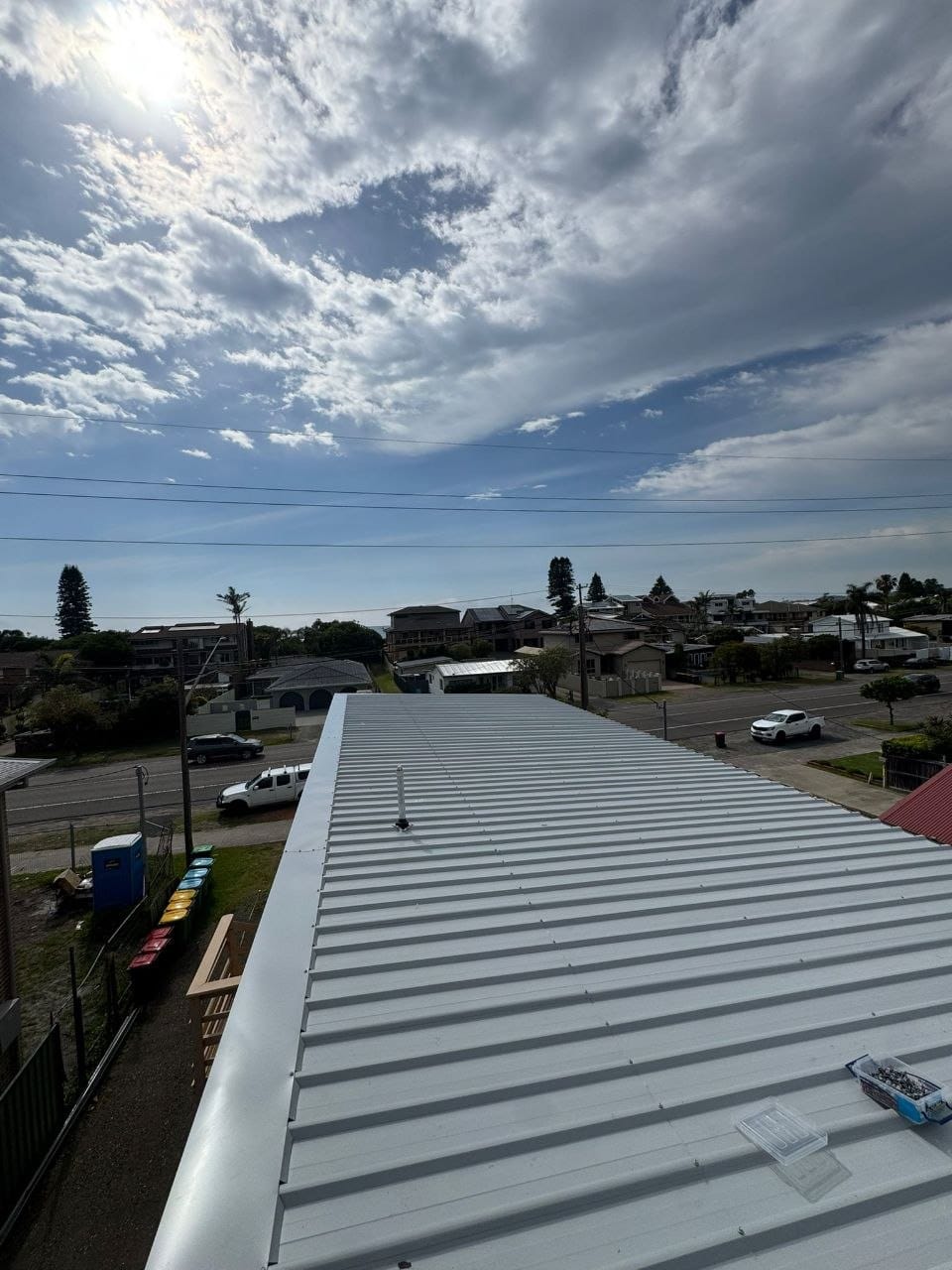
Roof pitch decides the profile before taste does. Corrugated Custom Orb needs at least 5 degrees. Trimdek works down to 2 degrees. Most tiled houses sit well above both, but a rear extension or a verandah tiled at a low pitch is often the part that has always leaked, and the conversion is the chance to put the right sheet on it. We measure the pitch of every roof plane at the quote.
Flashings, valleys and gutters
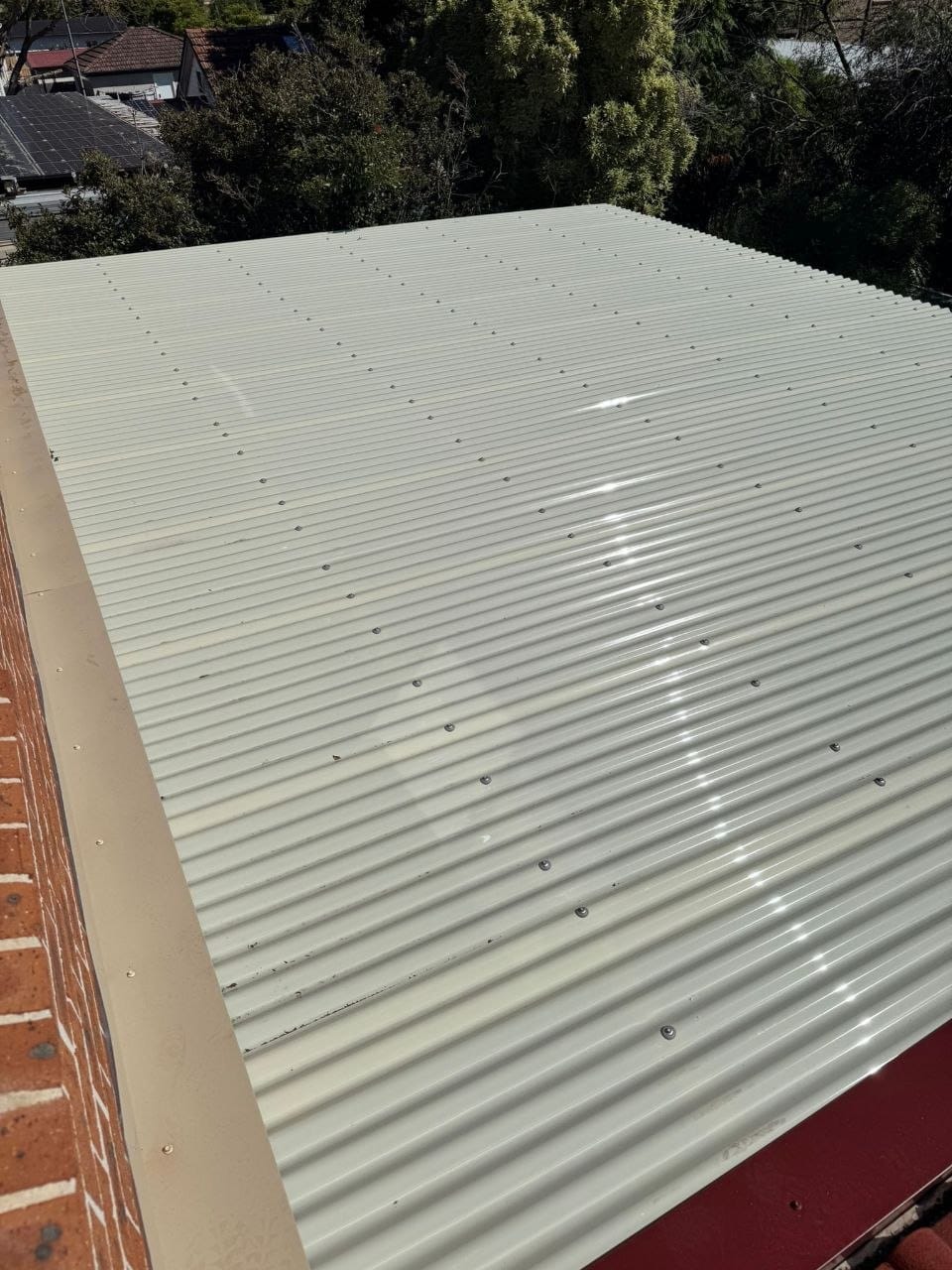
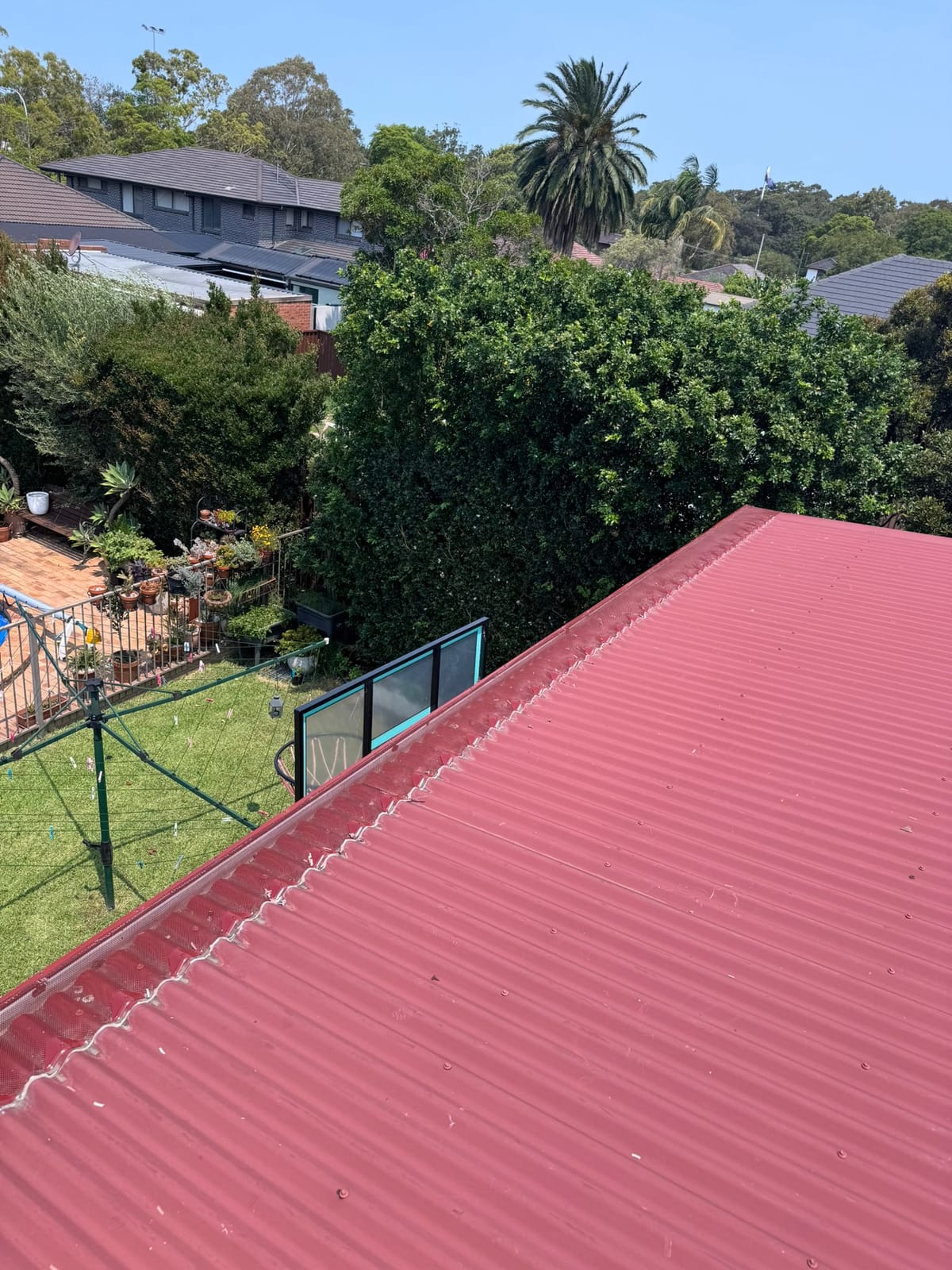
Every junction is remade: ridge and barge capping, valley gutters, apron and step flashings where the roof meets a wall or chimney, and collars at each pipe and vent. Reusing old tile flashings under a new metal roof is where most leaks on cheap conversions come from. We replace gutters and fascia cover at the same time in most cases, because the gutter has to suit the new sheet edge and the scaffold is already up. Box gutters and unusual downpipe runs are roof plumbing work and are itemised.
When re-sheeting is enough
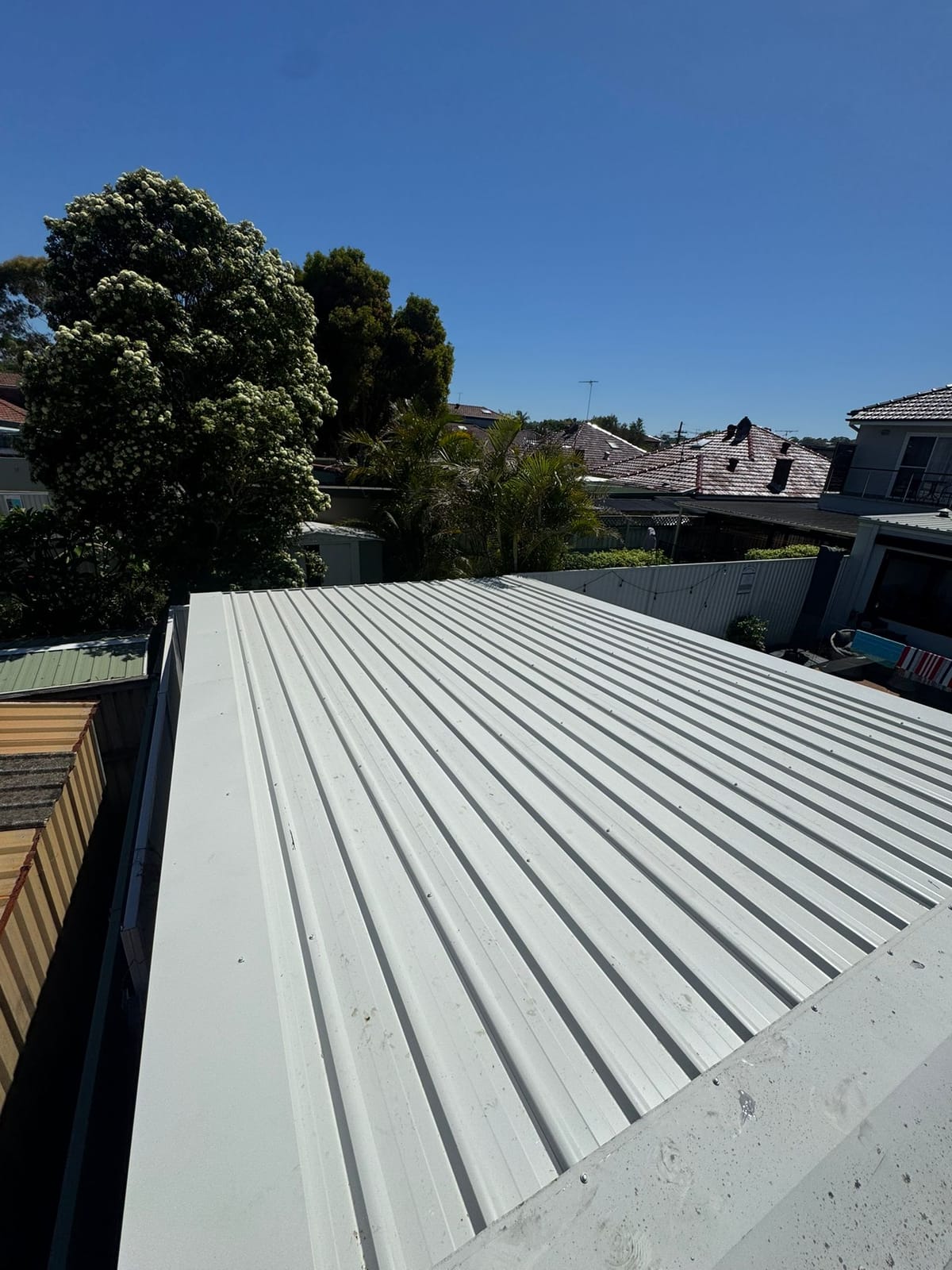
If the roof is already metal, you may not need a full strip to the rafters. Re-sheeting works when the battens are sound, straight and at a spacing that suits the new profile, and the fault is in the sheets themselves: rust through at the laps, perished screws, a coating that has chalked away. We take off the old sheets, check and re-fix the battens, lay a new blanket, then fit new sheets and all new flashings.
Re-sheeting is not enough when the battens are undersized hardwood that splits on a screw, when the old sheeting is asbestos cement, or when the frame has sagged. The crew does not remove asbestos. A licensed removalist is arranged, shown as its own line on the quote, and issues a clearance before we start.
How long it takes and living through it
An average single-storey home takes four to seven working days once materials are on site. Two storeys, a cut-up roof with many hips and valleys, or an asbestos removal first all add time. Scaffold or edge protection goes up before we start.
You can stay in the house. We strip only what we can sheet and make weathertight the same day, so the roof is never open overnight. Expect:
- Noise from early morning on strip days, and grit falling into the roof space. Cover anything stored up there.
- A skip and a sheet delivery, so the driveway is out of use for most of the week.
- Solar panels off before we start and back on after, by an accredited installer.
- Rain stopping work. The exposed section is tarped and the job waits.
Choosing the steel and the colour
Standard Colorbond steel suits most of Sydney. Close to surf or on the harbour foreshore we specify Colorbond Ultra, which costs more and is the grade BlueScope's warranty expects in that exposure. On the North Shore that mostly means the harbourside streets, not the bushland suburbs further up the line.
Colour is more than looks. A light roof runs cooler in a Western Sydney summer, and some councils and heritage conservation areas restrict what is allowed on a street-facing roof. Our guide to Colorbond colours for Sydney homes covers the range. Still weighing up whether to leave tile at all? Read tile vs Colorbond first.
What it costs
A conversion starts from $14,400 including GST for a small home with about 120 m² of roof, which is from $120 per m² supplied and installed. Size, pitch, storeys and the grade of steel move it up from that starting price. The Colorbond roof cost guide breaks the number down. A job over $20,000 needs Home Building Compensation cover and a written contract, so ask every quoting roofer for both. Our details are on the licence and insurance page.
When it is the wrong job
If the tiles are hard and the battens straight, a roof restoration costs a fraction of a new roof. A sound terracotta roof in a heritage street is usually worth keeping, and our tile roofing crew can repair it. We would rather quote the smaller job than sell a roof you do not need.
Warranty
Our work carries a 2-year workmanship warranty, set out on the warranty page. The steel is covered separately by BlueScope's own material warranty, which depends on the product and how close you are to salt water. Book a free on-site quote and we will measure the roof, check the frame from inside and give you a written, itemised price.