What a roof plumber does in NSW
The name confuses people, because a roof plumber does not touch taps or toilets. In NSW, roof plumbing means the metal and drainage parts of a roof:
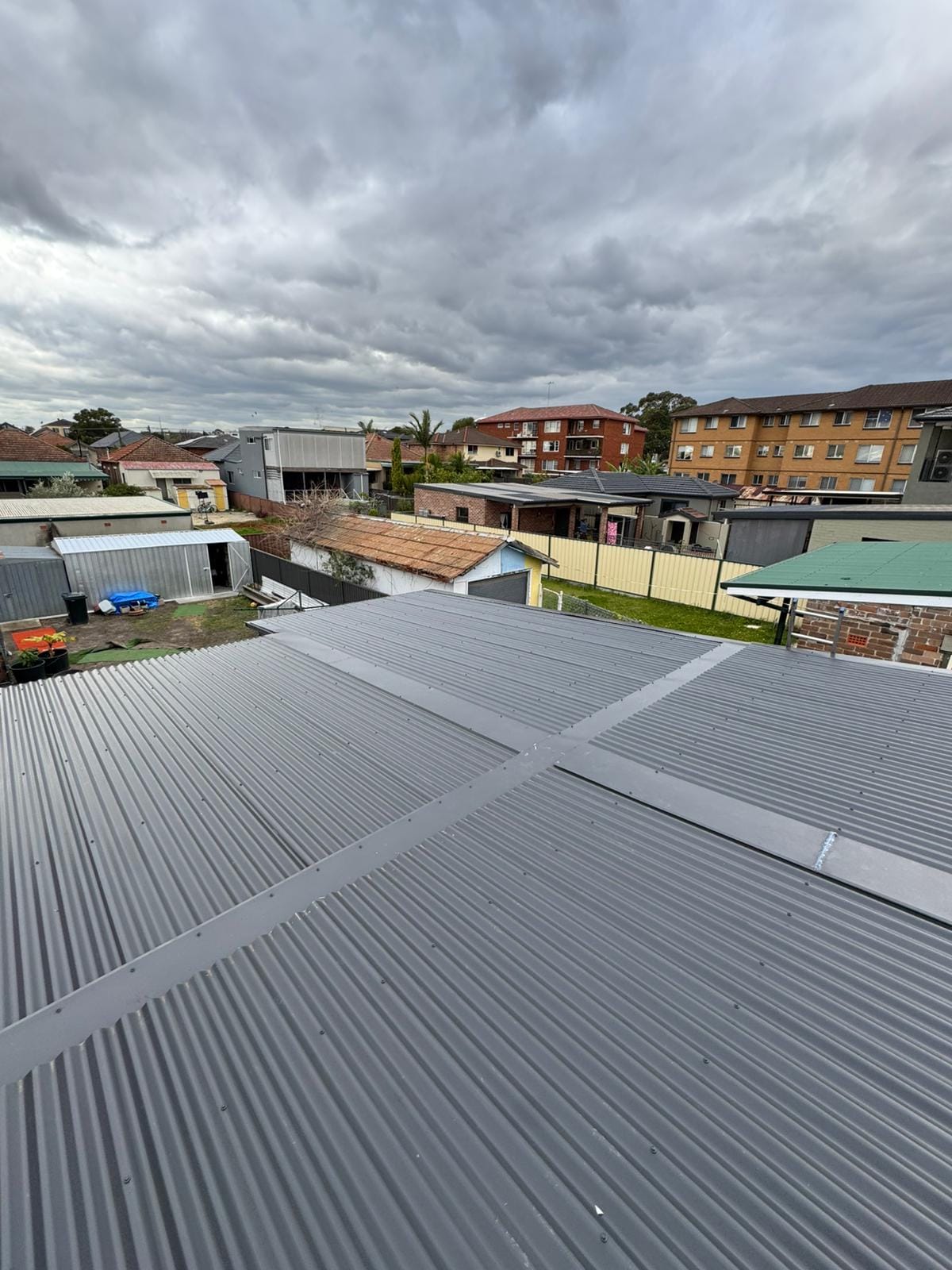
- Metal roofing: Colorbond and Zincalume sheeting, the screws and the cappings
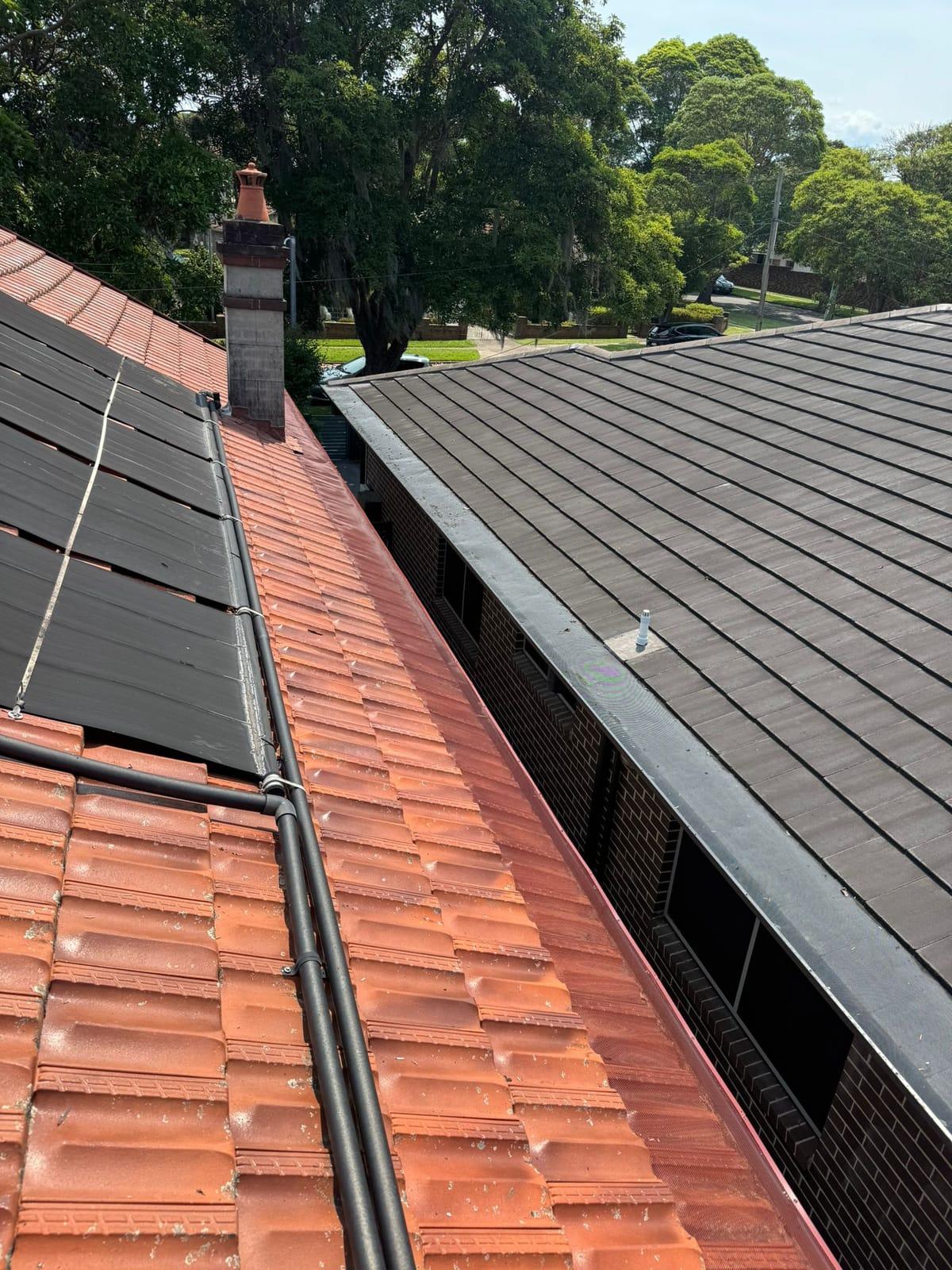
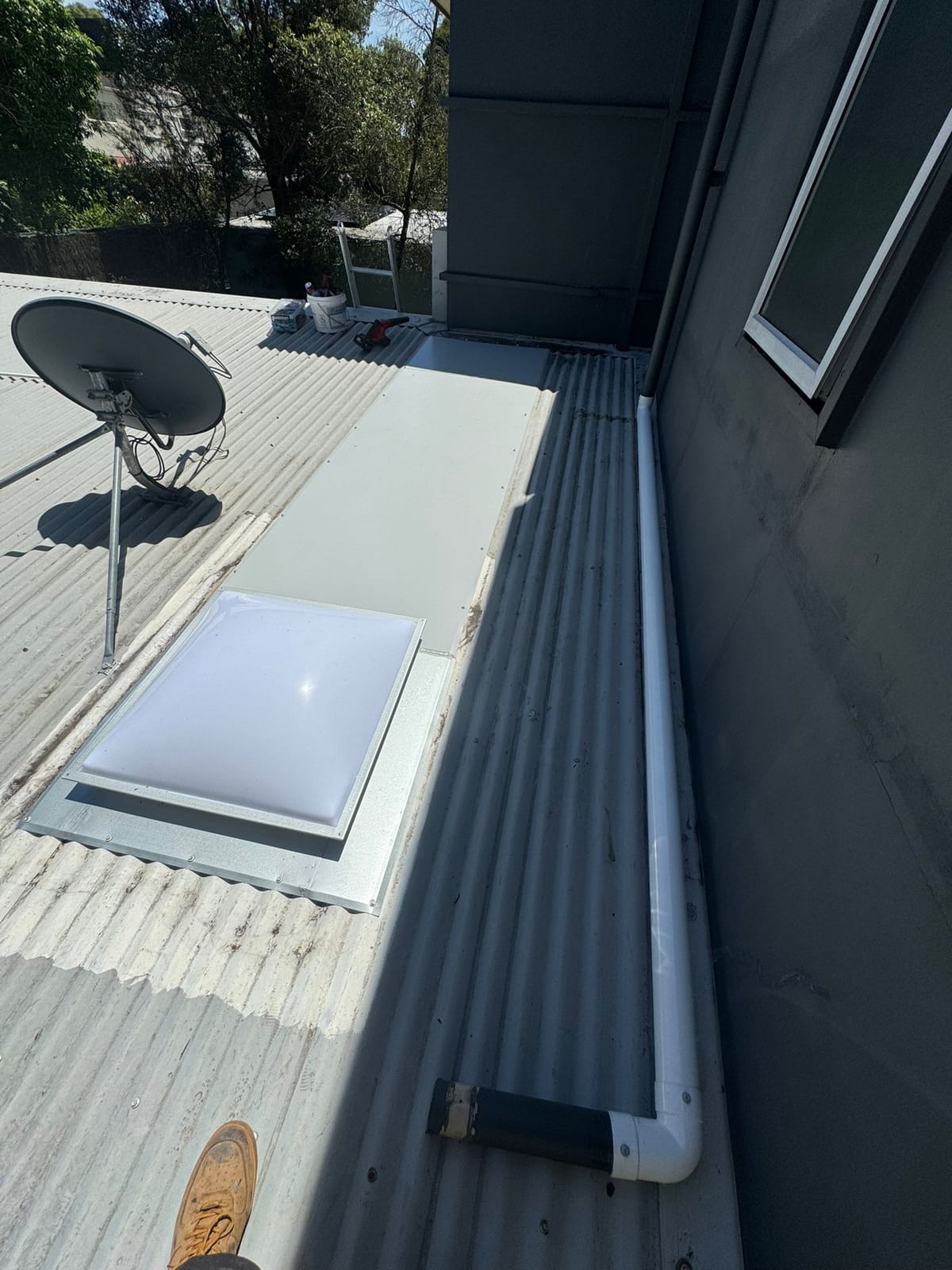
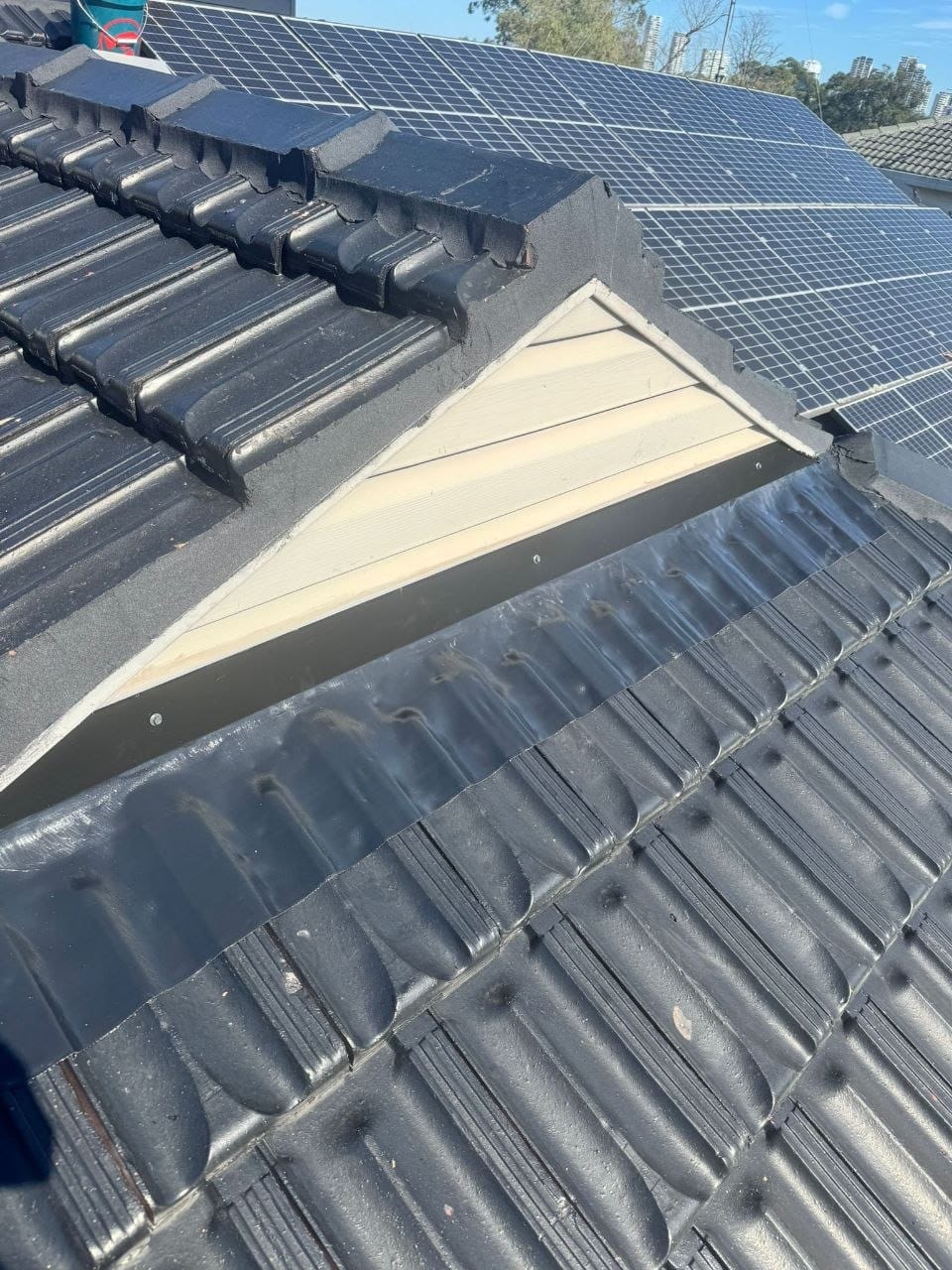
- Flashings: the folded metal or lead that seals a roof against walls, chimneys, parapets and skylights
- Valley irons: the metal channels where two roof slopes meet
- Gutters, including eaves gutters and the box gutter behind a parapet
- Downpipes, sumps, overflows and rainwater heads
- Roof penetrations: the collars and flashings around vent pipes, flues, exhaust fans, skylights and air conditioning lines
- Stormwater off the roof, down to where the downpipe meets the drain at ground level
A tiler lays and beds tiles. A roof plumber deals with the metal and the water. Most houses need both skills on the same roof, because a tile roof still has valleys, flashings, gutters and downpipes.
Roof plumbing work in NSW must be done by a licensed contractor. It is its own category of work, not something a general handyman can legally take on. Before you accept any quote, ours included, look the contractor up on the NSW Government licence check. Our licence and insurance page explains how to do that and what to look for.
What we do not do
We do not do hot water systems, gas fitting, bathrooms, sewer or any sanitary plumbing. We also stop at ground level: new stormwater pipes, pits and connections below ground belong to a drainer. If a job needs one, we tell you at the quote.
The roof plumbing work we do
Flashings
Flashings fail more often than any other part of a roof. Lead cracks along its folds after decades of heating and cooling. Sealant that was used in place of a proper chase perishes. Apron flashings lift in wind. On terraces and semis in the Inner West and Eastern Suburbs, the flashing along the party wall is the first place we look.
We replace or re-dress flashings and cut the top edge into the brickwork mortar joint so the seal does not rely on sealant alone. One detail worth knowing if you are comparing quotes: bare lead must not drain onto Colorbond or Zincalume, because it corrodes the coating. On a metal roof we use compatible flashing materials.
Valley irons
A valley carries the water from two roof planes, so it sees more flow than anywhere else on the roof. Leaves collect there, stay wet and rust the iron from the top. On tile roofs, mortar and debris can dam the edges and push water sideways under the tiles. We lift the tiles either side, remove the old valley, fit new Colorbond or Zincalume valley irons lapped in the direction of flow, and re-cut and re-lay the tiles.
Gutters and downpipes
New gutters, repairs, added downpipes and corrected falls. The detail is on the gutter replacement and gutter repairs pages. The roof plumbing point is sizing: the gutter and the number of downpipes are meant to be worked out from the roof area draining into them, not copied from what was there before.
Box gutters, sumps and rainwater heads
A box gutter runs inside the building line, so when it overflows the water goes into the ceiling. It needs enough width and fall for the roof it serves, an outlet that cannot be blocked by one handful of leaves, and an overflow that sends excess water outside where you can see it. On a parapet wall that usually means a sump discharging through the wall into rainwater heads, the open boxes at the top of the downpipes, which also act as a visible overflow.
AS/NZS 3500.3 is the Australian Standard for roof drainage. It sets how box gutters, sumps, rainwater heads, overflows and downpipes are sized from the catchment area and the local rainfall intensity. Sydney storms drop a great deal of water in a few minutes, and a lot of older box gutters were never built for it. When one overflows in every big storm we measure the catchment and rebuild to the standard instead of resealing it again. Larger commercial jobs are covered under commercial roofing.
Roof penetrations
Every pipe, flue, fan and cable that passes through a roof is a hole that has to be sealed. Rubber pipe collars on metal roofing perish in the sun after 10 to 15 years and split. Penetrations added later for solar, air conditioning or a new bathroom fan are often sealed with a blob of silicone and nothing else. We fit new collars, back-flash larger penetrations so water is diverted around them, and re-flash skylights.
Metal roofing
New sheeting, re-sheeting, tile-to-metal conversions, replacement of perished screws and treatment of rust at laps and edges. This is covered in full on the metal and Colorbond roofing page. Within a few hundred metres of surf on the Northern Beaches or the eastern coastline, the grade of steel and the fixings matter more than the colour.
How we work out what is wrong
Most roof plumbing calls start with water inside. We check the ceiling cavity if there is access, then the roof above it, then run a hose over each element in turn, starting low and working up, until the leak shows. That tells us which flashing, valley or penetration failed, and stops us replacing parts that were fine. The method is on our roof leak repairs page.
For gutter and box gutter work we measure the roof area feeding each outlet and follow the water to where it leaves the property. You get a written, itemised quote on-site with photos of what we found.
What it costs
Roof plumbing is priced by the element. As a guide for Sydney in 2026, including GST:
- A minor repair, such as one flashing, a pipe collar or a small leak, starts from $350.
- Replacing valley irons or longer flashing runs starts from $900.
- New gutter is from $45 per lineal metre, with downpipes from $180 each.
- New Colorbond sheeting over an existing structure is from $120 per m².
- Box gutter rectification on a commercial or strata building starts from $2,500.
Height, pitch and access move every one of those. Typical figures for common repairs are in our roof repair cost guide.
Strata, commercial and heritage
Box gutters and parapet flashings on unit blocks are usually common property, so we quote to the owners corporation or strata manager with a photo report. On shops and warehouses we can work around trading hours by arrangement.
In heritage conservation areas such as Hunters Hill, Balmain and Paddington, visible changes to gutter profile, rainwater heads or roofing material may need council approval. Like-for-like repair generally does not, but check before ordering materials.
Warranty and next step
All roof plumbing work carries our 2-year workmanship warranty, set out on the warranty page. Colorbond and Zincalume products carry their own manufacturer warranty on top. If water is coming in now, call and we will attend the same day where availability permits. Otherwise, book a free on-site quote.