Skip to content
Sam's Roofing Experts

Roof Ventilation & Whirlybirds in Sydney

If the upstairs rooms are still hot at 10pm, or there is mould on the sarking and drips off the underside of the roof in winter, the roof cavity is not breathing. We fit whirlybirds, solar roof vents and ridge vents, and we tell you when a vent will not fix it.

NSW licence 502874C2-year workmanship warrantySame-day emergency attendance, where available4.9 on Google

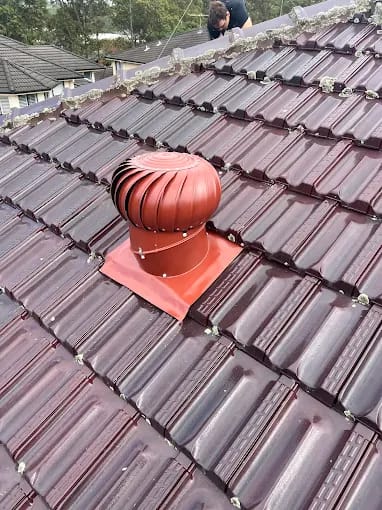
Whirlybird roof vent fitted and sealed into a terracotta tile roof

What roof ventilation costs in Sydney

Ventilation is one of the cheaper things you can do to a roof and the price is mostly in the unit and the access. A single storey tile roof with one whirlybird is a short visit; a two storey metal roof with two solar vents and eave vents takes most of a day. All prices are supplied and installed, GST inclusive.

JobStarting price, inc. GST
Whirlybird, supplied and installedFrom $350 each
Solar roof vent, supplied and installedFrom $700 each
Eave vents, fittedFrom $60 each
Ridge vent on a metal roofFrom $45 per lm
Exhaust fan ducted to eave or roof outletFrom $250

The variables that move the price

  • Tile or metal roof
  • Roof area and how many units it needs
  • Single or two storey and pitch
  • Whether eave vents are needed for intake
  • Solar versus wind-driven
  • Colour match to the roof

These are 2026 Sydney starting prices from our own quoting, not a promise for your roof. Every job is quoted free, on site and in writing after we have been on the roof. That is the number you can hold us to.

What is going wrong up there

On a January afternoon the air in a Sydney roof cavity sits between 55 and 70 degrees. Ceiling insulation slows that heat getting into the rooms below but does not stop it, and once the batts are warm they keep radiating into the house after the sun has gone. That is why the bedrooms are hotter at bedtime than at lunch. This is attic heat, and it is worst under dark tiles and dark Colorbond and on two storey homes, and worst of all out west.

Winter is the opposite problem. Warm, wet air from showers, cooking and breathing rises through the ceiling into a cavity that is cold on the underside of the roof. It condenses there. Roof cavity condensation looks like a leak: drips on the ceiling on a clear morning, water marks on rafters, black mould on the sarking, insulation damp on top. The worst cases we see have a bathroom exhaust fan ducted straight into the cavity, pumping a shower's worth of steam up there every morning.

Both problems have the same fix: move air through the cavity. Air needs a way in at the eaves and a way out at the top, and the vents we fit are the way out.

Whirlybird, solar vent or ridge vent

OptionHow it worksCapacityInstalled
WhirlybirdWind-driven turbine, spins on any breeze, no powerRoughly 90 to 100 m² of roof per unitFrom $350 each
Solar roof ventSolar-powered fan, runs whenever the sun is up, some models with a thermostatTwo to four times a whirlybird, one unit per 150 to 200 m²From $700 each
Ridge ventContinuous low-profile vent along the ridge line under the cappingDepends on ridge length, best for new metal roofsQuoted per lineal metre

A whirlybird is the honest default. It costs nothing to run, has one moving part, and on a windy ridge it pulls a lot of air. Its weakness is a still, hot afternoon, which is exactly when you want it working hardest. A solar roof vent solves that: the fan runs on sunlight, so it is moving the most air when the roof is hottest, and it is silent. Ridge vents are the neat option on a new Colorbond roof because they are invisible from the street, but retrofitting one into a tile roof means lifting the capping and is rarely worth it over a couple of whirlybirds.

Eave vents are the part people forget. A whirlybird with no intake is a fan sucking on a closed bottle. If your eaves are lined and sealed we fit eave vents at the same time.

How we install them

On a tile roof we lift the tiles around the spot, fit the vent's base flashing under the course above and over the course below, and refit the tiles cut around the throat. On metal we cut the sheet, fit the base flashing under the sheet above with the ribs sealed, and screw and seal the lower edge. The vent goes as high on the roof as possible, on the leeward side of the ridge for a whirlybird and the sunny side for a solar unit. Where there is sarking we cut and tape it so the vent draws from the cavity, not from between sarking and tiles.

A single unit takes about an hour. Two units and a set of eave vents is a half day.

What a vent will not fix

A vent does not replace insulation. If the ceiling batts are thin, missing over the bathroom, or compressed, fix those first and the vent will do more. A vent will not stop a bathroom fan that dumps into the cavity; that fan needs a duct to an eave or roof outlet, which we can do while we are up there. A vent will not dry a roof that is leaking, and if the water marks are under a valley or a flashing rather than spread across the sarking, it is a leak not condensation.

On an older roof with wet or torn sarking, the better money is sometimes a roof restoration with sarking repairs, and on a metal roof with heavy condensation an anti-condensation blanket fitted at re-sheeting time beats any number of vents. For a room that is dark as well as hot, a skylight is a separate conversation.

What it costs

A whirlybird installed is from $350 and most single storey homes need one or two. A solar roof vent is from $700 and one usually does the job of two whirlybirds. Two storey homes and steep pitches add access cost.

Warranty

Whirlybirds and solar vents carry their manufacturer's warranty, typically 10 to 15 years on the unit. Our installation and flashing carry our 2-year workmanship warranty. If a vent we fitted lets water in, we fix it at no cost.

If you are not sure whether the problem is heat, condensation or a leak, a roof inspection sorts it out first. Otherwise ask for a free quote with the roof type and size and we will tell you how many vents, where.
What is included, and what is not

Hold this against the other quotes you have. If a line below is missing from theirs, ask why.

Included as standard

  • Assessment of cavity ventilation, intake at the eaves and the state of the insulation
  • Supply of whirlybird, solar roof vent or ridge vent in a colour matched to the roof
  • Base flashing fitted under and over the tiles or sheets, sealed to the manufacturer's detail
  • Sarking cut and taped so the vent draws from the cavity
  • Eave vents where the eaves are sealed and there is no intake
  • Cut tiles and offcuts removed, roof left clean
  • 2-year workmanship warranty on installation and flashing

Not included, or quoted separately

  • Ceiling insulation top-up or replacement (quoted separately if needed)
  • Ducting a bathroom or kitchen exhaust fan to the outside (can be done on the same visit, quoted separately)
  • Electrical work for mains-powered fans (a licensed electrician)
  • Retrofitting a ridge vent into an existing tile roof
  • Anti-condensation blanket, which is fitted during metal re-sheeting
  • Repair of an existing leak found while we are up there

Guides that go with this service

Roof Ventilation: our own jobs

Photographed on site by our roofers. No stock photos.

All recent work →
  • Whirlybird roof vent fitted and sealed into a terracotta tile roof
    Whirlybird roof vent fitted and sealed into a terracotta tile roof
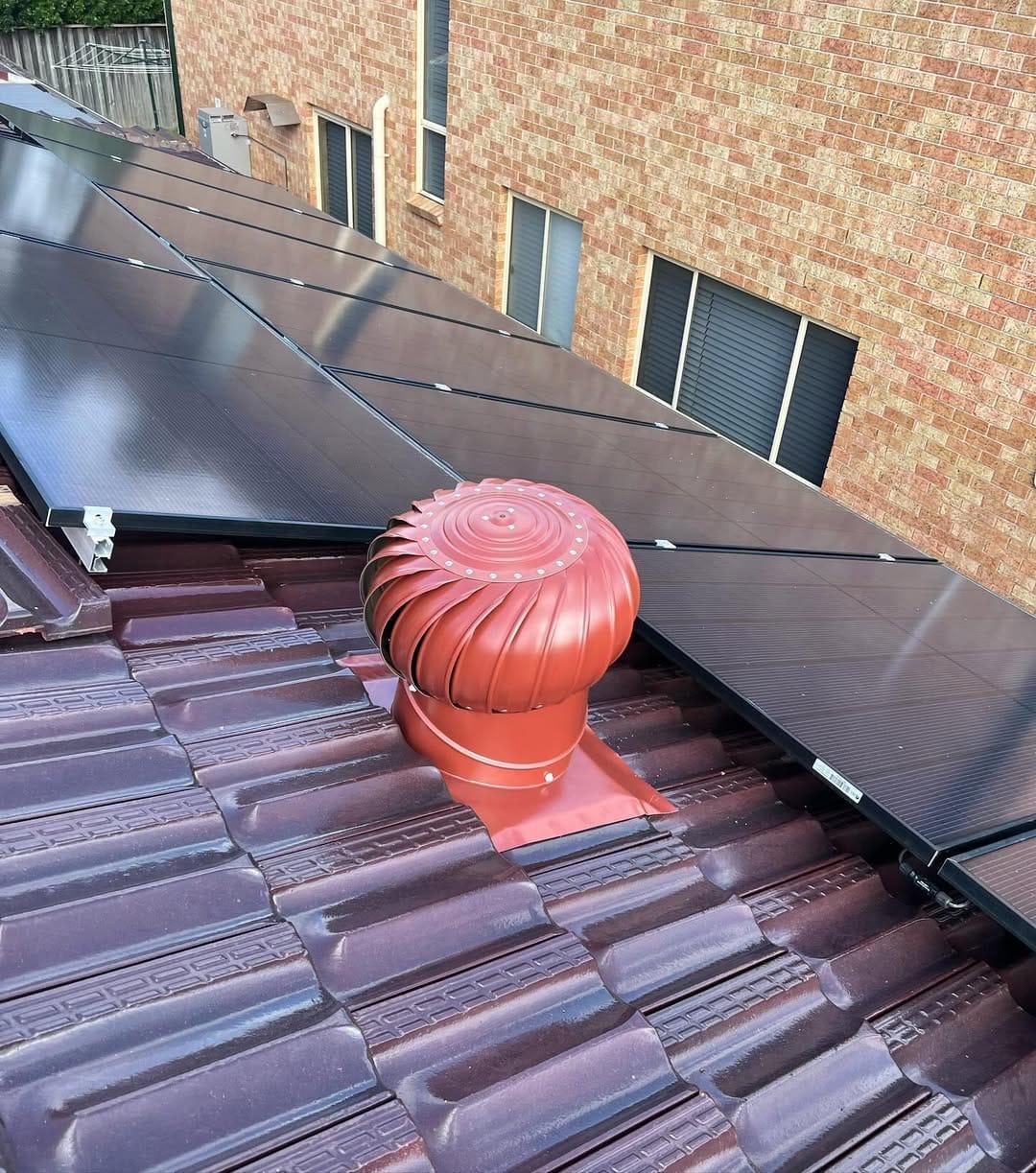
  • Whirlybird vent on a terracotta tile roof beside a bank of solar panels
    Whirlybird vent on a terracotta tile roof beside a bank of solar panels
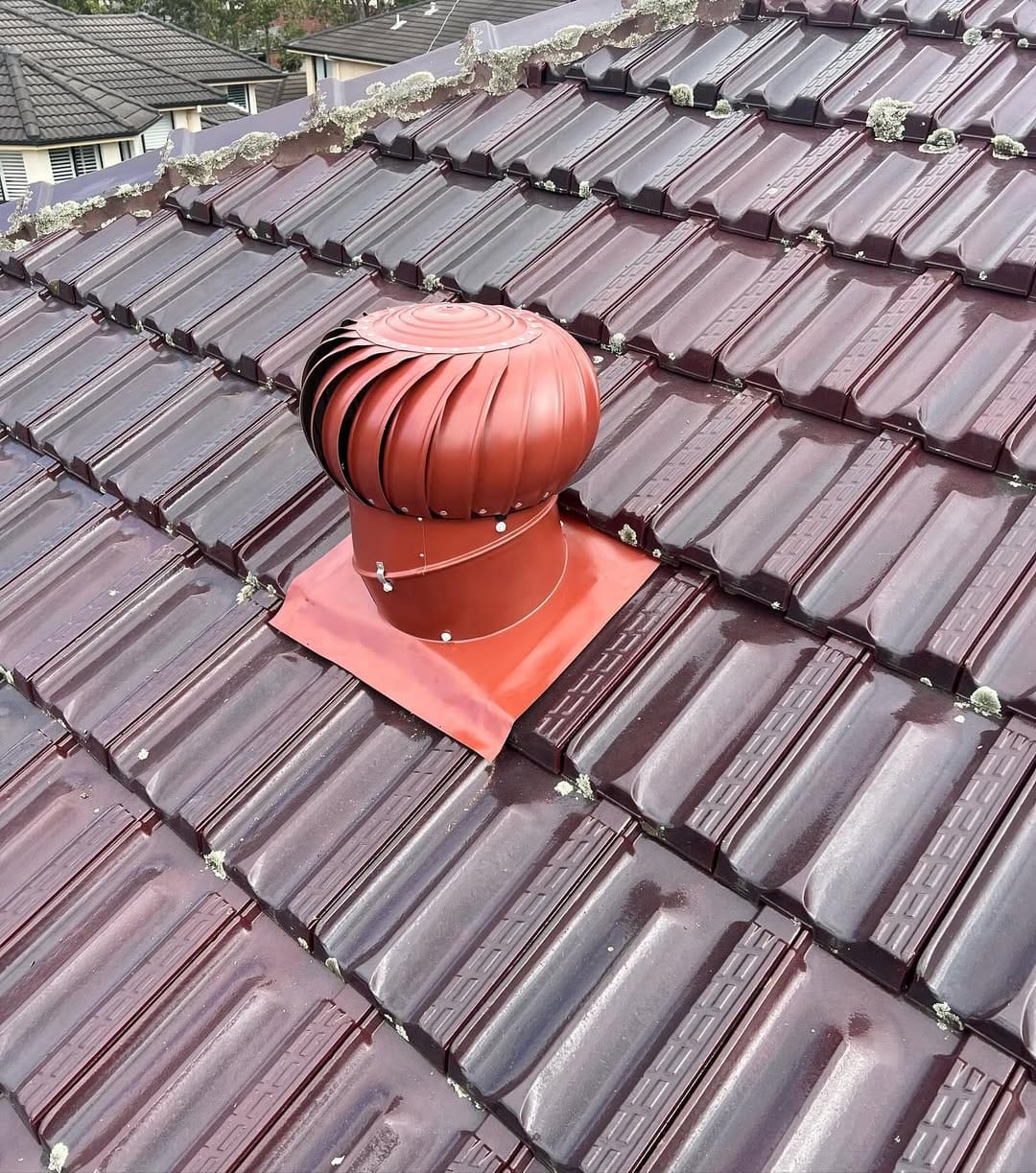
  • Close-up of a whirlybird vent flashed into terracotta tiles
    Close-up of a whirlybird vent flashed into terracotta tiles
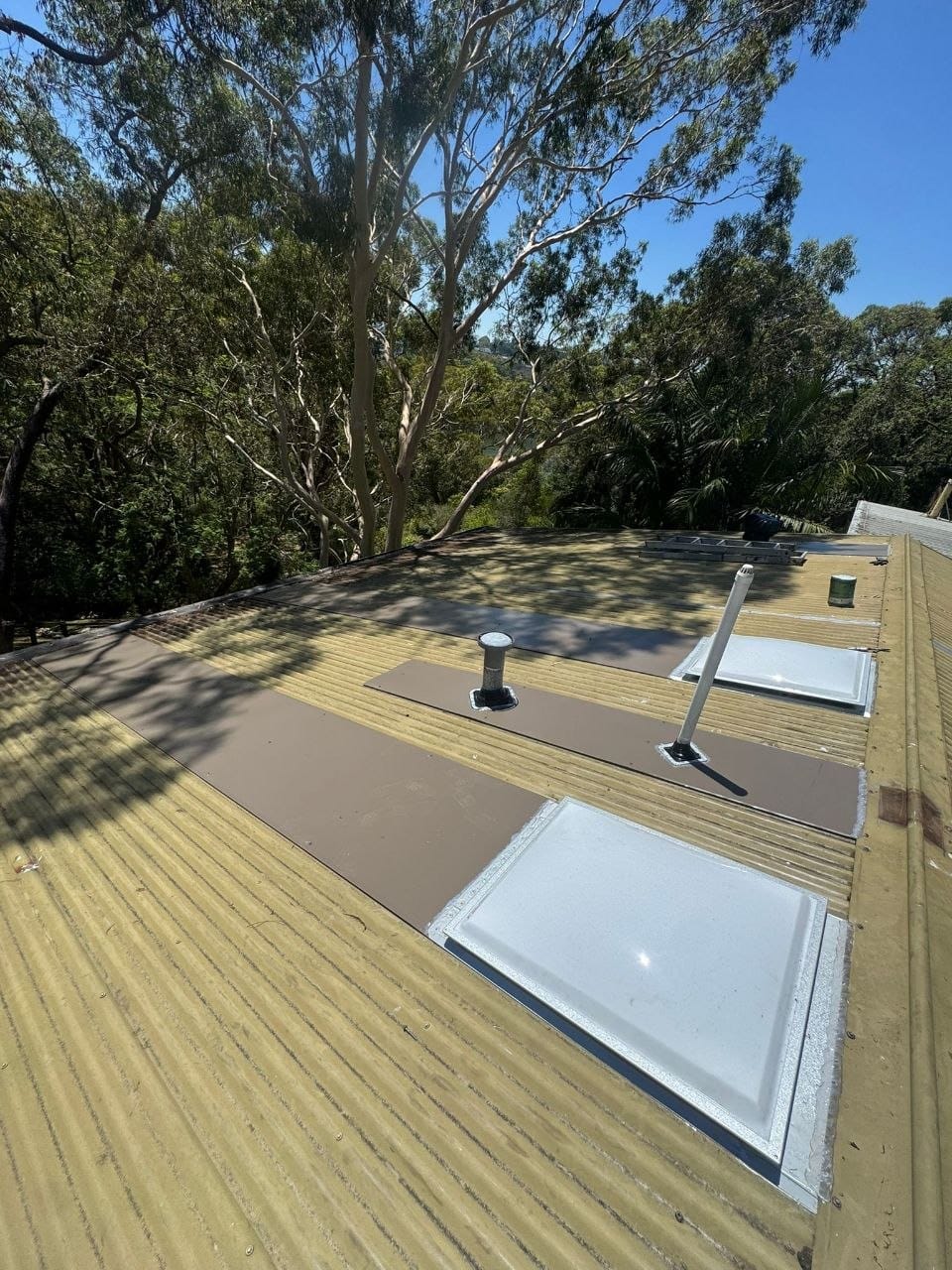
  • A skylight and roof vent on a metal roof under gum trees
    A skylight and roof vent on a metal roof under gum trees

Roof Ventilation: questions we get asked

How many whirlybirds does my house need?

One per 90 to 100 square metres of roof is the working rule, so a typical single storey home takes two and a small one gets away with one. That assumes there is intake at the eaves. If the eaves are sealed, one whirlybird with eave vents beats two without. A solar roof vent moves two to four times the air, so a single solar unit usually replaces a pair of whirlybirds.

Do whirlybirds let rain in?

A correctly installed one does not. The turbine head sheds water outward as it spins and the throat sits above the flashing line, so even wind-driven rain drips back onto the roof rather than down the throat. The ones that leak have been fitted on the wrong flashing or with the base sealed with silicone instead of lapped under the tiles. Ours are flashed to the manufacturer's detail and carry our workmanship warranty.

Is a solar roof vent worth the extra over a whirlybird?

On a hot, still site, yes. A whirlybird needs wind, and Sydney's worst heat comes on the windless afternoons before a southerly. A solar vent runs whenever the sun is on the panel, moves several times the air, and is silent. If you have a two storey home, a dark roof, or bedrooms that stay hot at night, it is the better buy. On a breezy ridge with a light roof the whirlybird does fine.

Water is dripping from the ceiling on a clear morning. Is that condensation or a leak?

Timing is the tell. Condensation shows up on cold clear mornings after a still night, especially after showers, and the marks are spread across the underside of the roof or the sarking rather than in one spot. A leak follows rain and lands in the same place each time, usually below a valley, flashing or penetration. If you are not sure, we can check the cavity and tell you which before you spend money on the wrong fix.

Will roof ventilation lower my cooling bills?

It helps, but honestly less than insulation does. Pulling the cavity down from 65 degrees to nearer the outside temperature takes the load off the ceiling insulation and stops the batts radiating heat into the rooms after dark, which is what people notice most. Combined with decent batts and shading on west windows the difference is real. On its own, on a poorly insulated house, it will not be dramatic and we would rather say so up front.

Get a free roof ventilation quote

We come out, get on the roof, photograph what we find and put every line in writing. No obligation and no sales call afterwards.

Call 0404 839 843Request a quote