What is growing on your roof, and why it matters
Most of what turns a Sydney roof dark is alive. The south and east faces dry slowest, so that is where it starts.
- Black streaks and mould. Algae and mould feeding on the dust and pollen that settle on the surface. Mostly cosmetic, but it holds moisture.
- Moss. Thick green cushions in the laps and along the shaded edge under a tree. Moss holds water like a sponge, lifts the laps between tiles and sheds into the gutters.
- Lichen. The grey, orange and pale green discs that look painted on. Lichen roots into the tile face, and it is the hardest growth to shift.
- Dirt, leaf tannin and bird mess, plus salt film within a few kilometres of the coast.
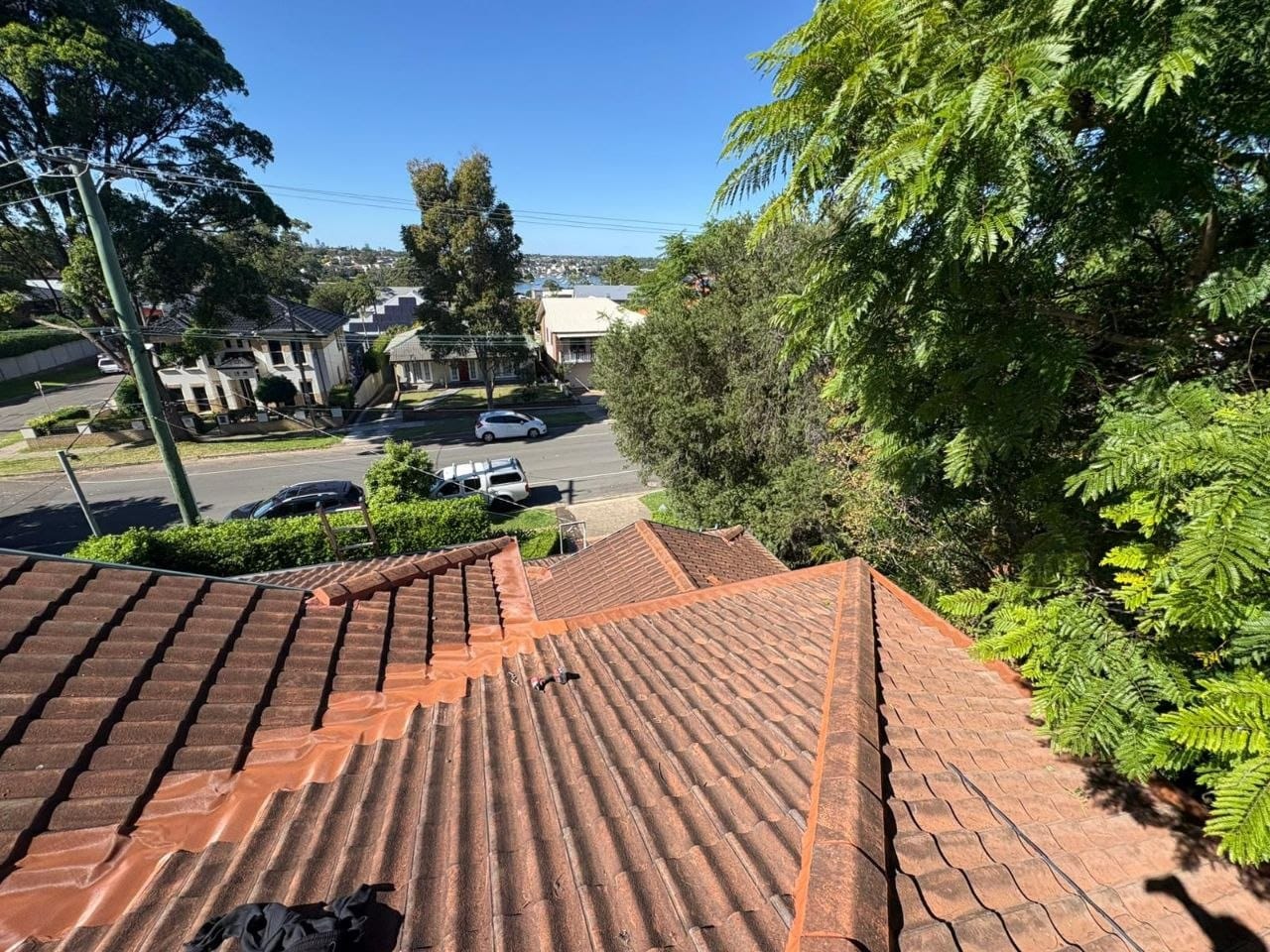
Growth is heaviest under canopy. Roofs under the gums and turpentines of the North Shore and the Hornsby district, and under the figs and jacarandas of the older inner suburbs, grow moss in a few seasons. An open, sunny roof in Western Sydney can go a decade with nothing but dust.
A dirty roof is not automatically a failing roof. Cleaning is worth doing when moss is lifting tiles or filling the gutters, when the house is going on the market, or when the roof is about to be coated. It does not fix a leak.
Pressure cleaning or a soft wash
This is the part most quotes skip, and it is the difference between a clean roof and a damaged one.
Pressure cleaning uses a high pressure wand to strip growth and loose surface off the tile. It gives an instant result and it is the right method for sound concrete tiles and most terracotta tiles in good condition.
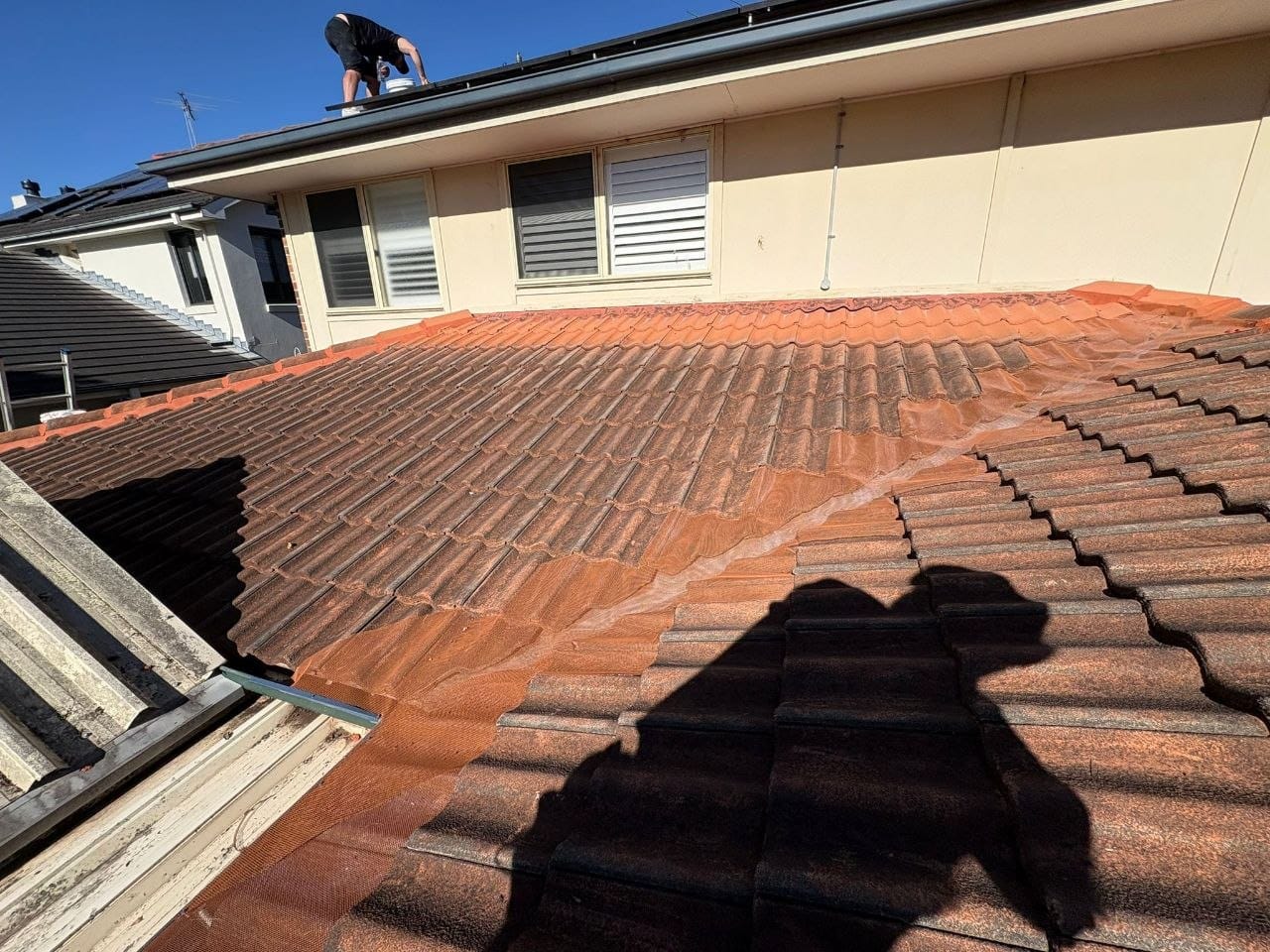
A soft wash applies a roof-safe cleaning and anti-moss treatment at low pressure, leaves it to work, and rinses gently. The growth dies and the roof keeps clearing over the following weeks as rain carries off what is left. It is slower to look finished and far kinder to the surface.
| Roof | Method we use | Why |
|---|---|---|
| Sound concrete tiles | Pressure cleaning | The tile body takes it, and it is the only way to get a surface ready for coating |
| Terracotta tiles in good condition | Pressure cleaning at reduced pressure | Glazed faces clean easily; no need to work them hard |
| Old, brittle or flaking terracotta | Soft wash | The wand can blow the face off a fretting tile and crack a brittle one underfoot |
| Colorbond and other painted metal | Soft wash | High pressure can mark the paint finish and drive water up under laps and flashings |
| Previously painted tile roof with sound coating | Soft wash | Pressure lifts a coating that still had years in it |
| Asbestos cement sheeting | We do not clean it | High pressure water on asbestos cement is prohibited in NSW |
The honest part about pressure
Pressure cleaning removes surface. On a 40-year-old concrete tile the factory colour coat is already mostly gone, and the wand takes the last of it along with the moss. The roof comes up clean but pale, sometimes patchy, and the bare tile is more porous than before, so growth returns sooner unless the roof is sealed or coated. If a clean and nothing else is what you want, we will tell you what the tiles are going to look like afterwards rather than let you find out from the driveway.
Pressure also finds weak tiles. A tile that cracks under the wand or under a boot was at the end anyway, but it has to be replaced on the day, and we allow for a few in every quote.
What we check while we are up there
A roof clean puts someone on every square metre of your roof, which is the cheapest inspection you will ever get. We look at:
- Ridge capping. Cracked bedding and loose pointing show up clearly once the growth is off. High pressure water must never be driven into failing ridge mortar, so loose ridges are cleaned by hand and reported.
- Broken tiles, slipped tiles and chipped corners.
- Valleys, where leaf litter and moss sit wet and rust the iron.
- Flashings around chimneys, skylights and walls.
- Gutters and downpipes, which will be full of what we just washed off.
You get photos of anything that needs attention, with a price if you want it fixed. Small items such as a few broken tiles can usually be done the same visit. Ridge work is covered under roof repairs.
How the job runs
- Inspect first. We walk the roof, test a tile or two in a corner nobody sees, and confirm the method.
- Control the runoff. Wash water carries moss, sludge and, on a painted roof, old coating. Rainwater tanks are disconnected or diverted so none of it ends up in your tank. Downpipes are fitted with filters or blocked and the sludge is collected from the gutters, not flushed down the stormwater drain.
- Protect the ground. Cars moved, windows shut, outdoor furniture and pools covered where overspray could reach.
- Clean from the ridge down, working with the laps so water is never forced up under a tile or sheet.
- Clear the gutters and flush the downpipes. On a standalone clean we scoop out what the wash put there. A full gutter clean of a neglected system is a separate line on the quote.
- Rinse walls, paths and windows where spray has landed.
- Photos of the finished roof and anything we found.
A single-storey home is usually half a day to a day. Two storeys, steep pitches and heavy lichen take longer. We do not clean in strong wind or when rain would wash a soft wash treatment off before it has worked.
Cleaning as the first stage of restoration or painting
Every coating job starts with a clean, and for that purpose only pressure cleaning will do: primer needs a bare, sound surface. Roof painting preparation is more thorough than a cosmetic wash, because any moss root or chalky residue left behind becomes the place the new coating lets go.
If your roof is faded as well as dirty, compare the price of a clean against a roof painting or full roof restoration quote before deciding. A clean on its own makes sense for a roof with good colour left, for glazed terracotta that was never meant to be painted, and for Colorbond. On a worn concrete tile roof, a clean is often half of a job that would be better finished.
What it costs
A pressure clean of a single-storey tile roof starts from $600 on most Sydney homes. Two-storey homes and roofs with heavy moss and lichen start from $1,000. A soft wash of a Colorbond or painted roof is from $500. The quote is free, written and given on-site, because pitch, access and tile condition cannot be judged from a satellite photo. There is more detail in what roof cleaning costs.
When a clean is the wrong job
- The roof leaks. Cleaning will not fix it and can make it worse. Start with leak repairs.
- Tiles are fretting or crumbling. Pressure will strip them. Soft wash only, or talk to us about whether the roof has a future.
- Ridge capping is loose along most of the roof. Re-bed and re-point first.
- The roof is asbestos cement. It must not be pressure cleaned. Any roof built before 1990 that looks like fibre cement sheeting needs identifying first.
- You want it to stay clean for ten years. Only a coating does that.
Warranty
Our 2-year workmanship warranty covers the work we do: any repair carried out during the visit, and damage caused by our cleaning. It cannot promise that moss will not return, because that depends on shade and trees. Trimming back overhanging branches does more than any treatment. Book a free on-site quote and we will tell you which method your roof needs before you commit to anything.